The Secret to Sustainable Weight Loss
Weight loss can often feel like a complicated puzzle. With thousands of diets promising quick fixes, it's easy to get overwhelmed. However, at its core, shedding unwanted fat comes down to one undeniable scientific principle: energy balance. If you want to lose weight, you need a structured calorie deficit meal plan.
When you consume fewer calories than your body burns, it is forced to tap into stored fat for energy. It sounds simple, but executing it consistently is where most people struggle. That's why we've put together a comprehensive, flavorful, and filling 7-day meal plan designed to keep you satisfied while you melt away the pounds.
To dive deeper into the science behind this, check out our guide on .
How to Determine Your Calorie Needs
Before jumping into the meal plan, you need to know your personal calorie target. A meal plan that puts a 6-foot-tall athlete in a deficit might be a calorie surplus for a sedentary office worker.
First, you must calculate your Total Daily Energy Expenditure (TDEE). This represents the total number of calories you burn in a day, including your basal metabolic rate (BMR) and all physical activity. To understand the relationship between these two metrics, read our article on .
Once you know your TDEE (often calculated using the Mifflin-St Jeor Equation), subtract 300 to 500 calories to create a healthy, sustainable deficit. This deficit typically results in a weight loss of about 0.5 to 1 pound per week. For a step-by-step walkthrough, visit .
The 7-Day Calorie Deficit Meal Plan
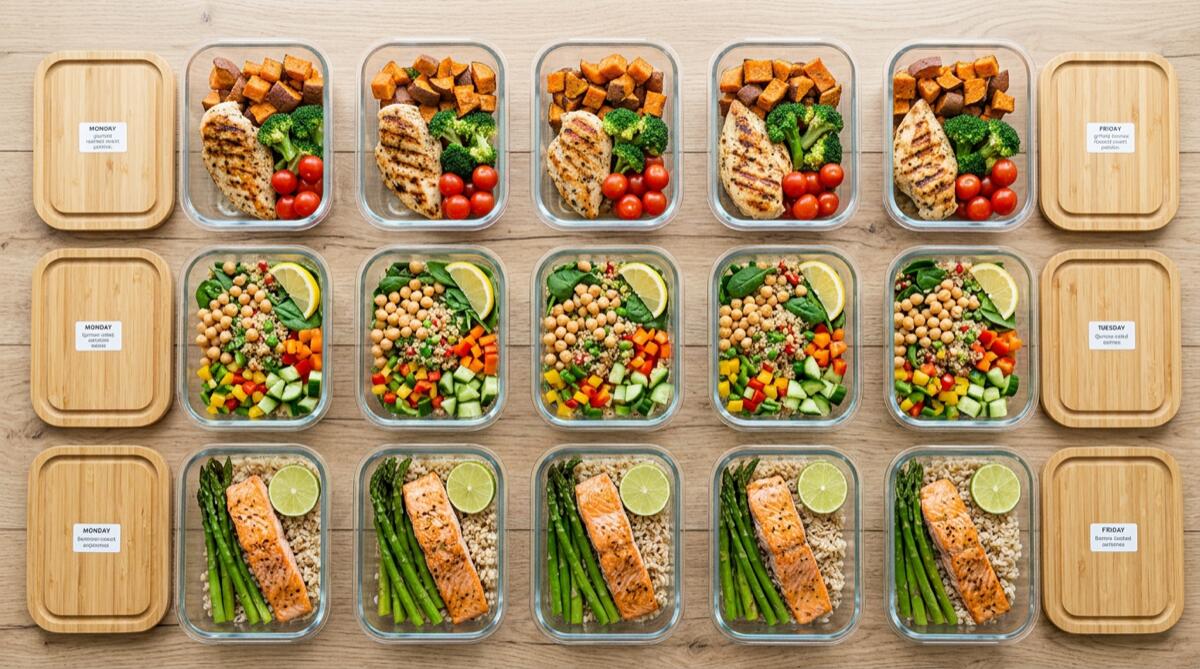
This sample meal plan is built around a daily target of approximately 1,500 to 1,700 calories. It focuses on high-volume, nutrient-dense foods rich in protein and fiber to keep hunger at bay. Adjust portion sizes up or down based on your specific TDEE.
Day 1: Starting Strong
- Breakfast (350 kcal): Protein oatmeal. 1/2 cup rolled oats cooked in water or almond milk, stirred with 1 scoop of whey protein powder, topped with 1/2 cup mixed berries and 1 tbsp chia seeds.
- Lunch (400 kcal): Grilled chicken salad. 4 oz grilled chicken breast, mixed greens, cherry tomatoes, cucumbers, 1/4 avocado, and 2 tbsp light vinaigrette.
- Dinner (500 kcal): Baked salmon (4 oz) with 1 cup roasted asparagus and 1/2 cup cooked quinoa.
- Snacks (250 kcal): 1 medium apple and a string cheese.
Day 2: Flavor and Fiber
- Breakfast (300 kcal): Greek yogurt parfait. 1 cup plain non-fat Greek yogurt, 1/2 cup sliced strawberries, and 1 oz sliced almonds.
- Lunch (450 kcal): Turkey wrap. 4 oz sliced turkey breast, spinach, hummus, and bell peppers wrapped in a whole-wheat tortilla.
- Dinner (450 kcal): Lean beef stir-fry. 4 oz lean beef strips cooked with broccoli, snap peas, and a low-sodium soy sauce over 1/2 cup brown rice.
- Snacks (300 kcal): 1 cup carrot sticks with 2 tbsp hummus, and a handful of edamame.
Day 3: Plant-Powered Push
- Breakfast (350 kcal): Avocado toast. 1 slice whole-grain bread topped with 1/4 mashed avocado and 2 poached eggs.
- Lunch (400 kcal): Lentil soup (1.5 cups) with a side salad and light dressing.
- Dinner (450 kcal): Chicken fajita bowl. 4 oz grilled chicken, sautéed bell peppers and onions, 1/4 cup black beans, and 1 tbsp salsa over cauliflower rice.
- Snacks (200 kcal): 1 rice cake with 1 tbsp peanut butter.
Day 4: Mid-Week Momentum
- Breakfast (350 kcal): Smoothie bowl. Blend 1 scoop protein powder, 1/2 banana, 1 cup spinach, and unsweetened almond milk. Top with 1 tbsp hemp seeds.
- Lunch (450 kcal): Tuna salad. 1 can of tuna mixed with 1 tbsp light mayo and celery, served with whole-grain crackers.
- Dinner (500 kcal): Turkey meatballs (4 oz) with zucchini noodles and 1/2 cup marinara sauce.
- Snacks (200 kcal): 1/2 cup cottage cheese with pineapple chunks.
Day 5: Comfort and Crunch
- Breakfast (300 kcal): 2 scrambled eggs with spinach and mushrooms, plus 1 slice of whole-wheat toast.
- Lunch (400 kcal): Leftover turkey meatballs and zucchini noodles.
- Dinner (550 kcal): Baked cod (5 oz) with 1 medium baked sweet potato and steamed green beans.
- Snacks (200 kcal): A small handful (1 oz) of mixed nuts.
Day 6: Weekend Warrior
- Breakfast (400 kcal): Protein pancakes (made with a banana, 2 eggs, and a scoop of protein powder) topped with sugar-free syrup.
- Lunch (450 kcal): Quinoa and black bean salad with corn, diced tomatoes, cilantro, and lime juice.
- Dinner (500 kcal): Homemade healthy pizza. 1 whole-wheat pita bread topped with tomato sauce, low-fat mozzarella, and loaded with vegetable toppings.
- Snacks (150 kcal): 1 cup of air-popped popcorn.
Day 7: Rest and Recharge
- Breakfast (350 kcal): Chia seed pudding (made overnight with almond milk) topped with fresh mango chunks.
- Lunch (400 kcal): Grilled chicken Caesar salad (use yogurt-based dressing and skip the croutons).
- Dinner (500 kcal): Pork tenderloin (4 oz) roasted with Brussels sprouts and 1/2 cup butternut squash.
- Snacks (200 kcal): 1 hard-boiled egg and a small orange.
Why Tracking Makes All the Difference
Having a meal plan is fantastic, but how do you ensure you're actually sticking to it? This is where comes into play. Human beings are notoriously bad at estimating portion sizes. You might think you're in a deficit, but a few extra tablespoons of olive oil or handfuls of nuts can quickly push you into a surplus.
If you've hit a plateau, you might want to read Why Your Calorie Count Is Wrong (And How to Fix It). The solution to inaccurate tracking is using smart technology. Forget manually typing every ingredient into a clunky database. With MacroLog, you can log your meals effortlessly. MacroLog uses advanced AI to recognize food from photos, allows you to log meals using your voice, and features a rapid barcode scanner for packaged foods. It takes the guesswork out of dieting.
Don't Forget Your Macros
While total calories dictate how much weight you lose, macronutrients (protein, fats, and carbohydrates) dictate what kind of weight you lose (fat vs. muscle) and how you feel during the process. Protein is crucial for maintaining muscle mass in a deficit, while healthy fats are essential for hormone regulation.
Learn more about balancing your diet in our guide on , and if you're unsure about fat intake, check out How Much Fat Should You Eat Per Day?. Tracking these is a breeze when you know How to Count Macros.
Building a Healthy Relationship with Food
A calorie deficit meal plan shouldn't feel like a prison sentence. It's important to approach calorie counting as a tool for education, not an obsession. If you're worried about becoming too fixated on numbers, read our advice on . Some people eventually transition to a different approach, which you can explore in Calorie Counting vs Intuitive Eating.
Remember, consistency is key. You don't need to be perfect; you just need to be consistent. If you're wondering about the timeline for your goals, our article How Long Should You Track Calories? provides a realistic roadmap.
Ready to Transform Your Body?
A well-structured calorie deficit meal plan is your blueprint for success. By focusing on nutrient-dense foods, prioritizing protein, and accurately tracking your intake, you will see results. The science of energy balance is proven—you can read more about it in —but the execution is up to you.
Make the process frictionless. Stop guessing your portion sizes and start tracking the smart way. Download MacroLog today to snap photos of your meals, scan barcodes, and let AI do the heavy lifting for your calorie and macro tracking. Your weight loss journey starts now!
