The Frustration of the Stalled Scale
You have been diligent. You log every single meal, you scan barcodes, and you are absolutely confident that you are eating in a calorie deficit. Yet, when you step on the scale at the end of the week, the number hasn't budged. In fact, it might have even gone up. Sound familiar?
This is one of the most frustrating experiences in any fitness or weight loss journey. When the math doesn't seem to match the results, it's easy to blame your metabolism, your genetics, or assume that tracking just doesn't work for you. But before you throw your kitchen scale out the window, you need to understand one crucial fact: your calorie count is probably wrong.
Don't take it personally. Studies show that people consistently underestimate their caloric intake by up to 30%, even when they are actively trying to be accurate. If you want to understand the foundational math behind weight loss, check out our guide on . However, knowing what a deficit is and actually being in one are two entirely different things. Let's dive into the most common calorie counting mistakes and, more importantly, how you can fix them.
7 Common Calorie Counting Mistakes You Are Probably Making
1. Eyeballing Portions Instead of Weighing Them
Human beings are notoriously bad at estimating volume. What you think is one tablespoon of peanut butter is often closer to two or three. What looks like a standard serving of cereal can easily be double the recommended amount. This phenomenon is known as "portion distortion."
When you measure food using cups or spoons, you leave a massive margin for error. A "cup of oats" can vary wildly depending on how tightly it's packed.
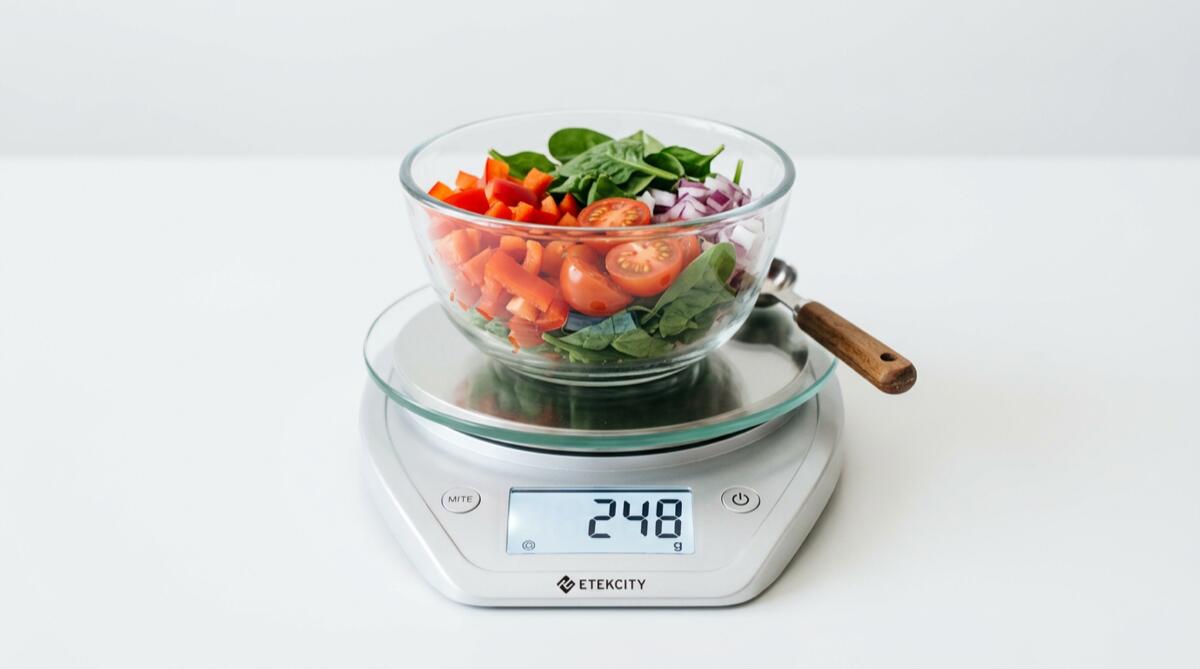
- The Fix: Invest in a digital kitchen scale and weigh your food in grams. Grams are an absolute unit of measurement. Fifty grams of peanut butter is always fifty grams, regardless of the spoon you use. If you need help getting started with accurate tracking, read our complete beginner's guide on how to count calories.
2. Forgetting the "Invisible" Calories
You logged your chicken breast, your rice, and your broccoli. But did you log the tablespoon of olive oil you used to pan-fry the chicken? Did you track the butter you melted over the broccoli? What about the splash of heavy cream in your morning coffee?
Fats are incredibly calorie-dense. A single tablespoon of olive oil contains roughly 120 calories. If you use a generous pour without measuring, you could easily be adding 300-400 unlogged calories to your daily intake. This alone is enough to completely wipe out a standard weight-loss deficit.
- The Fix: Log your cooking oils, butter, sauces, and dressings before you pour them. Get into the habit of placing your cooking pan on the scale, zeroing it out, and pouring your oil to measure the exact gram weight.
3. Logging Food in the Wrong State (Raw vs. Cooked)
This is a classic tracking trap. You weigh 100g of cooked pasta, but you log it using an entry for 100g of dry pasta. Or, you weigh 200g of raw chicken breast, but log it as cooked chicken. Why does this matter?
Foods change weight drastically during the cooking process. Pasta and rice absorb water, making them heavier. A 100g portion of raw rice turns into roughly 300g of cooked rice. Conversely, meats lose water and fat when cooked, becoming lighter. If you mix up raw and cooked entries, your calorie count will be wildly inaccurate.
- The Fix: Always try to weigh your food in its raw, uncooked state. The nutritional information on packaging almost always refers to the raw product unless stated otherwise. If you must weigh food after it's cooked, ensure you select a specific "cooked" entry in your tracking app.
4. The "Bite, Lick, and Taste" Habit
A bite of your partner's sandwich. Licking the spoon after making a dessert. Finishing the last few fries on your kid's plate. Tasting the pasta sauce three times while it simmers. These tiny moments seem completely harmless. After all, it's just one bite, right?
Unfortunately, your body doesn't ignore calories just because you ate them standing up or off someone else's plate. These bites, licks, and tastes (often referred to as BLTs) can easily add up to 200-300 calories a day.
- The Fix: Be mindful of mindless eating. If you bite it, write it. Even better, try to limit snacking while cooking and portion out exactly what you intend to eat.
5. Overestimating Calories Burned from Exercise
Many people link their fitness trackers to their calorie counting apps and "eat back" the calories they burn. The problem? Fitness trackers and smartwatches are notoriously inaccurate when it comes to estimating energy expenditure. Studies have shown that some devices overestimate calories burned by up to 90%.
If your watch says you burned 500 calories on your run, and you eat an extra 500 calories to compensate, you might actually be putting yourself in a calorie surplus. To understand how your daily activity actually impacts your metabolism, read our article explaining .
- The Fix: Do not rely on fitness trackers for your diet. Instead, calculate your total daily energy expenditure using a reliable method. Check out our guide on . Set your activity level appropriately, and eat to that target without eating back exercise calories.
6. Forgetting Liquid Calories
Juices, sodas, sweetened teas, and alcoholic beverages are a massive source of hidden calories. Because liquids don't trigger the same satiety signals in your brain as solid food, it is incredibly easy to consume hundreds of calories without feeling full.
A large latte with flavored syrup can pack over 300 calories. A couple of craft beers on a Friday night? That's easily 400-500 calories.
- The Fix: Stick to water, black coffee, unsweetened tea, or zero-calorie beverages whenever possible. If you do consume caloric drinks, make sure they are meticulously logged.
7. The Weekend Erase
You track perfectly from Monday to Friday afternoon. Then the weekend hits. You go out for dinner, have a few drinks, skip tracking on Sunday, and tell yourself you'll get back on track on Monday.
Weight loss is dictated by your average caloric intake over time, not just your "good" days. If you are in a 300-calorie deficit for five days (saving 1,500 calories), but overeat by 1,000 calories on Saturday and 800 calories on Sunday, you have completely erased your deficit for the week. In fact, you are now in a surplus.
- The Fix: Consistency is key. You don't have to be perfect on weekends, but you still need to be aware. If you find strict tracking too stressful on weekends, you might want to read our article on Calorie Counting vs Intuitive Eating to find a balance that works for your lifestyle.
How to Fix Your Tracking Forever
Now that you know the mistakes, how do you fix them without making tracking feel like a second full-time job? The answer lies in using better tools.
Traditional calorie tracking apps require you to manually search through massive, confusing databases filled with duplicate and incorrect entries. This fatigue is exactly why people stop weighing their food or skip logging their meals altogether.
This is where MacroLog changes the game. As an AI-powered calorie tracker, MacroLog removes the friction from logging your food. Instead of typing and searching, you can simply use voice logging to say, "I had 150 grams of raw chicken breast cooked in a tablespoon of olive oil," and the AI will accurately calculate and log the meal for you.
Not sure how much something weighs? MacroLog features advanced photo recognition. Just snap a picture of your plate, and the AI will help identify the foods and estimate the portions. Combined with a lightning-fast barcode scanner, you can ensure that you are logging the exact product you are consuming, eliminating the guesswork that leads to stalled weight loss.
The Bottom Line
Calorie counting is a powerful tool, but it is only as effective as the data you provide. If you are asking yourself, , remember that the number only matters if you are tracking it accurately. By weighing your food in grams, accounting for cooking oils, logging raw ingredients, and staying consistent through the weekend, you will finally see the scale move.
Stop letting hidden calories sabotage your progress. Make tracking effortless, accurate, and even enjoyable. Download MacroLog today and take control of your nutrition with the power of AI.
