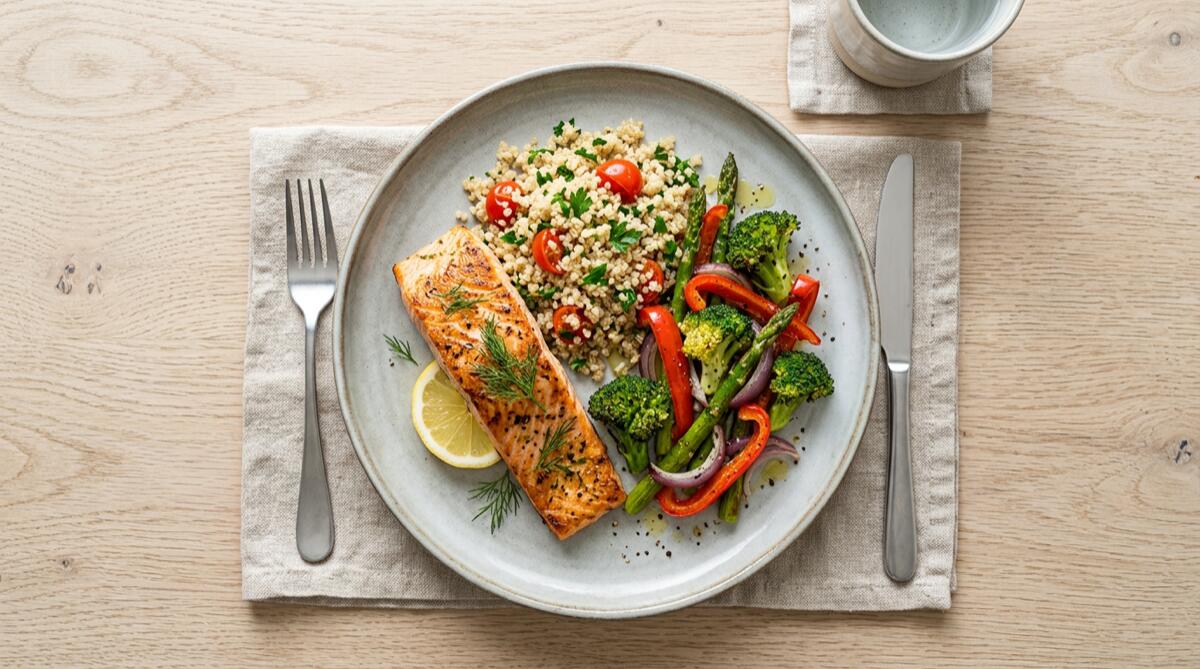
The Ultimate Guide: How to Count Macros
If you have ever tried to lose weight, build muscle, or simply improve your body composition, you have probably heard the phrase "If It Fits Your Macros" (IIFYM) or been told to track your macronutrients. But knowing that you should track them and actually knowing how to count macros are two entirely different things.
While mastering how to count calories is the essential first step for weight management, tracking your macros takes your nutrition to the next level. It ensures that the weight you lose comes from fat rather than muscle, and the weight you gain builds a lean physique rather than just adding body fat.
In this comprehensive guide, we will break down exactly what macros are, why they matter, and provide a simple, step-by-step framework to help you calculate and track them effectively.
What Are Macros?
Macronutrients, affectionately known as "macros," are the three primary building blocks of the food we eat. They provide the energy (calories) your body needs to function, survive, and thrive. The three macronutrients are:
- Protein: Contains 4 calories per gram. Essential for building and repairing tissues, preserving muscle mass, and keeping you full.
- Fats: Contain 9 calories per gram. Crucial for hormone production, brain function, and nutrient absorption.
- Carbohydrates: Contain 4 calories per gram. Your body's preferred and most efficient energy source, especially for high-intensity workouts.
Alcohol is technically a fourth macronutrient (providing 7 calories per gram), but since it offers no nutritional value, it is not factored into a standard macro-tracking plan.
Step 1: Determine Your Calorie Needs
Before you can figure out how to count macros, you must determine how many calories you need to consume each day. Your macros must add up to your total daily calorie target. If you are aiming for weight loss, you need to establish a .
To find your maintenance calories, you need to calculate your Total Daily Energy Expenditure. You can learn exactly how to do this in our comprehensive guide on . The most scientifically accurate way to find your baseline is by using the Mifflin-St Jeor equation.
Example: Let's say your TDEE is 2,500 calories, and you want to lose weight safely. You decide on a 500-calorie deficit, making your daily goal 2,000 calories.
Step 2: Set Your Protein Target
Protein is the most critical macronutrient to set first, especially if you are in a calorie deficit. High protein intake prevents muscle breakdown, increases the thermic effect of food (meaning you burn more calories digesting it), and provides massive satiety benefits.
How much do you need?
Scientific studies generally recommend consuming between 0.8 to 1.2 grams of protein per pound of body weight (or 1.8 to 2.6 grams per kilogram) for active individuals looking to optimize body composition.
Example: If you weigh 160 lbs, a good target is 160 grams of protein.
Since protein has 4 calories per gram: 160g x 4 = 640 calories.
Step 3: Establish Your Fat Intake
Fats are essential for keeping your hormones (like testosterone and estrogen) balanced and ensuring you can absorb fat-soluble vitamins (A, D, E, and K). Dropping your fats too low can lead to lethargy, hormone disruptions, and poor mood.
How much do you need?
A safe baseline is allocating 25% to 30% of your total daily calories to healthy fats.
Example: 25% of our 2,000-calorie goal is 500 calories.
Since fat has 9 calories per gram: 500 / 9 = 55 grams of fat.
Step 4: Fill the Remaining Calories with Carbs
Once your protein and fats are set, the remaining calories in your budget are allocated to carbohydrates. Carbs fuel your brain, your workouts, and your daily activities.
How to calculate it:
Total Calories - (Protein Calories + Fat Calories) = Carb Calories
Example:
Total: 2,000 calories
Protein: 640 calories
Fat: 500 calories
Remaining: 2,000 - (640 + 500) = 860 calories for carbs.
Since carbs have 4 calories per gram: 860 / 4 = 215 grams of carbs.
Your Final Macro Split: 160g Protein / 55g Fat / 215g Carbs = 2,000 Calories.
Step 5: How to Track Your Macros Easily
Now that you have your targets, the daily execution begins. In the past, this meant keeping a physical journal, reading every nutrition label, and doing mental math all day. Fortunately, technology has completely revolutionized .
This is where MacroLog becomes your ultimate tool. Instead of manually searching for every single ingredient, MacroLog uses advanced AI to make tracking frictionless. You can simply snap a photo of your meal, and the AI will recognize the food and estimate the macros. Cooking a complex recipe? Use the barcode scanner to instantly log ingredients. In a rush? Just use voice logging and say, "I ate 200 grams of grilled chicken breast and a cup of white rice," and the app will instantly populate your diary.
Common Mistakes When Counting Macros
1. Weighing Food After Cooking
This is a classic reason why your calorie count is wrong. Meats lose water and shrink when cooked, while grains like rice and pasta absorb water and expand. Always weigh your food raw and uncooked for the most accurate macro data.
2. Forgetting the "Hidden" Macros
A splash of olive oil in the pan, a handful of almonds while walking out the door, or the cream in your morning coffee—these "invisible" macros add up quickly. One tablespoon of olive oil packs 14 grams of pure fat (about 120 calories). Log everything!
3. Becoming Too Obsessive
Remember that macro targets are exactly that—targets, not absolute limits. Hitting within 5-10 grams of your goal is a massive success. You must learn to maintain a healthy relationship with food.
Should You Track Macros Forever?
Many beginners wonder if they will be tied to a food scale for the rest of their lives. The short answer is no. Tracking macros is a phenomenal educational tool. Over time, you will develop an intuitive understanding of portion sizes and macronutrient profiles. You can learn more about the transition phases in our guide on how long you should track calories.
Start Your Macro Journey Today
Learning how to count macros is one of the highest-ROI skills you can develop for your health and fitness. It gives you the freedom to eat the foods you love while systematically moving toward your goals.
Ready to put this knowledge into practice without the headache of manual math? Download MacroLog today. Let our AI handle the math, the barcode scanning, and the food recognition so you can focus on cooking delicious meals and crushing your goals!
Still choosing a tool? Compare the shortlist in best macro tracking apps in 2026, or read the head-to-head write-ups on MacroLog vs MyFitnessPal and MacroLog vs MacroFactor.
