Introduction: The Buzz Around Macros
If you have ever looked into weight loss, muscle building, or just general fitness, you have almost certainly heard the phrase "track your macros" or "If It Fits Your Macros" (IIFYM). But for many beginners, this terminology can feel like an entirely different language. You might find yourself asking: what are macros, and why does everyone in the fitness community seem so obsessed with them?
While learning how to count calories is the essential first step for weight management, understanding macronutrients is what takes your nutrition to the next level. Calories determine how much weight you lose or gain, but macronutrients determine what kind of weight you lose or gain—meaning the difference between losing body fat versus losing hard-earned muscle.
In this comprehensive guide, we will break down exactly what macros are, how they function in your body, and how you can calculate the perfect macronutrient ratio for your specific goals.
What Are Macros?
"Macros" is simply short for macronutrients. These are the primary building blocks of the food you eat. Your body requires them in relatively large amounts (hence the prefix "macro") to survive, grow, and function optimally. They provide the energy—measured in calories—that fuels your daily activities, workouts, and basic bodily functions.
There are three main macronutrients:
- Protein
- Carbohydrates
- Fats
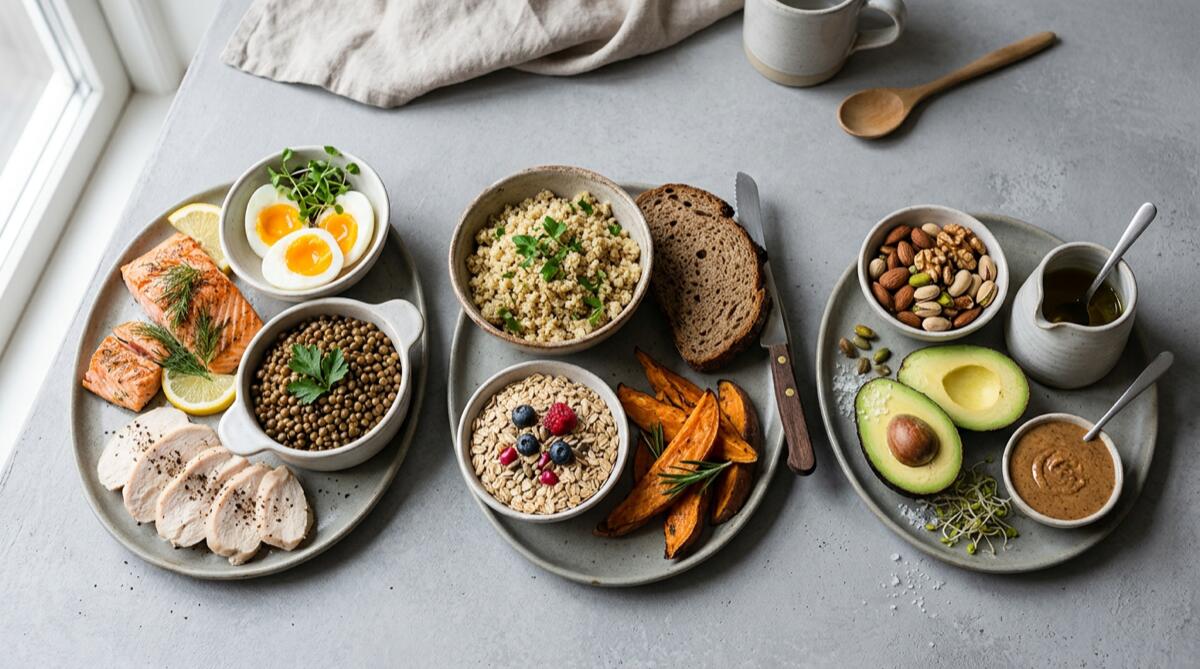
Every piece of food you consume is made up of one, two, or a combination of all three of these macros. For example, a chicken breast is almost entirely protein, olive oil is entirely fat, and a bowl of oatmeal is primarily carbohydrates. A slice of pizza, on the other hand, contains a significant amount of all three.
Note: Micronutrients, by contrast, are vitamins and minerals. Your body needs them in much smaller amounts (micro), and while they are vital for overall health and disease prevention, they do not contain calories.
The Big Three: Breaking Down Macronutrients
To truly understand how to optimize your diet, you need to know what each macronutrient does for your body.
1. Protein: The Building Block
Protein is arguably the most celebrated macronutrient in the fitness world, and for good reason. It is responsible for the growth, repair, and maintenance of your body's tissues, including muscle, skin, hair, and nails. Furthermore, protein plays a crucial role in producing enzymes and hormones.
- Energy density: 4 calories per gram
- Why you need it: When you exercise, you create micro-tears in your muscle fibers. Protein provides the amino acids necessary to repair these tears, making your muscles stronger and larger. Additionally, protein is highly satiating, meaning it keeps you feeling full longer, which is incredibly helpful when you are in a calorie deficit.
- Best sources: Lean meats (chicken, turkey, lean beef), fish, eggs, dairy products (Greek yogurt, cottage cheese), tofu, tempeh, legumes, and high-quality protein powders.
2. Carbohydrates: The Energy Engine
Despite being unfairly demonized by various diet trends over the years, carbohydrates are your body's preferred and most efficient source of energy. When you consume carbs, your body breaks them down into glucose, which fuels your brain, your central nervous system, and your muscles during high-intensity workouts.
- Energy density: 4 calories per gram
- Why you need it: Carbs fuel your workouts and help replenish muscle glycogen stores after you exercise. They also play a vital role in brain function. Not all carbs are created equal, however. You should focus primarily on complex carbohydrates, which contain fiber and digest slowly, providing a steady stream of energy rather than a rapid spike and crash.
- Best sources: Oats, brown rice, quinoa, sweet potatoes, whole grain bread, fruits, and vegetables.
3. Fats: The Essential Protector
Dietary fat does not make you fat—eating too many total calories makes you fat. In fact, dietary fats are absolutely essential for your survival. They protect your organs, support cell growth, keep your body warm, and are necessary for the absorption of fat-soluble vitamins (A, D, E, and K).
- Energy density: 9 calories per gram (more than double the calories of protein and carbs)
- Why you need it: Fats are crucial for hormone production, including testosterone and estrogen. They also support brain health and joint lubrication. Because fats are so calorie-dense, portion control is key, but they should never be eliminated from your diet.
- Best sources: Avocados, nuts (almonds, walnuts), seeds (chia, flaxseed), olive oil, fatty fish (salmon, mackerel), and whole eggs.
What About Alcohol?
While not considered an essential macronutrient because your body doesn't need it to survive, alcohol does contain calories. Specifically, alcohol provides 7 calories per gram. These are often referred to as "empty calories" because they offer no nutritional value. If you drink, these calories still count toward your daily total and must be factored into your diet plan.
Why You Should Care About Macros, Not Just Calories
If weight loss is purely about calories in versus calories out, why bother tracking macros? The answer lies in body composition.
If you eat 2,000 calories a day consisting entirely of donuts and soda, you might lose weight if your maintenance calories are 2,500. However, the weight you lose will likely include a significant amount of muscle mass, and you will probably feel lethargic, hungry, and moody. Your body will lack the protein needed to maintain muscle and the healthy fats required for hormone regulation.
By tracking your macros, you ensure that the weight you lose comes primarily from fat while preserving your lean muscle mass. This is the core principle of science-based calorie tracking for weight loss.
How to Calculate Your Macro Needs
Calculating your ideal macronutrient split doesn't have to be complicated. Here is a step-by-step approach to finding the right numbers for your body.
Step 1: Determine Your Total Daily Energy Expenditure (TDEE)
Before you can split your macros, you need to know your calorie target. You can learn exactly how to find this by reading our guide on how to use a TDEE calculator. We highly recommend using the Mifflin-St Jeor equation, which is widely considered the most accurate formula for calculating your Basal Metabolic Rate (BMR).
Once you have your TDEE, decide on your goal. If you want to lose weight, subtract 300-500 calories. If you want to build muscle, add 200-300 calories. If you want to maintain, keep the number as is. For more details, check out our guide on how many calories you should eat per day.
Step 2: Set Your Protein Target
Protein is the most critical macro to set first. A standard, highly effective recommendation for active individuals is to consume roughly 0.8 to 1.2 grams of protein per pound of body weight (or 1.8 to 2.6 grams per kilogram). For example, a 150 lb person might aim for 150 grams of protein.
Calculation: 150g protein x 4 calories/gram = 600 calories from protein.
Step 3: Set Your Fat Target
Fats should generally make up 20% to 30% of your total daily calories. This ensures adequate hormone production and overall health.
Calculation: Let's say your daily calorie goal is 2,000 calories. 25% of 2,000 is 500 calories. Since fat has 9 calories per gram, divide 500 by 9 to get roughly 55 grams of fat.
Step 4: Fill the Rest with Carbohydrates
Your remaining calories will come from carbs. Simply subtract your protein and fat calories from your daily total, and divide the remainder by 4 (since carbs have 4 calories per gram).
Calculation: 2,000 total calories - 600 (from protein) - 500 (from fat) = 900 remaining calories. 900 / 4 = 225 grams of carbs.
Your final daily macro split for a 2,000 calorie diet would be: 150g Protein / 55g Fat / 225g Carbs.
Tracking Macros the Easy Way
Now that you know your numbers, how do you actually track them without losing your mind? This is where technology steps in to save the day.
We believe tracking should be effortless. That is why we built MacroLog, an AI-powered calorie tracker designed to take the friction out of logging your meals. Instead of manually searching for "medium apple" or "grilled chicken breast" and guessing the weight, MacroLog allows you to:
- Use Photo Recognition: Simply snap a picture of your plate, and our AI will analyze the food, estimate the portion size, and instantly log the macros.
- Use Voice Logging: Just tell the app what you ate. Say, "I had a bowl of oatmeal with a scoop of whey protein and a tablespoon of peanut butter," and MacroLog will calculate the exact protein, carbs, and fats in seconds.
- Scan Barcodes: Instantly pull up the exact nutritional profile of any packaged food.
Using a smart tool makes it incredibly easy to track calories without becoming obsessive.
Common Macro Tracking Mistakes
As you begin your macro-tracking journey, watch out for these common pitfalls:
- Obsessing Over Exact Grams: You do not need to hit your macros to the exact decimal point. Being within 5-10 grams of your daily targets is perfectly fine. Consistency matters more than perfection.
- Forgetting Cooking Oils: A tablespoon of olive oil contains 120 calories and 14 grams of fat. If you don't log the oil you cook with, you could easily be consuming hundreds of hidden calories.
- Ignoring Fiber: While tracking the big three is important, don't forget about fiber (a type of carbohydrate). Aim for 25-35 grams of fiber per day to support digestion and gut health.
- Tracking Raw vs. Cooked Inconsistently: Meat shrinks when cooked (losing water), while rice and pasta expand (absorbing water). Always log your food in the state you weigh it. If you weigh raw chicken, log it as raw chicken.
Conclusion
Understanding what macros are is the key to unlocking your body's true potential. By balancing your protein, carbohydrates, and fats, you can optimize your energy levels, build lean muscle, and shed unwanted body fat effectively.
Remember, nutrition is a marathon, not a sprint. If you are wondering how long you should track calories, the goal is to do it long enough to build an intuitive understanding of portion sizes and food composition.
Ready to take control of your diet the smart way? Stop guessing and start progressing. Download MacroLog today and let our AI do the heavy lifting for you!


