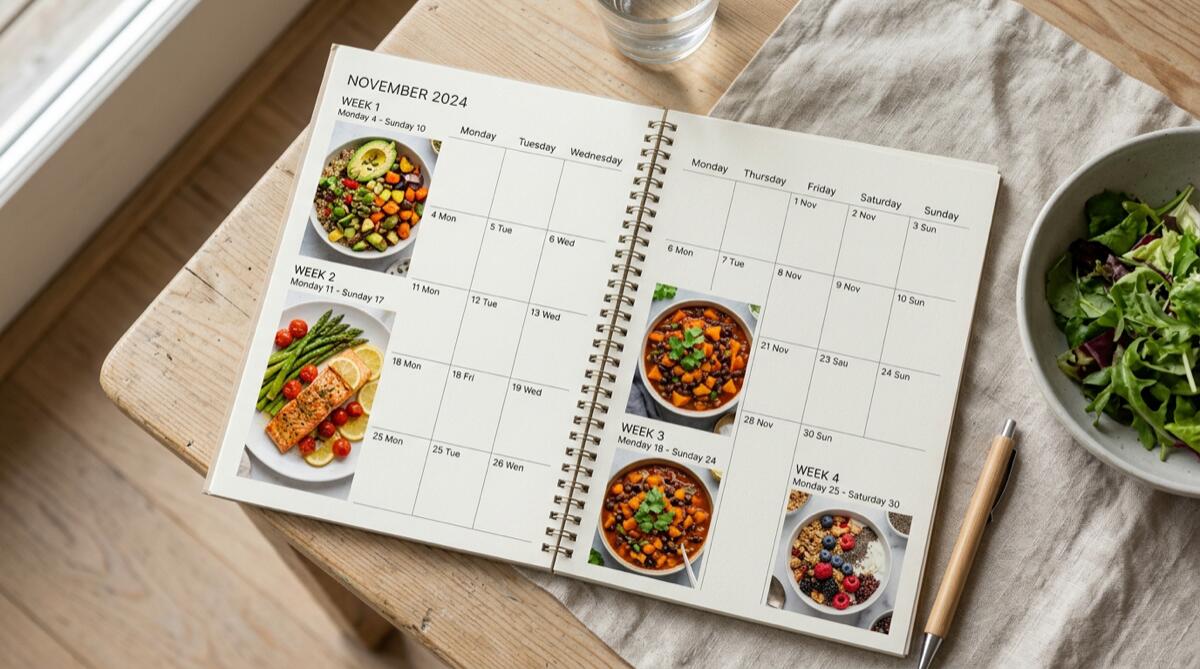
The Journey Begins: Why Your First 30 Days Matter
Making the decision to start calorie tracking is one of the most empowering steps you can take toward understanding your body and achieving your health goals. However, the initial phase can feel overwhelming. Between weighing your food, scanning barcodes, and understanding macronutrients, it is easy to experience information overload. That is exactly why we have broken down this process into a manageable, day-by-day roadmap.
Research shows that it takes time to build a sustainable habit. By spreading the learning curve over 30 days, you give your brain the necessary time to adapt. Whether your goal is to lose weight, build muscle, or simply maintain your current physique while eating better, this guide will walk you through everything you need to know. Let's embark on your first month of tracking, ensuring you build a foundation that lasts.
Phase 1: The Observation Phase (Days 1-7)
Day 1-3: Just Log It
Your only goal for the first three days is to log what you eat. Do not try to change your diet. Do not restrict your favorite snacks. If you are going to eat a donut, eat the donut—but log it. The key to a successful start is awareness. Many beginners fail because they try to overhaul their entire diet on day one. For a deeper understanding of the basics, check out our guide on How to Count Calories: The Complete Beginner's Guide.
During these first few days, you might find logging tedious. This is where MacroLog shines. Instead of typing out every ingredient, you can simply use the AI voice logging feature. Just say, "I had two scrambled eggs with a slice of sourdough toast," and the app will do the heavy lifting for you.
Day 4-5: Discovering Your Baselines
Now that you have a few days of data, it is time to look at the numbers. You might be surprised by how many calories are in your daily latte or that handful of nuts you grab from the pantry. This is the perfect time to calculate your Total Daily Energy Expenditure (TDEE). Your TDEE is the total number of calories your body burns in a day. Learn more about this crucial metric in our article: TDEE Explained: How to Use a TDEE Calculator for Weight Loss.
It is also important to understand the difference between your resting burn rate and your active burn rate. Read up on BMR vs TDEE: What's the Difference and Why It Matters so you know exactly what these numbers mean for your body.
Day 6-7: The Hidden Calories
As you round out your first week, start paying attention to the sneaky calories that often go unlogged: cooking oils, sauces, dressings, and small bites taken while cooking. A single tablespoon of olive oil packs about 120 calories! If you feel like you are tracking everything but the scale is not moving, you might be missing these hidden culprits. We highly recommend reading Why Your Calorie Count Is Wrong (And How to Fix It) to tighten up your tracking accuracy.
Phase 2: The Action Phase (Days 8-14)
Day 8-10: Setting Your Calorie Target
Welcome to week two! You now have a clear picture of your current eating habits. It is time to set a goal. If your goal is weight loss, you need to establish a calorie deficit. But how much of a deficit is safe and sustainable? Dive into What Is a Calorie Deficit and How Does It Work? The Ultimate Guide to understand the science of energy balance.
To get the most accurate baseline for your calculations, you should familiarize yourself with the gold standard of metabolic formulas. Check out The Mifflin-St Jeor Equation Explained Simply: Calculate Your True Calorie Needs. Once you have your number, input it into MacroLog to set your daily goal.
Day 11-14: Making Smart Swaps
Instead of eating less food, focus on eating *smarter* food. This concept is known as calorie density. By swapping high-calorie, low-volume foods for low-calorie, high-volume foods, you can stay full while hitting your deficit. For example, swap a dense bagel for a bowl of oatmeal, or regular mayonnaise for Greek yogurt. If you are wondering about the scientific backing of this approach, read Calorie Tracking for Weight Loss: The Science-Based Approach.
Phase 3: The Macronutrient Phase (Days 15-21)
Day 15-17: Beyond the Calorie
By week three, tracking calories should feel like a normal part of your routine. Now, we introduce macronutrients: protein, carbohydrates, and fats. While calories dictate *how much* weight you lose or gain, macros dictate *what kind* of weight you lose or gain (fat vs. muscle). If you are new to this concept, start with What Are Macros? The Complete Guide to Macronutrients.
Protein is crucial for muscle retention and satiety. Carbohydrates provide energy for your workouts. But what about fats? Many beginners fear dietary fat, but it is essential for hormone regulation. Learn exactly how to balance this in How Much Fat Should You Eat Per Day? The Ultimate Guide.
Day 18-21: Dialing in Your Macros
Now that you understand what macros are, it is time to track them. This can seem mathematically daunting, but it doesn't have to be. Read our step-by-step tutorial on How to Count Macros: A Step-by-Step Guide.
With MacroLog, tracking macros is effortless. The app's AI photo recognition allows you to simply snap a picture of your meal, and it will instantly estimate the calories and macronutrient breakdown. It is like having a nutritionist in your pocket!
Phase 4: The Lifestyle Phase (Days 22-30)
Day 22-25: Navigating Social Events
You have been doing great, but suddenly you are invited to a birthday dinner or a weekend brunch. Do not panic. You do not need to bring a food scale to a restaurant. This is where you practice estimating and making mindful choices. Remember the principles of energy balance we discussed? If you need a refresher on why a single meal won't ruin your progress, read Do Calories Really Matter? The Science of Energy Balance.
Day 26-28: Avoiding Tracking Obsession
As you approach the end of your first month, it is crucial to check in on your mental health. Tracking should be a tool, not a master. If you find yourself stressing over 10 calories of spinach, it is time to take a step back. We highly recommend reading How to Track Calories Without Becoming Obsessive: A Guide to Healthy Calorie Tracking.
You might also be wondering how calorie tracking fits into other dietary philosophies. Is it possible to combine tracking with listening to your body's natural hunger cues? Explore the nuances in Calorie Counting vs Intuitive Eating: Which Is Right for You?.
Day 29-30: Looking Ahead
Congratulations! You have successfully completed your first 30 days. You now have a wealth of data about your body, your habits, and your relationship with food. The question now is: what comes next? Should you track forever? To plan your long-term strategy, check out How Long Should You Track Calories? The Complete Timeline.
Ready to Transform Your Health?
The first 30 days are just the beginning of a lifelong journey toward better health, improved energy, and a physique you are proud of. If you haven't already, make sure you have the right tools to support your goals. Ditch the clunky, outdated tracking apps that make logging a chore.
Experience the future of nutrition tracking with AI photo recognition, voice logging, and a massive verified food database. Start your journey today and download MacroLog to make hitting your goals easier than ever before!


