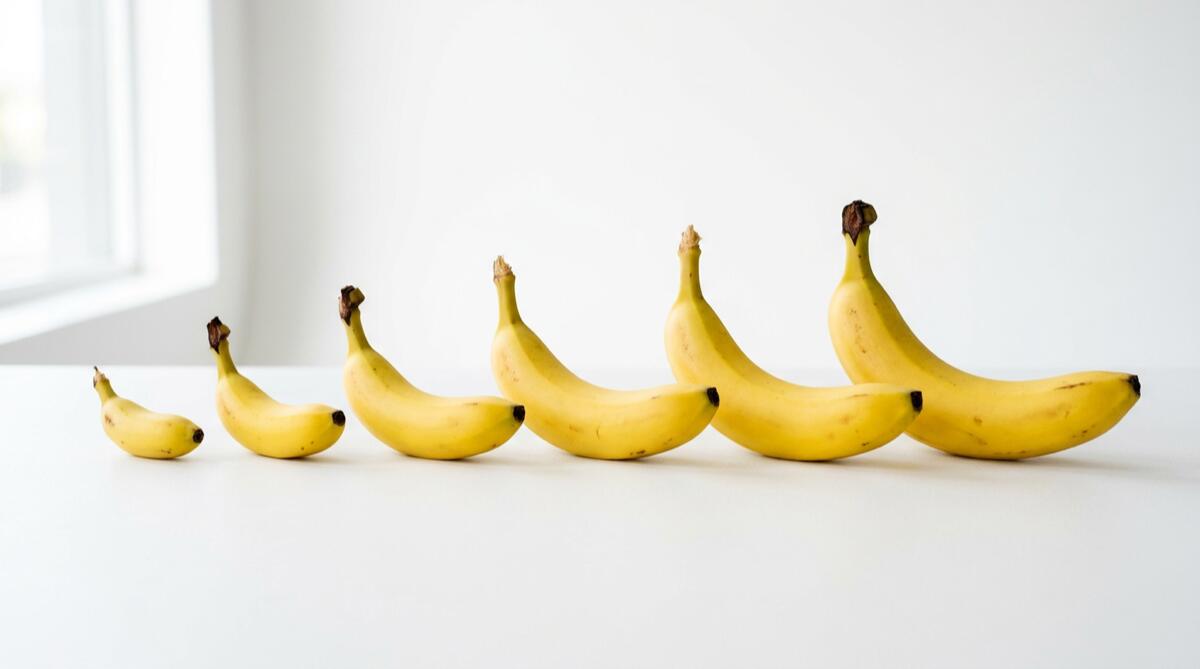
Bananas are arguably the world's most perfect fast food. They come in their own biodegradable packaging, they're affordable, and they offer a quick source of energy whether you're heading to the gym or rushing to work. But if you're keeping an eye on your energy intake, you've probably asked yourself: exactly how many calories in banana servings of different sizes?
It's a common question, and for good reason. Bananas are denser in carbohydrates and calories compared to watery fruits like strawberries or watermelon. However, they are also packed with essential nutrients that make them a fantastic addition to any diet. In this comprehensive guide, we'll break down the exact calories in a banana, explore its macronutrient profile, and show you how to easily fit this delicious fruit into your daily goals.
How Many Calories in a Banana? Size Matters
When you log a banana in a tracking app, you'll often see options like "small," "medium," or "large." But what do these sizes actually mean? The number of calories in a banana depends entirely on its size and weight. Here is a standard breakdown based on average sizes (measured without the peel):
- Extra small (less than 6 inches, ~81g): 72 calories
- Small (6–7 inches, ~101g): 90 calories
- Medium (7–8 inches, ~118g): 105 calories
- Large (8–9 inches, ~136g): 121 calories
- Extra large (9 inches or longer, ~152g): 135 calories
- Sliced (1 cup, ~150g): 134 calories
- Mashed (1 cup, ~225g): 200 calories
While estimating by length is okay in a pinch, it's not the most accurate method. If you want to be precise—especially if your goal is weight loss—we highly recommend using a digital food scale. Weighing your food in grams removes all the guesswork. If you're curious about why your estimations might be stalling your progress, check out our guide on Why Your Calorie Count Is Wrong (And How to Fix It).
Tracking doesn't have to be tedious, though. With MacroLog, our AI-powered calorie tracker, you can simply take a photo of your banana alongside your breakfast, or use voice logging to say, "I ate a 120-gram banana," and the app will instantly calculate the calories and macros for you.
The Macronutrient Breakdown of a Banana
Calories are only part of the story. To truly understand how a food impacts your body, you need to look at its macronutrients. If you're new to this concept, you might want to read .
For a standard medium banana (118 grams), the nutritional profile looks like this:
- Calories: 105
- Carbohydrates: 27 grams
- Fiber: 3.1 grams
- Sugars: 14.4 grams
- Protein: 1.3 grams
- Fat: 0.3 grams
Carbohydrates: Your Body's Preferred Energy Source
As you can see, bananas are almost entirely composed of carbohydrates. This is why they are a favorite among athletes for pre-workout fuel. The carbohydrates in bananas provide a quick, easily digestible source of glucose, which your muscles use for energy.
Protein and Fat
Bananas contain almost negligible amounts of protein and fat. If you are using a banana as a snack, it's often a smart idea to pair it with a source of protein or healthy fats—like a spoonful of peanut butter or a serving of Greek yogurt—to slow down digestion and keep you full for longer. Wondering how much fat you should be aiming for? Read our guide on How Much Fat Should You Eat Per Day?.
Ripe vs. Unripe Bananas: Does the Calorie Count Change?
A fascinating fact about bananas is how their nutritional composition shifts as they ripen. Whether a banana is green and firm or brown and spotty, the total calories in banana remain exactly the same. However, the type of carbohydrates changes significantly.
Green (Unripe) Bananas: These contain high amounts of resistant starch. Resistant starch acts like soluble fiber in your digestive system; it resists digestion and ends up feeding the beneficial bacteria in your gut. Because it's not fully broken down into sugar, green bananas have a lower glycemic index and will cause a slower, smaller rise in blood sugar.
Yellow and Brown (Ripe) Bananas: As a banana ripens, enzymes break down the resistant starch into simple sugars (sucrose, glucose, and fructose). This is why a brown, spotty banana tastes so much sweeter and is perfect for baking banana bread. Ripe bananas are easier to digest and provide faster energy.
Health Benefits: Beyond the Calories
When you track calories, it's easy to develop tunnel vision and only look at the numbers. But the quality of your food matters just as much as the quantity. The calories in a banana come packaged with a host of beneficial micronutrients:
- Potassium: A medium banana provides about 422mg of potassium (roughly 9% of your daily needs). Potassium is crucial for heart health, blood pressure regulation, and muscle function.
- Vitamin B6: Bananas are an excellent source of Vitamin B6, which helps your body metabolize amino acids and carbohydrates.
- Vitamin C: While you might associate Vitamin C with oranges, a medium banana actually provides about 10mg of this immune-boosting antioxidant.
- Magnesium: Important for bone health and energy production.
Are Bananas Good for Weight Loss?
There is a persistent myth in the diet industry that bananas are "fattening" because of their sugar and carb content. Let's set the record straight: no single food causes weight gain, and no single food causes weight loss. It all comes down to energy balance.
If you are in a calorie deficit—meaning you burn more calories than you consume—you will lose weight, even if you eat bananas every day.
In fact, bananas can be highly beneficial for weight loss. The 3.1 grams of fiber in a medium banana helps promote satiety, keeping you fuller for longer. Furthermore, replacing highly processed, calorie-dense snacks (like a 250-calorie candy bar) with a 105-calorie banana is a fantastic strategy for reducing your overall daily intake.
How to Fit Bananas into Your Diet
If you're learning How to Count Calories, you'll quickly realize that bananas are incredibly versatile. Here are a few smart ways to incorporate them without blowing your daily calorie budget:
- Pre-Workout Fuel: Eat a medium banana 30-45 minutes before a workout for a fast-digesting energy boost.
- Oatmeal Upgrade: Mash half a banana into your morning oats while they cook for natural sweetness, saving calories you might have spent on sugar or maple syrup.
- Protein Smoothies: Blend a frozen banana with protein powder, spinach, and almond milk for a thick, milkshake-like texture.
- Healthy Baking: Use mashed overripe bananas as a substitute for butter or oil in baking recipes.
The Bottom Line on Banana Calories
So, how many calories in a banana? On average, you're looking at about 105 calories for a medium-sized fruit. They are a nutrient-dense, affordable, and delicious carbohydrate source that can fit perfectly into any health or weight loss plan.
Remember, the key to successful weight management isn't demonizing specific foods like bananas; it's understanding your overall energy intake.
Ready to start tracking your nutrition the easy way? Stop guessing the sizes of your bananas and let AI do the heavy lifting. Download MacroLog today. With our advanced photo recognition, barcode scanner, and voice logging features, tracking your daily calories and macros has never been simpler.


