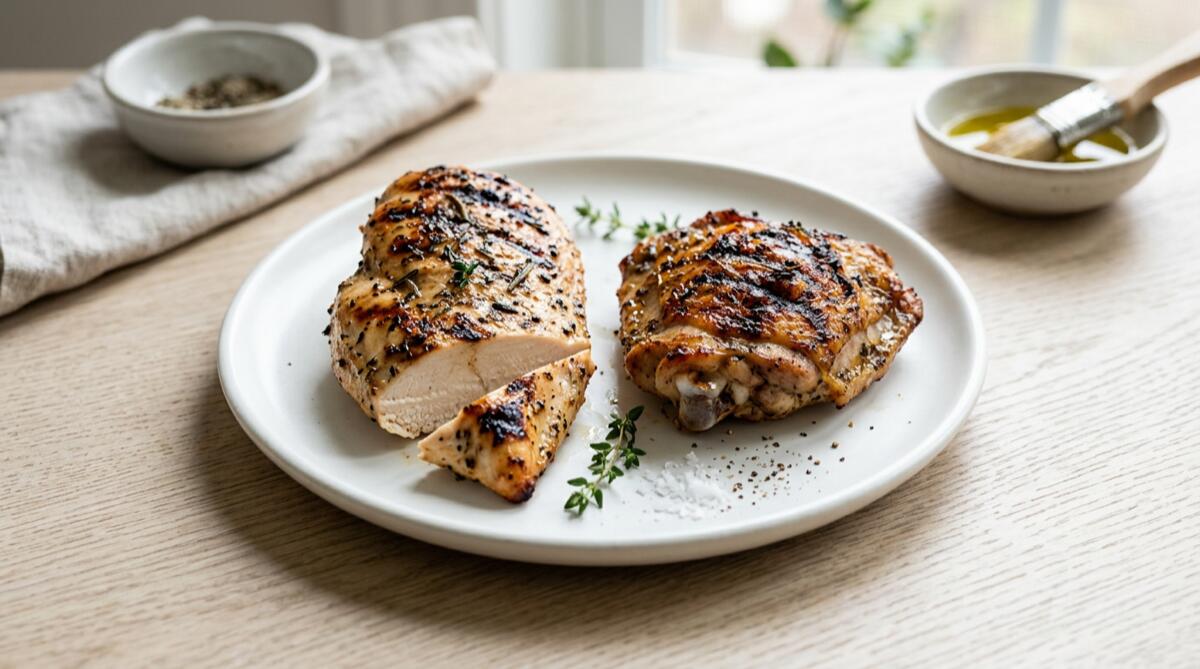
The Ultimate Poultry Showdown: Chicken Breast vs Thigh Nutrition
When it comes to building muscle, losing weight, or simply maintaining a healthy lifestyle, chicken is the undisputed king of dietary protein. It is versatile, affordable, and packed with essential nutrients. However, when you stand at the meat counter or browse the grocery store aisles, you are inevitably faced with a crucial decision: chicken breast or chicken thigh?
The chicken breast vs thigh nutrition debate is one of the most common discussions in the fitness and nutrition world. For decades, bodybuilders and dieters have championed the chicken breast as the ultimate clean food, while culinary enthusiasts and keto dieters have praised the chicken thigh for its superior flavor and juiciness. But what does the science actually say? In this comprehensive guide, we will break down the nutritional differences, explore which cut is best for your specific goals, and show you how to track them perfectly.
The Nutritional Breakdown: Macros and Calories
To truly understand the differences, we need to look at the raw data. The nutritional profile of chicken changes drastically depending on whether you leave the skin on or take it off. For the sake of a fair comparison, let's look at 100 grams (about 3.5 ounces) of raw, skinless, and boneless meat for both cuts.
Chicken Breast: The Lean Protein Powerhouse
Chicken breast is famous for being incredibly lean. It is the go-to choice for anyone looking to maximize protein intake while keeping calories as low as possible. If you are learning , chicken breast is often the easiest puzzle piece to fit into your daily targets.
- Calories: ~120 kcal
- Protein: 22.5 grams
- Fat: 2.6 grams
- Carbohydrates: 0 grams
As you can see, almost 80% of the calories in a skinless chicken breast come directly from protein. This makes it an incredibly efficient food for muscle repair and satiety.
Chicken Thigh: The Flavorful Alternative
Chicken thighs belong to the "dark meat" category of poultry. Because the legs of the chicken are used more frequently than the breast muscles, the meat contains more myoglobin (which gives it a darker color) and inherently carries more fat. If you want to know how much fat you should eat per day, incorporating chicken thighs can be a delicious way to hit that target.
- Calories: ~177 kcal
- Protein: 17.3 grams
- Fat: 11.9 grams
- Carbohydrates: 0 grams
While the protein is slightly lower, the fat content is significantly higher. This extra fat is precisely what makes chicken thighs so forgiving to cook—they rarely dry out, even if you accidentally leave them in the oven a few minutes too long.
Micronutrients: It is Not Just About Macros
When comparing chicken breast vs thigh nutrition, we must look beyond just protein and fat. The micronutrient profiles (vitamins and minerals) differ significantly between white and dark meat.
Why Dark Meat Shines in Minerals
Because chicken thighs are active muscles, they require more oxygen, which is transported by iron. As a result, dark meat is noticeably richer in iron and zinc. Zinc is crucial for immune function and hormone production, while iron is vital for preventing anemia and maintaining energy levels. If you struggle with low iron, swapping out breast for thigh meat a few times a week is a smart nutritional move.
Why White Meat Wins in B-Vitamins
On the other hand, chicken breast is a superior source of certain B-vitamins, particularly Vitamin B6 and Niacin (Vitamin B3). These vitamins play a critical role in energy metabolism—helping your body convert the food you eat into usable energy. A single serving of chicken breast can provide over 50% of your daily recommended intake of Niacin.
Which One Should You Choose for Your Goals?
There is no single "best" cut of chicken. The right choice depends entirely on your current health and fitness objectives. Let us break down a few common scenarios.
For Weight Loss and Calorie Deficits
If your primary goal is shedding body fat, you are likely operating in a calorie deficit. To understand this concept fully, you can read our guide on . When calories are restricted, volume eating becomes important. Chicken breast allows you to eat a larger physical volume of food for fewer calories compared to thighs. You get maximum protein to preserve muscle mass and keep you full, without spending too many of your precious daily calories on fat.
For Muscle Gain and Bulking
If you are in a building phase, eating enough calories can sometimes become a chore. Chicken thighs are excellent for bulking because they are more calorie-dense. The extra fat provides a healthy source of energy, and the superior flavor can make eating large quantities of food much more enjoyable.
For Keto and Low-Carb Diets
The ketogenic diet relies on high fat and moderate protein intake. Chicken breast is often too lean for strict keto dieters unless it is smothered in oil, butter, or cheese. Chicken thighs, naturally higher in fat, fit perfectly into a low-carb, high-fat macronutrient split.
Cooking Methods Matter: Don't Ruin the Macros!
It is crucial to remember that the baseline nutritional values of chicken can change dramatically based on how you prepare it. A lean chicken breast loses its low-calorie appeal if it is deep-fried in heavy batter. Conversely, a chicken thigh can be part of a lean diet if it is baked or grilled with minimal added oils.
Furthermore, weighing your food correctly is a common stumbling block. Do you weigh it raw or cooked? Chicken shrinks as it cooks and loses water weight, meaning 100g of cooked chicken has more calories than 100g of raw chicken. This is a massive reason why your calorie count might be wrong. Always try to log your meat in its raw state for the most accurate tracking.
How to Easily Track Your Chicken Meals
Tracking macros can sometimes feel tedious, especially when dealing with different cuts of meat, skin-on vs. skinless, and various cooking methods. This is where modern AI technology changes the game.
Instead of manually searching databases and guessing portion sizes, you can use MacroLog. MacroLog is an AI-powered calorie tracking app designed to make logging your food effortless. Eating a complex meal? Just snap a picture of your plate, and MacroLog's photo recognition will identify the chicken thighs, the roasted vegetables, and the rice. Prefer speaking? Use the voice logging feature and simply say, "I ate 200 grams of grilled chicken breast with a tablespoon of olive oil," and the app will instantly calculate the precise macros for you. You can even use the barcode scanner for packaged poultry at the grocery store.
The Verdict: Is One Really Better Than the Other?
In the great chicken breast vs thigh nutrition debate, there are no losers. Both cuts are excellent sources of high-quality protein and can easily fit into a balanced diet. If you are wondering , the answer is yes—and that is the main differentiator here.
Choose chicken breast when you need lean protein and have limited calories to spare. Choose chicken thighs when you want more flavor, have room for extra healthy fats, or want to boost your iron intake. Many people find success by rotating both into their meal prep to prevent diet fatigue and enjoy a wider spectrum of nutrients.
Ready to Take Control of Your Nutrition?
Whether you prefer the lean efficiency of the breast or the juicy richness of the thigh, tracking your intake is the key to hitting your goals. Stop guessing your macros and start tracking the smart way. Download MacroLog today to experience the fastest, easiest way to track your calories using AI photo recognition and voice logging. Your perfect diet is just a scan away!
