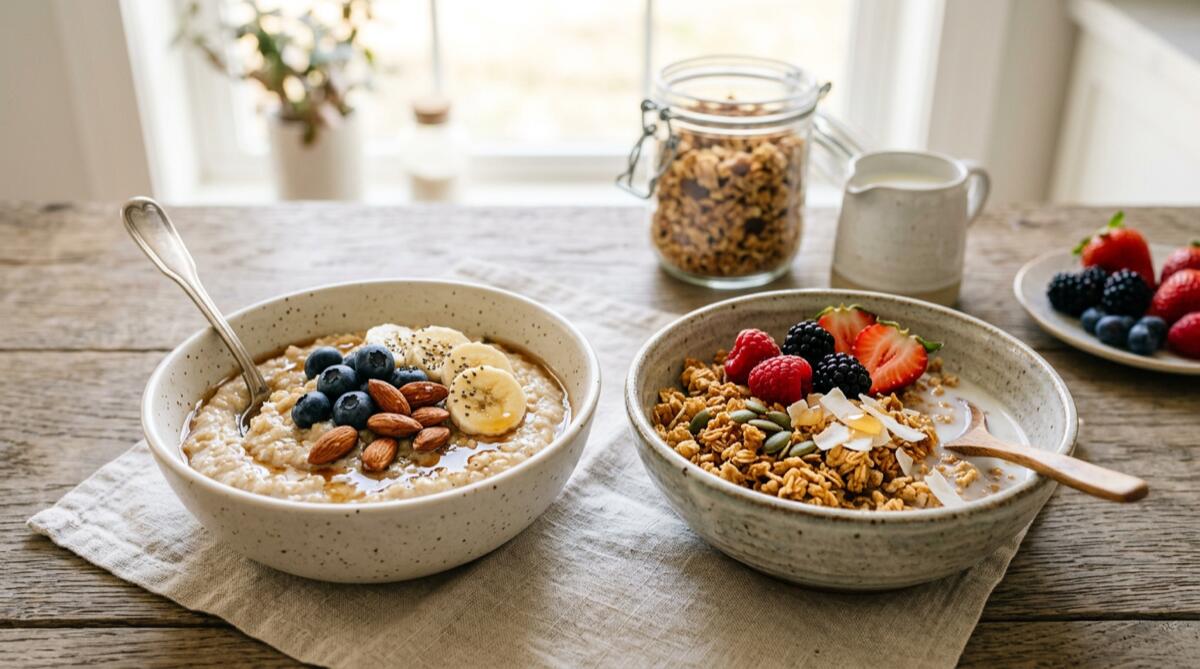
The Great Breakfast Debate: Oats vs Granola
Breakfast is often hailed as the most important meal of the day, setting the tone for your energy levels, cravings, and overall nutritional balance. When it comes to quick, healthy, and customizable morning meals, two contenders consistently dominate the spotlight: oats and granola. At first glance, they might seem like close cousins. After all, traditional granola is primarily made from rolled oats. However, when you dive into the oats vs granola debate, you quickly realize that their nutritional profiles, calorie densities, and impact on your daily macros are vastly different.
Whether you are trying to lose weight, build muscle, or simply maintain a balanced diet, understanding the macronutrient breakdown of your breakfast is crucial. In this comprehensive guide, we will dissect both options, compare their macros head-to-head, and help you decide which one deserves a spot in your morning bowl.
What Are Oats? The Unprocessed Powerhouse
Oats (Avena sativa) are a whole-grain cereal known for their incredible nutritional value and versatility. They come in several forms, including steel-cut, rolled (old-fashioned), and quick oats. Regardless of the processing method, oats retain their bran and germ, making them a fantastic source of complex carbohydrates and dietary fiber.
The Nutritional Profile of Oats
Let's look at the raw numbers. For a standard 100-gram serving of dry rolled oats, the macronutrient breakdown looks approximately like this:
- Calories: ~379 kcal
- Carbohydrates: 68g (including 10g of fiber and ~1g of naturally occurring sugar)
- Protein: 13g
- Fat: 6.5g
Oats are a nutritional powerhouse. They are incredibly rich in a specific type of soluble fiber called beta-glucan. Scientific studies have shown that beta-glucan is highly effective at lowering LDL (bad) cholesterol, stabilizing blood sugar levels, and significantly increasing feelings of fullness. If you want to dive deeper into how different nutrients affect your body, check out our guide on .
What Is Granola? The Crunchy Comfort
Granola is essentially a baked mixture of rolled oats, nuts, seeds, and a sweetener (like honey, maple syrup, or sugar), all bound together with a fat source (like coconut oil, butter, or canola oil). The baking process gives granola its signature crunch and irresistible toasted flavor. While it often contains dried fruits or chocolate chips to enhance the taste, these additions also significantly alter its nutritional profile.
The Nutritional Profile of Granola
Because granola recipes vary wildly between commercial brands and homemade batches, the macros can fluctuate. However, a typical 100-gram serving of store-bought granola generally provides:
- Calories: ~450 - 500 kcal
- Carbohydrates: 60g - 65g (including 5g - 8g of fiber and 20g - 25g of added sugar)
- Protein: 10g - 12g
- Fat: 15g - 20g
While granola does offer beneficial micronutrients from the nuts and seeds, it is essentially a calorie-dense food. The combination of added fats and sugars makes it incredibly palatable—meaning it's very easy to overeat. If you've ever poured a "normal" looking bowl of granola, you might be shocked to learn you've just served yourself 600 calories. This is exactly why learning How to Count Calories: The Complete Beginner's Guide is essential for long-term success.
Oats vs Granola: Head-to-Head Macro Comparison
To truly understand the oats vs granola dynamic, we need to compare them across the core macronutrients and overall energy density. Yes, they do, especially when choosing your breakfast staple.
1. Calories and Volume
The most significant difference between oats and granola is caloric density. 50 grams of dry oats (about 190 calories) expands significantly when cooked with water or milk, creating a large, voluminous bowl that physically fills your stomach. On the other hand, 50 grams of granola (about 235 calories) is barely a handful. You get significantly less food volume for more calories with granola, which can be a trap if you are not measuring your portions.
2. Carbohydrates and Sugar
Both are high-carbohydrate foods, but the quality of those carbs differs. Oats provide slow-digesting, complex carbohydrates with virtually zero added sugar. This results in a slow, steady release of energy throughout the morning. Granola, conversely, is often loaded with added sugars. A single serving can contain up to 5-6 teaspoons of sugar, leading to a rapid spike in blood glucose followed by a mid-morning crash.
3. Dietary Fats
Oats are naturally low in fat, containing just enough to help absorb fat-soluble vitamins. Granola is relatively high in fat due to the oils used in the baking process and the addition of nuts and seeds. While the fats from nuts are healthy unsaturated fats, the oils used in commercial granolas are often refined. If you are tracking your macros and wondering about your fat intake, our guide on How Much Fat Should You Eat Per Day? can help you find your ideal range.
4. Protein Content
Both oats and granola offer a moderate amount of plant-based protein (around 10-13g per 100g). However, neither is a complete protein source on its own. To make your breakfast optimal for muscle retention and satiety, you should pair either option with a high-protein source like Greek yogurt, milk, or a scoop of protein powder.
Which One Should You Choose Based on Your Goals?
There is no definitive "good" or "bad" food here; the winner of the oats vs granola debate depends entirely on your personal fitness goals and daily energy requirements.
When to Choose Oats (For Weight Loss)
If your primary goal is fat loss, oats are the undisputed champion. Because they are highly satiating and low in calorie density, they make it much easier to maintain a . You can eat a massive, filling bowl of oatmeal for under 300 calories. By adding berries and a scoop of whey protein, you create a nutrient-dense, low-calorie meal that will keep you full for hours.
When to Choose Granola (For Muscle Gain & Active Lifestyles)
If you are bulking, struggling to eat enough calories, or are a highly active endurance athlete, granola is a fantastic tool. When you need to consume 3,000+ calories a day, eating massive volumes of low-calorie food becomes a chore. Granola allows you to easily add 400-500 high-quality calories to your diet without feeling uncomfortably full. It's also an excellent pre-workout snack for quick energy.
How to Track Your Breakfast Effortlessly
Whether you choose the voluminous comfort of oatmeal or the sweet crunch of granola, tracking your intake is the only way to ensure your breakfast aligns with your goals. But let's be honest—weighing every single almond in your granola or calculating the macros of your custom oatmeal recipe can be tedious. This is where MacroLog changes the game.
MacroLog is an AI-powered calorie tracking app designed to remove the friction from dieting. If you are eating store-bought granola, simply use the barcode scanner to instantly log the exact nutritional information. Making a complex oatmeal bowl with chia seeds, peanut butter, and blueberries? Just use the voice logging feature and say, "I had 50 grams of oats with a cup of almond milk, a tablespoon of peanut butter, and a handful of blueberries." The AI will instantly calculate the macros for you. You can even use the photo recognition feature to snap a picture of your meal and let the app estimate the calories. Tracking has never been this easy.
The Verdict
In the battle of oats vs granola, context is king. Oats provide an incredible, low-calorie, high-volume base that is perfect for weight loss and sustained energy. Granola offers a delicious, calorie-dense crunch that is ideal for those looking to gain weight or fuel intense physical activity. Whichever you choose, the key to success is portion control and accurate tracking. If you want to learn more about the science of tracking, read our article on .
Ready to take control of your nutrition without the headache of manual calculations? Download MacroLog today and start tracking your meals with the power of AI!

