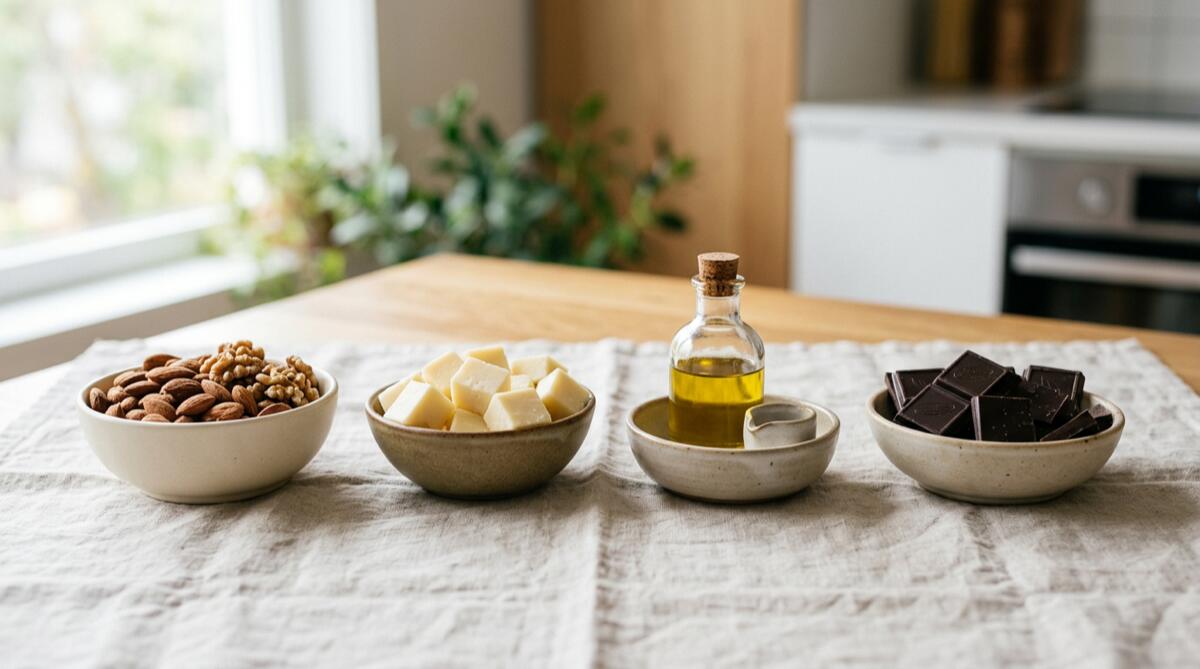
The Power of Calorie Density: A Double-Edged Sword
Have you ever looked at a tiny handful of almonds and wondered how it packs the same amount of energy as three whole apples? Welcome to the fascinating world of calorie density. Whether you are an athlete trying to bulk up, someone struggling with a poor appetite, or simply trying to lose weight without feeling starved, understanding the most calorie-dense foods is the ultimate game-changer for your nutrition strategy.
Calorie density refers to the number of calories in a given weight or volume of food. Foods with high calorie density pack a massive amount of energy into a very small physical footprint. While diet culture often demonizes these foods, they are incredibly valuable tools when used correctly. In this guide, we will explore the healthiest calorie dense foods, the sneaky ones to watch out for, and how to track them effortlessly.
What Are Calorie-Dense Foods?
At its core, food is just fuel. All foods are made up of macronutrients: proteins, carbohydrates, and fats. If you want to dive deeper into how these building blocks work, check out our complete guide on . The reason some foods are incredibly calorie-dense comes down to simple math: fats contain 9 calories per gram, while proteins and carbs contain only 4 calories per gram. Furthermore, foods that lack water (like dried fruits or oils) are vastly more calorie-dense than water-rich foods (like vegetables and fresh fruits).
Understanding this concept is crucial for managing your energy balance. If you're trying to figure out the science behind weight management, it all ties back to your Total Daily Energy Expenditure.
Why Would You Want to Eat Calorie-Dense Foods?
Most mainstream nutrition advice focuses on weight loss, which usually involves seeking out low-calorie, high-volume foods to stay full. However, incorporating the most calorie-dense foods into your diet is essential for several reasons:
- Healthy Weight Gain: If you are trying to build muscle (bulking) or recover from an illness, eating 3,000+ calories of salads and lean chicken is physically exhausting. Calorie-dense foods make hitting your surplus easy.
- High-Endurance Athletes: Runners, cyclists, and swimmers burn massive amounts of energy. They need compact fuel sources that won't cause digestive distress during training.
- Hormonal Health: Many calorie-dense foods are rich in dietary fats, which are vital for hormone production and nutrient absorption. Unsure of your fat requirements? Read How Much Fat Should You Eat Per Day?
The Healthiest Calorie-Dense Foods to Add to Your Diet
Not all high-calorie foods are created equal. Eating a 500-calorie donut provides a vastly different physiological response than eating 500 calories of macadamia nuts. Here are the best nutrient-packed, calorie-dense foods you should know about:
1. Nuts and Nut Butters
Nuts are nature's ultimate energy capsules. A mere 100 grams of walnuts or pecans contains nearly 650 calories. They are packed with heart-healthy monounsaturated fats, fiber, and protein. Peanut butter, almond butter, and cashew butter are fantastic ways to easily add 200-300 calories to a smoothie or a bowl of oatmeal. Just be sure to choose natural varieties without added sugars or hydrogenated oils.
2. Healthy Oils and Fats
Oils are 100% pure fat, making them the most calorie-dense foods on the planet. One single tablespoon of extra virgin olive oil contains about 120 calories. Drizzling olive oil over a salad, cooking your eggs in butter, or adding a splash of avocado oil to your roasted vegetables is an effortless way to boost your daily caloric intake without feeling overly full.
3. Avocados
Unlike most fruits, which are primarily carbohydrates and water, avocados are rich in healthy fats. A single large avocado can pack up to 300-350 calories. They are incredibly versatile—perfect for mashing on toast, blending into creamy smoothies, or slicing into salads.
4. Dried Fruits
When you remove the water from fruit, you shrink its volume but keep all the calories and sugar. A cup of fresh grapes has about 60 calories, but a cup of raisins (dried grapes) contains nearly 500 calories! Dates, dried apricots, and prunes are excellent sources of quick energy and fiber, making them perfect pre-workout snacks.
5. Dark Chocolate
High-quality dark chocolate (70% cocoa or higher) is a delicious way to sneak in extra calories. A standard 100-gram bar contains around 600 calories, alongside a hefty dose of antioxidants, magnesium, and iron.
The "Sneaky" Calorie Bombs to Watch Out For
If your goal is weight loss, being unaware of calorie density can completely sabotage your progress. You might think you're eating a "healthy" salad, but a heavy pour of ranch dressing, a handful of croutons, and a sprinkle of cheese can easily turn a 200-calorie meal into an 800-calorie bomb. To understand how this impacts your weight loss journey, read our guide on .
Watch out for these highly palatable, calorie-dense items:
- Liquid Calories: Fancy coffee drinks, sodas, and even fruit juices provide hundreds of calories but zero satiety. Your brain doesn't register liquid calories the same way it does solid food.
- Ultra-Processed Snacks: Potato chips, cookies, and pastries are engineered to be hyper-palatable. They combine fats and refined carbs, making it incredibly easy to eat 1,000 calories in one sitting without feeling full.
- Restaurant Sauces: Chefs make food taste amazing by using generous amounts of butter, oil, and heavy cream.
How to Track Calorie-Dense Foods Without the Headache
Because calorie-dense foods pack so much energy into a small volume, eyeballing portions is notoriously difficult. Guessing the amount of peanut butter on your toast could mean the difference between logging 100 calories and actually consuming 350. This is exactly Why Your Calorie Count Is Wrong (And How to Fix It).
To get accurate data without the stress, you need the right tools. This is where MacroLog steps in. Forget about manually searching through endless databases. With MacroLog, you can simply take a photo of your meal, and the AI will analyze the ingredients and estimate the portions. Did you use a specific brand of olive oil? Just use the lightning-fast barcode scanner. You can even use voice logging to say, "I had two tablespoons of peanut butter and a banana," and the app will log it instantly.
Tracking doesn't have to be a chore. If you're worried about becoming too focused on the numbers, check out our guide on .
Finding Your Balance
Whether you are trying to gain weight or lose it, understanding calorie density puts you in the driver's seat of your nutrition. You don't need to fear the most calorie-dense foods, nor do you need to avoid them. By combining high-volume, low-calorie foods (like vegetables and lean proteins) with strategic portions of calorie-dense healthy fats and carbs, you can create a balanced, sustainable diet that fuels your specific goals.
Ready to take control of your nutrition with the smartest AI tracker on the market? Download MacroLog today and make tracking your calories and macros easier than ever before!


