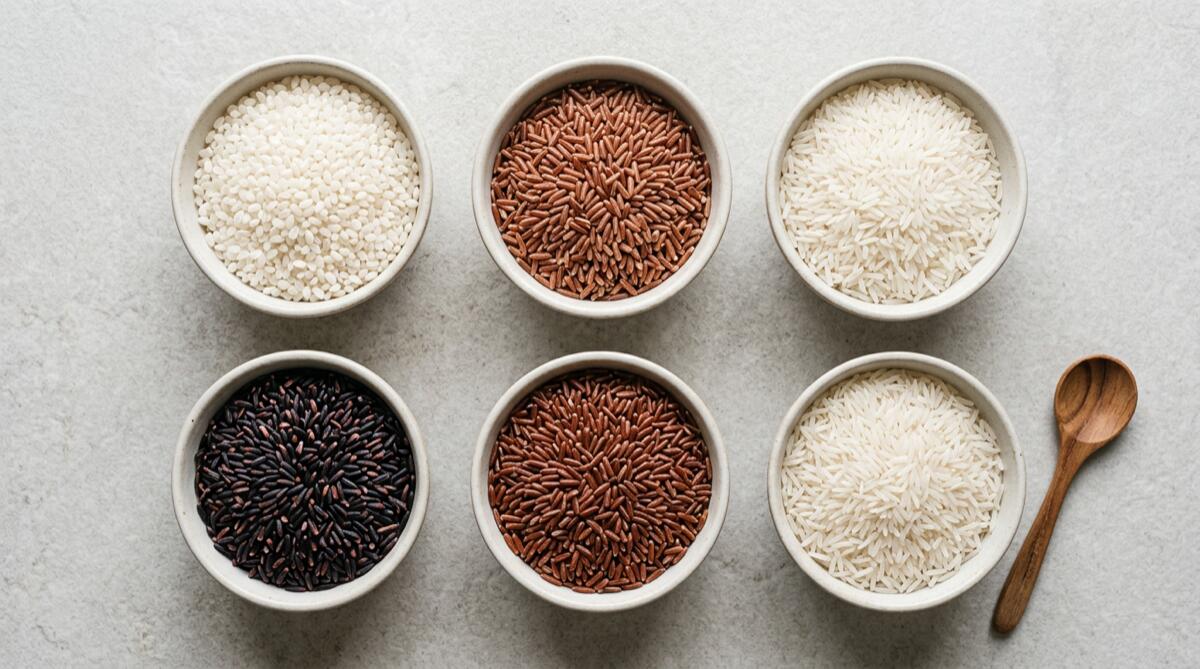
The Ultimate Guide to Calories in Rice
Rice is a global dietary staple. Whether it is the base of a hearty burrito bowl, a side for your meal-prepped chicken, or wrapped up in fresh sushi, rice is everywhere. But if you are tracking your food intake, you have probably found yourself staring at a steaming bowl and wondering about the exact calories in rice. Is it better to weigh it raw or cooked? Does brown rice really have fewer calories than white rice?
In this comprehensive guide, we will break down the calorie content of different types of rice, explain the golden rules of tracking it, and show you how to easily log your meals without the headache.
The Golden Rule: Dry vs. Cooked Rice
Before we dive into the specific numbers, we need to address the most common mistake people make when tracking rice: confusing dry weight with cooked weight. This is a primary reason Why Your Calorie Count Is Wrong (And How to Fix It).
When rice cooks, it absorbs a massive amount of water. Water has zero calories, but it significantly increases the weight and volume of the rice.
- Dry (Raw) Rice: Contains about 350-360 calories per 100 grams.
- Cooked Rice: Contains about 110-130 calories per 100 grams (depending on how much water it absorbed).
Pro Tip: Always try to weigh your rice raw before cooking for the most accurate tracking. If you are eating out or eating meal-prepped rice, search your tracking app specifically for "cooked rice" to avoid overestimating your intake by 300%!
How Many Calories in Rice? A Breakdown by Type
Not all rice is created equal. While the calorie differences between varieties aren't massive, the fiber, nutrient density, and glycemic index can vary. Here is the nutritional breakdown per 100 grams of cooked rice.
White Rice (Short & Long Grain)
White rice has had its bran and germ removed, making it softer and faster to cook. It is easily digestible and great for quick pre-workout energy.
- Calories: ~130 kcal
- Carbs: 28g
- Protein: 2.7g
- Fat: 0.3g
Brown Rice
Brown rice is a whole grain. Because it retains the bran and germ, it has a nuttier flavor, a chewier texture, and slightly more fiber and micronutrients.
- Calories: ~112 kcal
- Carbs: 24g
- Protein: 2.6g
- Fat: 0.9g
Basmati Rice
Famous for its fragrant aroma and long grains, basmati rice is a staple in Indian and Middle Eastern cuisines. It has a slightly lower glycemic index compared to standard white rice.
- Calories: ~120 kcal
- Carbs: 25g
- Protein: 3.5g
- Fat: 0.4g
Jasmine Rice
This aromatic short-to-medium grain rice is commonly used in Southeast Asian dishes. It tends to be slightly stickier than basmati.
- Calories: ~130 kcal
- Carbs: 29g
- Protein: 2.7g
- Fat: 0.2g
Wild Rice
Fun fact: wild rice is technically a semi-aquatic grass, not a true rice! It is incredibly nutrient-dense, high in protein, and lower in calories.
- Calories: ~101 kcal
- Carbs: 21g
- Protein: 4g
- Fat: 0.3g
Understanding the Macros in Rice
If you are learning How to Count Macros: A Step-by-Step Guide, you need to know where rice fits into your daily goals. Rice is overwhelmingly a carbohydrate source. It provides very little fat and only a modest amount of incomplete protein.
Carbohydrates are your body's preferred energy source. Whether you choose white or brown rice depends largely on your personal digestion, taste preference, and fiber goals for the day. If you want a deeper dive into how carbs, fats, and proteins work together, check out our guide on What Are Macros? The Complete Guide to Macronutrients.
Rice and Weight Loss: Friend or Foe?
A common myth is that eating rice makes you gain weight. The truth is, weight loss comes down to energy balance. If you understand What Is a Calorie Deficit and How Does It Work?, you know that you can absolutely enjoy rice while losing weight—provided you control your portions.
The Resistant Starch Hack: Did you know that cooking rice and then cooling it in the refrigerator for 12-24 hours changes its chemical structure? The cooling process creates resistant starch, a type of fiber that your body cannot easily digest. This slightly lowers the usable calories in rice and provides excellent fuel for your healthy gut bacteria!
How to Track Rice Accurately Without the Stress
Weighing, searching, and logging food can sometimes feel tedious, especially with ingredients like rice where you have to specify raw vs. cooked. This is where modern AI technology changes the game.
With MacroLog, tracking your rice intake is effortless. Instead of scrolling through hundreds of confusing search results, you can use MacroLog's advanced features:
- Voice Logging: Simply tap the microphone and say, "I ate 150 grams of cooked basmati rice with 6 ounces of grilled chicken breast." MacroLog's AI instantly understands the context and logs the exact macros.
- Barcode Scanning: Cooking at home? Scan the barcode on your bag of dry rice to instantly pull up the exact nutritional data for that specific brand.
- Photo Recognition: Eating out? Snap a photo of your sushi plate or curry bowl. The AI will analyze the image, estimate the portion size, and log the calories for you.
Conclusion
Understanding the calories in rice is simple once you know the difference between raw and cooked weights. Whether you prefer fluffy white rice, nutty brown rice, or fragrant jasmine, it can easily fit into a healthy, balanced diet.
Ready to stop guessing and start tracking your meals with the power of AI? Download MacroLog today and make calorie tracking the easiest part of your fitness journey!


