Imagine a world where you could eat as much as you want without ever gaining a single ounce. For decades, the diet industry has teased us with the concept of zero calorie foods—magical snacks that supposedly require more energy to digest than they actually provide. But do these foods really exist, or are they just another clever marketing myth?
If you have ever found yourself mindlessly crunching on celery sticks while wondering if you are actually burning calories, you are not alone. Navigating the world of nutrition can be incredibly confusing, especially when trying to maintain a for weight loss. In this comprehensive guide, we will dive deep into the science of digestion, bust the "negative calorie" myth, and show you how to strategically use extremely low-calorie foods to achieve your health goals without feeling starved.
What Are Zero Calorie Foods?
In the strictest scientific sense, a true "zero calorie" food would be something that contains absolutely no metabolizable energy. Water, black coffee, and plain tea fit this description. However, when people talk about zero calorie foods, they are usually referring to solid foods—specifically certain fruits and vegetables—that are so low in calories that their caloric impact on your daily total is negligible.
These foods are typically characterized by two main features:
- High Water Content: Many of these foods are made up of 90% to 95% water. Since water has zero calories, it adds significant weight and volume to the food without adding energy.
- High Fiber Content: Dietary fiber is a type of carbohydrate that the human body cannot fully digest. While it does provide a small amount of energy (about 2 calories per gram, depending on the type), its primary role is to add bulk to your diet and keep your digestive system healthy.
Because these foods are mostly water and fiber, you can eat them in massive quantities while barely making a dent in your daily energy allowance. But this brings us to one of the most persistent myths in the fitness world.
The "Negative Calorie" Myth Busted
The theory behind "negative calorie" foods is fascinating: the idea is that a food like celery contains so few calories (about 14 calories per cup) that the physical act of chewing, swallowing, and digesting it burns more calories than the celery itself provides. Therefore, eating it theoretically puts you in a caloric deficit.
Unfortunately, human biology is much more efficient than that. To understand why, we need to look at the Thermic Effect of Food (TEF). As explained in our guide on , TEF is the energy your body expends to digest, absorb, and process the nutrients in your meals.
TEF typically accounts for about 10% of your . While protein has a high thermic effect (up to 30%), the carbohydrates found in vegetables only require about 5% to 10% of their total calories to digest.
Let's do the math on a stalk of celery that contains 10 calories. Your body might burn 1 or 2 calories digesting it. You are still left with a net gain of 8 calories. While 8 calories is practically nothing, it is absolutely not negative. There is no scientifically proven food that requires more energy to digest than it yields. However, this does not mean these foods are not incredibly valuable for weight loss!
The Best "Near-Zero" Calorie Foods for Volume Eating
Even though true negative calorie foods do not exist, "near-zero" calorie foods are the secret weapon of successful dieters. They form the foundation of volume eating—a strategy where you prioritize foods that provide high volume for very few calories, keeping your stomach physically full and your brain satisfied. Volume eating is the one strategy that stops working on a GLP-1, since the medication already delivers fullness and the space left has to carry protein instead — our food list built for small portions on a GLP-1 inverts the logic.
1. The Hydrating Vegetables
Vegetables should be the cornerstone of any weight loss phase. They are packed with micronutrients and are incredibly forgiving if you accidentally overeat them.
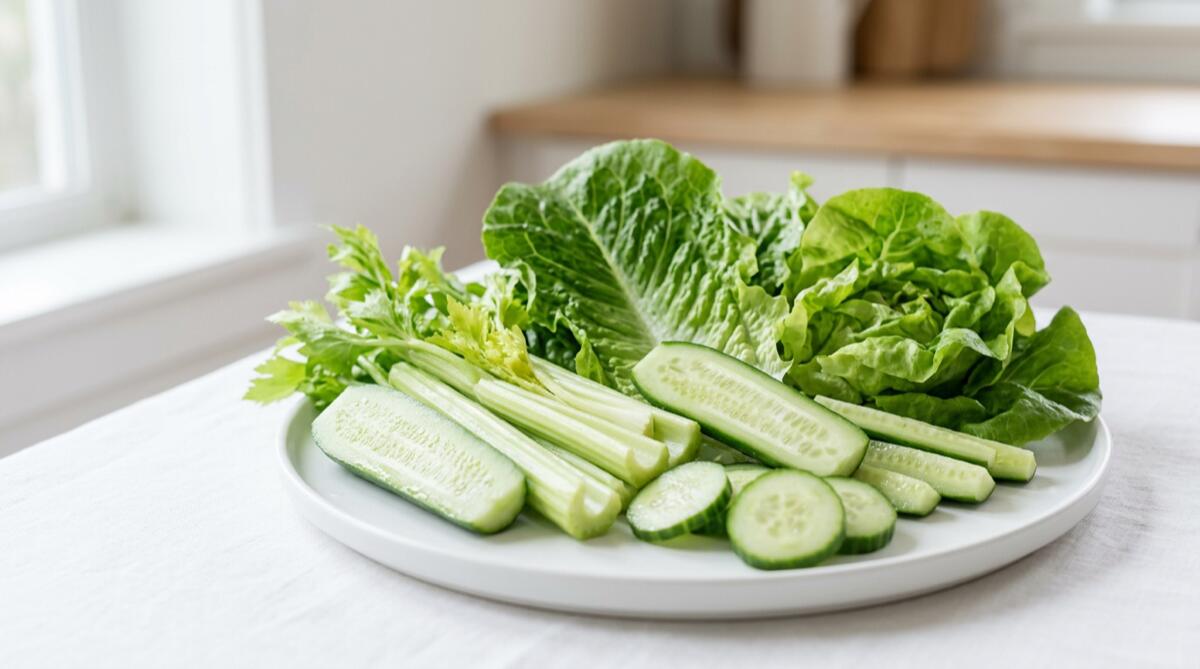
- Celery: At 14 calories per cup, it is the poster child for low-calorie snacking. Its satisfying crunch makes it a great substitute for chips.
- Cucumbers: Containing about 16 calories per cup, cucumbers are 95% water. They are perfect for bulking up salads or eating with a light dip.
- Zucchini: At 20 calories per cup, zucchini is a versatile superhero. Spiralize it into "zoodles" to replace heavy pasta, and you can save hundreds of calories per meal.
- Leafy Greens: Spinach, kale, arugula, and iceberg lettuce range from 5 to 15 calories per cup. You can literally eat a mixing bowl full of greens for fewer calories than a single bite of a candy bar.
2. The Sweet Cravings Savers (Fruits)
While fruits generally contain more sugar (and therefore more calories) than vegetables, several options are low enough in calories to be eaten in large, satisfying portions.
- Watermelon: True to its name, it is mostly water. At 46 calories per cup, it is one of the lowest-calorie fruits available and perfect for satisfying a sweet tooth.
- Strawberries: A massive cup of whole strawberries contains only about 50 calories. They are fantastic for adding volume to oatmeal or Greek yogurt.
- Grapefruit: Half a grapefruit contains around 40 calories and is packed with Vitamin C and fiber.
3. True Zero-Calorie Beverages
Don't forget what you drink! Liquid calories are one of the main reasons people fail to lose weight, as they do not provide satiety. Swapping sugary drinks for these true zero-calorie options can transform your progress:
- Water: The ultimate zero-calorie drink. Sometimes thirst masks itself as hunger.
- Black Coffee: A cup of black coffee contains about 2-5 calories, which is statistically zero. It also acts as a mild appetite suppressant.
- Green Tea: Like coffee, it is virtually calorie-free and contains antioxidants that mildly support metabolism.
How to Incorporate These Foods into Your Diet
Knowing about these foods is one thing; using them effectively is another. If you are wondering , the answer depends on your unique metabolism, but filling up on near-zero calorie foods makes hitting that target much easier.
Here are some practical ways to use them:
- The 50/50 Plate Rule: Fill exactly half of your plate with low-calorie vegetables before adding your protein and complex carbs. This naturally limits the portion size of calorie-dense foods while ensuring you feel stuffed at the end of the meal.
- Snack Upgrades: Instead of reaching for a 200-calorie protein bar when you are only slightly hungry, try a large bowl of cucumber slices with a sprinkle of salt and vinegar. You will get the crunch and flavor for about 20 calories.
- Meal Bulking: Add a bag of spinach to your soups, stews, or pasta sauces. The spinach will wilt down, adding massive amounts of fiber, iron, and volume without impacting the macro profile of your meal. Speaking of macros, if you need help balancing them, check out our guide on .
Do You Need to Track Zero Calorie Foods?
A common question among beginners learning how to count calories is whether they actually need to log every single leaf of spinach or slice of cucumber. The truth is, it depends on your goals and personality.
If tracking every sprig of parsley drives you crazy, it might be best to adopt a more relaxed approach. As we discuss in our article on , the 20 calories you get from a handful of cherry tomatoes will not make or break your diet. Consistency matters far more than absolute perfection.
However, if you are strictly monitoring your intake to understand your baseline, or if you cook vegetables in oils and butter (which do contain significant calories), tracking is essential. This is where technology makes life infinitely easier.
Instead of manually searching databases for "1 cup of chopped cucumber," you can simply use MacroLog. With its advanced AI photo recognition, you can just snap a picture of your massive volume-eating salad, and the app will instantly estimate the ingredients and portion sizes. Prefer talking? Use the voice logging feature to simply say, "I ate a large bowl of watermelon," and MacroLog will do the heavy lifting for you. It takes the tediousness out of tracking, allowing you to focus on enjoying your food.
The Bottom Line
While true solid zero calorie foods and negative calorie foods are a physiological myth, "near-zero" calorie foods are very real and absolutely vital for sustainable weight loss. By leveraging foods with high water and fiber content, you can "hack" your body's hunger signals, keeping your stomach full while maintaining the calorie deficit required to burn fat.
Remember, successful weight loss is not about eating as little as possible; it is about eating as smart as possible. Combine a solid understanding of your calorie needs with a diet rich in high-volume, low-calorie foods, and you will find that reaching your goals doesn't have to involve hunger or suffering.
Ready to start tracking your high-volume meals the easy way? Stop typing and start snapping. Download MacroLog today and let AI simplify your nutrition journey!


