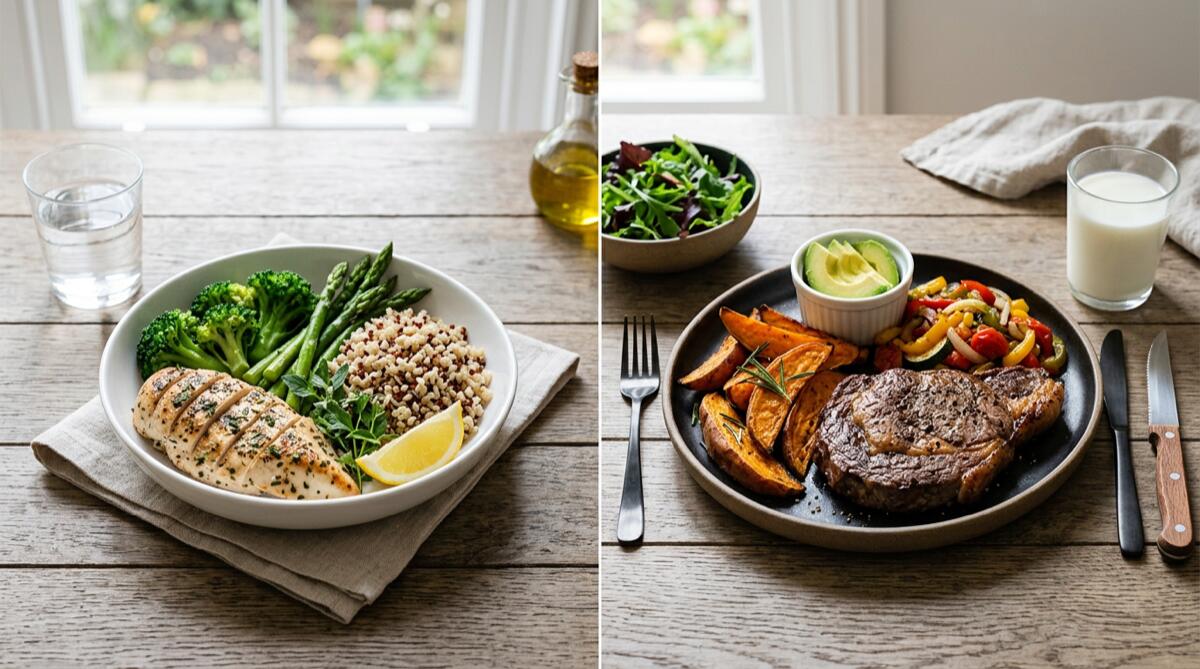
The Evolution of Dieting: Why Long Cycles Are Out
For decades, the fitness industry has preached a very specific, almost religious doctrine when it comes to changing your physique: the long, grueling bulk, followed by an equally long, punishing cut. You spend six to eight months eating everything in sight to build muscle, accepting that you will gain a significant amount of body fat. Then, you spend the next four to six months starving yourself to reveal the muscle you built, inevitably losing some of it along the way.
But what if there was a better way? What if you could build muscle without getting overly fat, and lose fat without sacrificing your hard-earned muscle mass? Enter the modern approach to body recomposition: the mini cut mini bulk cycle.
This strategy has taken the evidence-based fitness community by storm, offering a more sustainable, psychologically friendly, and physiologically optimal way to achieve your dream physique. In this comprehensive guide, we will break down exactly what mini cuts and mini bulks are, the science behind why they work, and how you can implement them into your lifestyle.
What is a Mini Cut?
A mini cut is a short, aggressive fat-loss phase typically lasting between 2 to 6 weeks. Unlike a traditional cut that stretches over several months and requires gradual decreases in calories to combat metabolic adaptation, a mini cut gets straight to the point.
Because the duration is so short, your body doesn't have time to fully adapt to the lower calorie intake. This means you can utilize a much larger calorie deficit than you normally would without risking severe muscle loss, hormonal crashes, or extreme metabolic slowdown.
When Should You Do a Mini Cut?
- During a long building phase: If you are on a traditional bulk and your body fat percentage starts creeping up too high (typically above 15-17% for men, or 24-26% for women), a mini cut can help you shed that excess fat quickly so you can return to building muscle.
- Before a short-notice event: Have a beach vacation or a wedding coming up in a month? A mini cut is the perfect tool to drop a few pounds of fat and reduce water retention quickly.
- To improve insulin sensitivity: As body fat increases, insulin sensitivity often decreases, making it harder for your body to partition nutrients toward muscle growth. A quick mini cut can "reset" this sensitivity.
How to Execute a Mini Cut
To successfully run a mini cut, you need to be precise. You are aiming for an aggressive deficit, usually around 500 to 1,000 calories below your maintenance level. If you aren't sure where to start, you should first read up on .
Protein intake is paramount during this phase. Because the calorie deficit is steep, your risk of muscle breakdown is higher. Aim for 1.2 to 1.5 grams of protein per pound of body weight. You will also want to keep your training intensity high; do not switch to light weights and high reps. Lift heavy to give your muscles a reason to stick around.
What is a Mini Bulk?
Conversely, a mini bulk is a focused muscle-building phase that lasts anywhere from 4 to 8 weeks. Instead of an open-ended "see food" diet, a mini bulk utilizes a slight, controlled calorie surplus to promote muscle hypertrophy while minimizing fat accumulation.
When Should You Do a Mini Bulk?
- After a long cut: If you've just finished a 16-week fat loss phase, jumping into a massive surplus will lead to rapid fat gain. A mini bulk allows you to transition smoothly, taking advantage of your body's primed anabolic state.
- To break a plateau: If your lifts have stalled while eating at maintenance, a 6-week mini bulk can provide the energy and recovery capacity needed to push through the plateau.
How to Execute a Mini Bulk
The key to a successful mini bulk is restraint. You only need a surplus of about 200 to 300 calories per day to build muscle optimally. Any more than that will simply be stored as fat. To find your exact starting point, use a calculator and understand your energy needs by reading our guide on (which also applies to weight gain!).
During a mini bulk, your carbohydrate intake should increase significantly to fuel hard training sessions and aid in recovery, while fat and protein can remain at moderate levels.
The Pros and Cons of the Mini Cut Mini Bulk Strategy
The Benefits
1. Psychological Relief: Dieting for 16 weeks is mentally exhausting. Knowing that a mini cut only lasts 4 weeks makes it much easier to stay disciplined. The light at the end of the tunnel is always visible.
2. Less Fat Accumulation: By using mini cuts to keep body fat in check, you never get too far away from your ideal physique. You won't have to buy a whole new wardrobe of larger clothes just because you're "bulking."
3. Better Nutrient Partitioning: Staying relatively lean year-round ensures that your body remains highly sensitive to insulin, meaning the food you eat is more likely to be used for muscle repair rather than fat storage.
The Drawbacks
1. Requires Precision: Because these phases are short, there is no room for error. If you mess up your calorie tracking for a week during a 4-week mini cut, you've ruined 25% of the phase.
2. The "Spinning Wheels" Trap: If you alternate between mini cuts and mini bulks too frequently (e.g., 2 weeks bulk, 2 weeks cut), you won't give your body enough time to actually build new muscle tissue. You will end up looking exactly the same year after year.
How to Track Properly During Short Cycles
As mentioned, precision is non-negotiable when executing a mini cut mini bulk protocol. If you are guessing your portion sizes, you are setting yourself up for failure. Many people think they are in a deficit when they are actually at maintenance. If you've experienced this, you might want to read Why Your Calorie Count Is Wrong (And How to Fix It).
However, we also know that tracking every single gram of food can lead to burnout. For tips on balancing precision with sanity, explore .
The easiest way to guarantee accuracy without the headache is by using MacroLog. Designed with cutting-edge AI, MacroLog eliminates the tedious nature of traditional calorie counting. Instead of searching through databases for 10 minutes to log a single meal, you can simply snap a photo of your plate, and MacroLog's AI will identify the foods and estimate the portions. You can even use voice logging—just say, "I ate 200 grams of chicken breast and a cup of rice," and the app will instantly log the correct macros for you. When you have only 4 weeks to make your mini cut successful, having a tool like MacroLog in your pocket is a game-changer.
Sample Schedule: Combining the Two
How do you string these together into a cohesive yearly plan? Here is an example of how an intermediate lifter might use the mini cut mini bulk strategy over a 6-month period:
- Weeks 1-8: Mini Bulk (250 kcal surplus). Focus on progressive overload and building mass.
- Weeks 9-12: Mini Cut (750 kcal deficit). Strip away the small amount of fat gained during the bulk.
- Weeks 13-20: Mini Bulk (250 kcal surplus). Back to building muscle from a leaner starting point.
- Weeks 21-24: Mini Cut (750 kcal deficit). Final polish for summer or a vacation.
This alternating structure ensures continuous progress without the mental and physical fatigue of traditional, months-long dieting phases.
Conclusion
The mini cut mini bulk approach is a powerful strategy for anyone looking to build muscle and lose fat efficiently. By keeping your phases short and focused, you can avoid the excessive fat gain of traditional bulking and the muscle loss of long-term cutting. Remember, the secret to making this strategy work is absolute precision in your nutrition.
Stop guessing your macros and start seeing real results. Make your next mini cut or mini bulk effortless by downloading MacroLog today and let our AI do the heavy lifting for your diet.