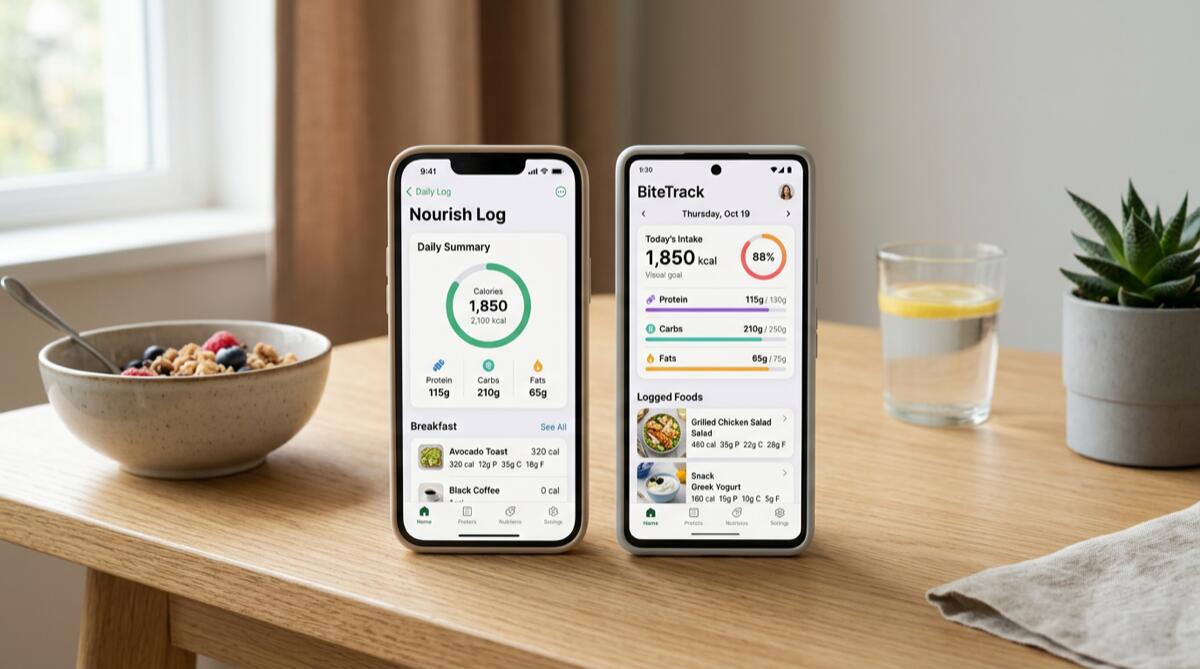
MyFitnessPal offers free calorie and macro logging, while barcode, Meal Scan and voice logging require Premium. MacroLog includes unlimited barcode scanning free and puts photo and voice logging in Pro. [1]
Facts as of 10 September 2026. Published by MacroLog, the maker of one of the apps compared. We are not neutral. Rival facts were checked on 10 September 2026 using vendor sources and the verified articles cited below.
At a glance
| What you need | What to check |
|---|---|
| Logging without a subscription | Calorie and macro logging, food search, exercise logging and community. [3][4] |
| Photo logging | Meal Scan and voice logging are Premium features. [1][3] |
| A local MacroLog diary | Logging works offline with local storage, except AI photo and voice logging, which need internet. Multi-device sync is planned and is not available today. Data export is a Pro feature. |
Feature comparison
| Feature | MacroLog | MyFitnessPal |
|---|---|---|
| Free tier | Manual search, unlimited barcode scanning, basic stats and local storage. Free forever, no card. | Calorie and macro logging, food search, exercise logging and community. [3][4] |
| Barcode scanner | Free, unlimited. | Premium. [1][3] |
| Macros and nutrients | Basic stats free; 12 micronutrients in Pro. | Basic macro logging is free; custom macro goals are Premium. [3] |
| AI photo logging | Pro; photo and voice need internet. | Meal Scan and voice logging are Premium features. [1][3] |
| Apple Health | Supported on iOS; full data scope below. | Writes meal summaries; does not read food back in. Reads exercise, weight and sleep; caffeine and vitamin A are not exported. [5] |
| Health Connect | Supported on Android; full data scope below. | Supported on Android; exports meal summaries and water, and can read supported glucose and sleep data. [6] |
| Platforms | iOS and Android; no web app. | iOS and Android; health integrations described here use the mobile apps. Browser functionality was not re-verified. [1][6] |
| USD prices: US offers | Pro: $5.99/month or $49/year in the US. The first week costs $2: a paid trial, not a free trial. Prices vary by country and store. | Website figures from today's guide: Premium $79.99/year; Premium+ $99.99/year or $24.99/month. Premium monthly App Store items: $9.99 or $19.99. [3] |
| PLN prices: Polish offers | Prices vary by country and store. Check the Polish purchase screen; the USD amounts above are US prices. | Listed monthly Premium offers: 34.99 or 97.99 zł; annual offers: 34.99, 184.99 or 389.99 zł. These are separate store items, not a single tariff. [2] |
Store entries can be different offers. Amounts with no stated period are not presented as monthly or annual prices.
MyFitnessPal: what the vendor documents
Premium+ adds meal planning to Premium's tracking tools. The $6.67 and $8.34 monthly equivalents in today's pricing guide refer to annual billing; they are not month-to-month charges. If you need only barcode or photo logging, compare Premium's actual offer rather than assuming Premium+ is required. [3]
Writes meal summaries; does not read food back in. Reads exercise, weight and sleep; caffeine and vitamin A are not exported. [5]
Supported on Android; exports meal summaries and water, and can read supported glucose and sleep data. [6]
MacroLog: free and Pro
Manual search, unlimited barcode scanning, basic stats and local storage. Free forever, no card.
Pro adds AI photo logging, voice logging, 12 tracked micronutrients and CSV/JSON export. Photo and voice use Gemini and need internet access. Accuracy is not guaranteed; low-confidence items are flagged for your review.
Logging works offline with local storage, except AI photo and voice logging, which need internet. Multi-device sync is planned and is not available today. Data export is a Pro feature.
Apple Health on iOS / Health Connect on Android: writes calories, protein, carbs, fat, 12 micronutrients, water and weight; reads weight (two-way), steps and active energy. Steps and active energy are informational only and never change the calorie budget.
Which fits your needs?
Consider MyFitnessPal if its free diary or paid meal-planning package suits your routine. Consider MacroLog if avoiding a barcode subscription matters. Do not treat Apple Health summaries as a way to transfer a complete food diary. [3]
What this does not solve
- We did not run a side-by-side app test, measure photo accuracy or check every regional paywall. Vendor descriptions establish advertised availability, not measured performance.
- The vendor pricing page and Apple Health help URL could not be fetched directly in this run; those facts use the explicitly authorised sibling guides checked today. The offer shown to a specific account is unverified. Browser functionality was not re-verified.
- MacroLog is available on iOS and Android, with no web app. Multi-device sync is planned. Photo and voice logging require both Pro and internet access.
What this is based on
MacroLog publishes this page and is not neutral. Sources below were read on 10 September 2026 through browser retrieval or the verified sibling articles explicitly identified here. Command-line curl requests failed with DNS errors.
- US App Store — read 10 September 2026
- Polish App Store — read 10 September 2026
- MyFitnessPal pricing guide, verified today — read 10 September 2026. Verified sibling article; the original vendor sources are linked there.
- MyFitnessPal alternatives, verified today — read 10 September 2026. Verified sibling article; the original vendor sources are linked there.
- Health-sync guide, verified today — read 10 September 2026. Verified sibling article; the original vendor sources are linked there.
- Vendor Health Connect / Android documentation — read 10 September 2026
Unsuccessful source checks on 10 September 2026:
- Google Play, Poland (hl=pl, gl=PL) — attempted 10 September 2026; unavailable in this run. No unsupported facts were inferred from it.
- Vendor Premium pricing page — attempted 10 September 2026; unavailable in this run. No unsupported facts were inferred from it.
- Vendor Apple Health help — attempted 10 September 2026; unavailable in this run. No unsupported facts were inferred from it.
MacroLog features and prices follow our product documentation, reviewed 10 September 2026. Unverified rival features are marked as not stated in the checked sources.