The Hidden Variable in Your Diet: Understanding Fiber and Macros
If you have ever looked at a nutrition label and tried to do the math, you might have noticed something strange. You multiply the protein and carbs by 4, the fats by 9, add them up, and the total calories don't quite match the big number at the top of the label. The culprit? Fiber.
When you are learning , fiber is often the most confusing element. Does it have calories? Do you count it as a carbohydrate? Should you subtract it to get 'net carbs'? Understanding the relationship between fiber and macros is crucial for anyone serious about optimizing their nutrition, whether your goal is fat loss, muscle gain, or simply better digestive health.
In this comprehensive guide, we will break down exactly how fiber affects your macros and calories, the science behind how your body processes it, and how to track it accurately without losing your mind.
What Exactly is Fiber?
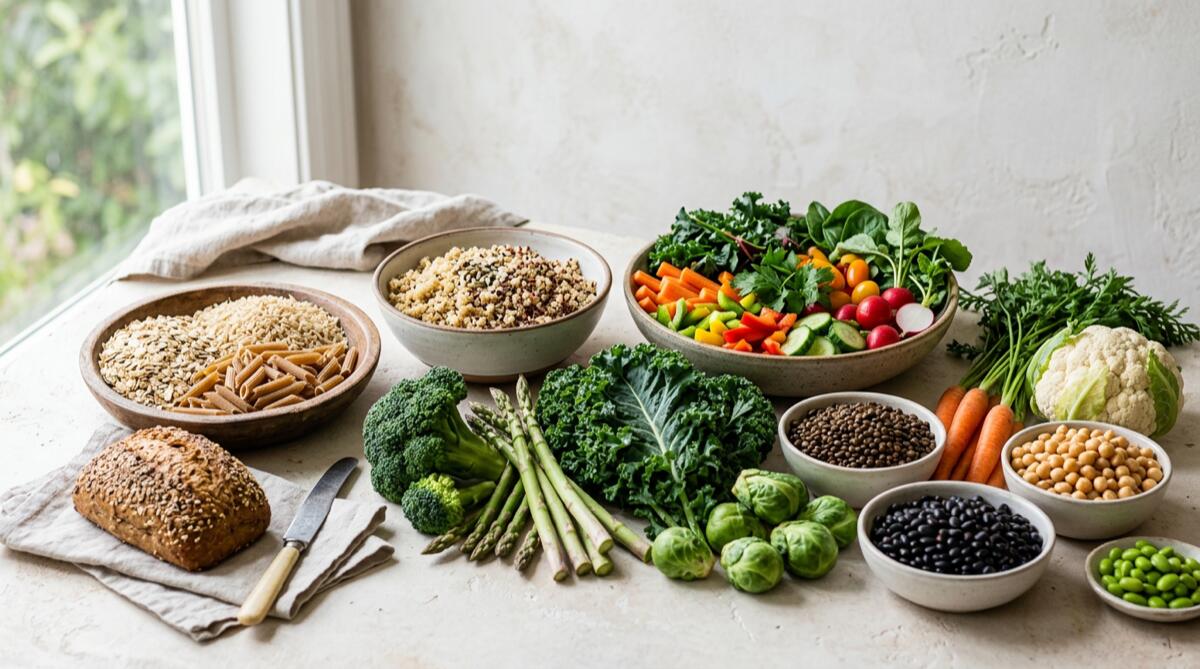
Before we dive into the math of macros, we need to understand what fiber actually is. Dietary fiber is a type of carbohydrate found naturally in plant foods—like fruits, vegetables, whole grains, nuts, and legumes. However, unlike other carbohydrates (such as starches and sugars), fiber cannot be easily broken down into glucose by your small intestine.
For context, if you want a refresher on the basics of carbohydrates and other nutrients, check out our complete guide on
Fiber is generally categorized into two main types, both of which play unique roles in your body:
- Soluble Fiber: This type dissolves in water to form a gel-like substance in your digestive tract. It slows down digestion, helps regulate blood sugar levels, and can lower cholesterol. You will find it in oats, beans, apples, and chia seeds.
- Insoluble Fiber: This type does not dissolve in water. It adds bulk to your stool and acts like a broom, sweeping food through your digestive system and preventing constipation. Whole wheat, brown rice, broccoli, and the skins of many fruits are rich in insoluble fiber.
The Big Question: Does Fiber Have Calories?
This is where the relationship between fiber and macros gets interesting. The short answer is: Yes, but not as many as regular carbohydrates.
Standard carbohydrates provide 4 calories per gram. Because human digestive enzymes cannot break down fiber in the stomach or small intestine, it was historically assumed that fiber had zero calories. However, modern nutritional science paints a different picture, proving that , even when they come from fiber.
The Science of Fiber Fermentation
When soluble fiber reaches your large intestine (colon), the trillions of bacteria living there get to work. They ferment the fiber, feeding on it and producing byproducts called Short-Chain Fatty Acids (SCFAs), such as butyrate, propionate, and acetate. Your body can absorb these SCFAs and use them for energy.
Because of this fermentation process, the FDA estimates that soluble fiber provides about 2 calories per gram. Insoluble fiber, which ferments much less, provides closer to 0 calories per gram. However, for the sake of simplicity on nutrition labels, many regulatory bodies assign a standard value of roughly 1.5 to 2 calories per gram for all mixed dietary fiber.
Fiber and Macros: Total Carbs vs. Net Carbs
If you are tracking macros, you have likely encountered the term Net Carbs. This concept was popularized by low-carb and keto diets, but it is highly relevant for anyone tracking their intake.
Total Carbs include all types of carbohydrates: sugars, complex starches, and fiber.
Net Carbs represent the carbohydrates that your body actually digests and turns into blood glucose.
How to Calculate Net Carbs
The standard formula is simple:
Net Carbs = Total Carbs - Dietary Fiber
For example, if a serving of raspberries has 15 grams of total carbohydrates and 8 grams of fiber, the net carbs would be 7 grams. If you are strictly monitoring your blood sugar or following a ketogenic diet, you might only track those 7 grams. However, if you are strictly tracking calories for weight loss, you must remember that those 8 grams of fiber still contribute a small amount of energy (around 16 calories).
Understanding this distinction is one of the key reasons why your calorie count might be wrong. If an app assumes all carbs are 4 calories per gram, a high-fiber day could look artificially high in calories.
Why You Need to Prioritize Fiber for Weight Loss
When people learn , they often focus solely on eating less. But what you eat dictates how easy it is to maintain that deficit. Fiber is your secret weapon for fat loss for several scientifically proven reasons:
1. Massive Satiety Boost
Fiber takes up physical space in your stomach. Soluble fiber absorbs water and expands, triggering stretch receptors in your stomach lining that tell your brain you are full. A high-fiber meal keeps you satisfied for hours, reducing the urge to snack and making significantly more manageable.
2. The Thermic Effect of Food (TEF)
Your body has to work hard to process high-fiber, whole foods. This means you burn slightly more calories digesting a fiber-rich apple than you would digesting a glass of apple juice. This small but compounding effect contributes to your .
3. Blood Sugar Regulation
By slowing down the absorption of nutrients, fiber prevents massive spikes and subsequent crashes in blood sugar. These crashes are what cause intense sugar cravings mid-afternoon. Stable blood sugar means stable energy and better adherence to your macro goals.
How Much Fiber Should You Eat Per Day?
Most health organizations recommend the following daily fiber intake:
- Women: 25 grams per day
- Men: 38 grams per day
Unfortunately, the average Western adult only consumes about 10-15 grams per day. If you are tracking your food and notice your fiber is low, you need to increase it. But a word of caution: increase your fiber slowly! Jumping from 10 grams to 40 grams overnight will cause severe bloating, gas, and digestive distress. Add 5 grams extra per week and drink plenty of water.
Common Mistakes When Tracking Fiber and Macros
Even seasoned macro trackers make mistakes when it comes to fiber. Here are the pitfalls to avoid:
1. Double Counting Calories
Depending on your region, nutrition labels handle fiber differently. In the US, fiber is included in the Total Carbohydrate count. In Europe and the UK, the "Carbohydrate" line on a label already shows Net Carbs, and Fiber is listed completely separately. If you use a generic food database and mix up US and EU entries, your macros will be wildly inaccurate.
2. Chasing "Fake" Fiber
With the rise of keto diets, many processed protein bars and snacks are packed with isolated, synthetic fibers (like soluble corn fiber or inulin) to artificially lower the net carb count. While these technically count as fiber, they don't offer the same micronutrient and gut-health benefits as whole foods. They can also cause extreme bloating. Stick to whole foods whenever possible.
3. Becoming Obsessive
It is easy to get bogged down in the math of 2 calories vs. 4 calories per gram. If you want to learn , the best approach is to aim for a daily fiber target (e.g., 30g) and let a smart app do the heavy lifting for the calorie math.
How MacroLog Makes Tracking Fiber Effortless
Tracking fiber shouldn't require a degree in mathematics or a deep understanding of international food labeling laws. This is where AI technology steps in to revolutionize your diet.
With MacroLog, you don't have to worry about the complex relationship between fiber and macros. Our AI-powered app handles the calculations automatically. Here is how MacroLog makes it easy:
- Smart Barcode Scanning: Whether you are scanning a product from the US or Europe, MacroLog's database understands the labeling laws and correctly assigns the fiber calories and net carbs, so your daily totals are always perfectly accurate.
- AI Photo Recognition: Having a massive salad or a bowl of oatmeal? Just snap a photo. MacroLog's AI estimates the portion size and breaks down the exact macros, including your dietary fiber.
- Voice Logging: Simply say, "I had a cup of black beans and a large apple," and MacroLog will instantly log the food, calculating the massive fiber boost you just gave your body.
MacroLog ensures that your calorie deficit is accurate, taking the guesswork out of fiber fermentation and net carbs. If you are serious about hitting your goals and want to know exactly while prioritizing gut health, you need the right tools.
Conclusion
Understanding how fiber affects your macros and calories is a game-changer for your nutrition. While fiber does contain some calories (about 2 kcal/g), its benefits for satiety, blood sugar control, and gut health make it an absolute necessity for anyone looking to improve their body composition.
Stop stressing over the math of net carbs and let AI do the work for you. Take control of your health, optimize your digestion, and hit your macro goals with precision.
Ready to track your fiber and macros the smart way? Download MacroLog today and experience the future of AI calorie tracking!
