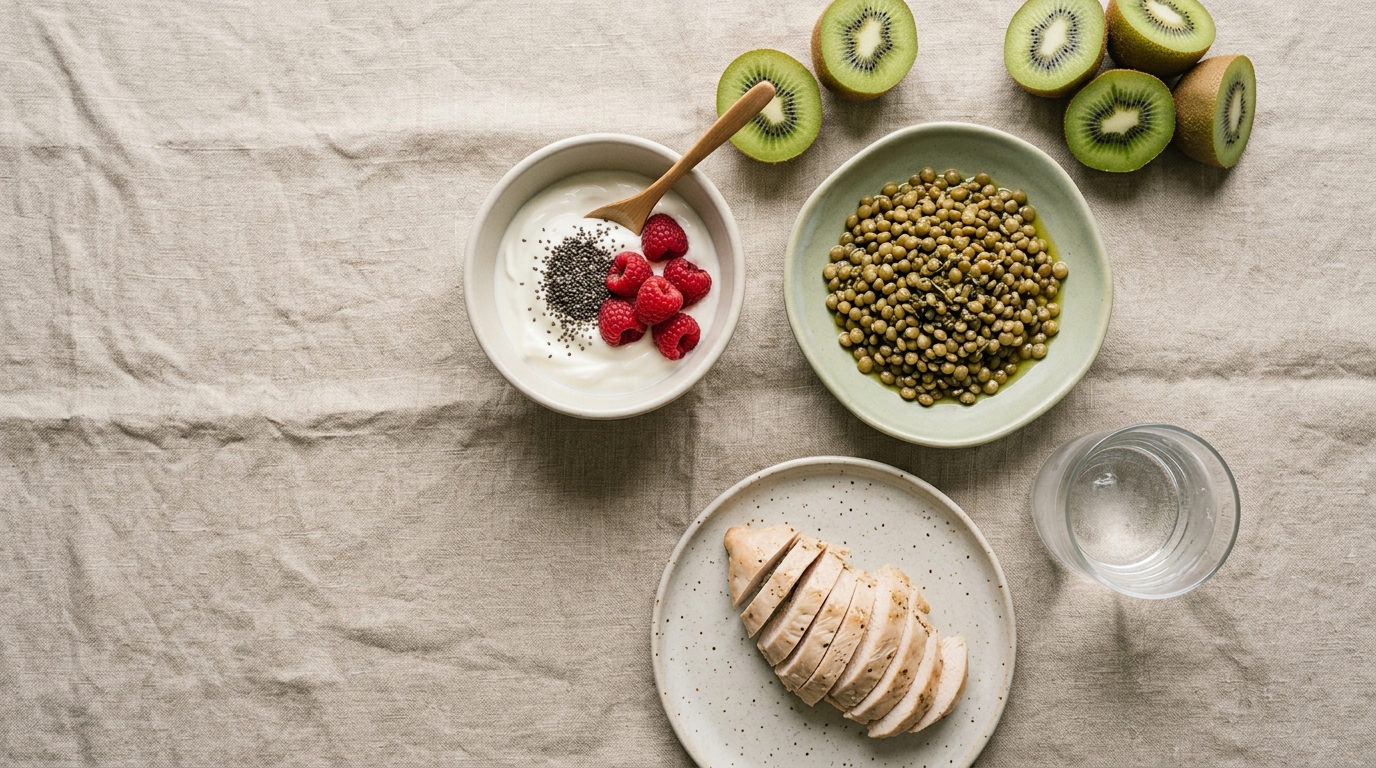
On a GLP-1, build every meal around 25 to 30 grams of protein, spread 25 to 30 grams of fiber across the day, and drink 2 to 2.5 litres (68 to 85 fl oz) of fluid. In practice that means Greek yogurt, chicken breast, canned fish, cottage cheese, lentils, chia and berries. The list below sorts foods by the problem each one solves, not by food group.
Your prescriber or a registered dietitian sets your calorie and protein numbers against your medical history. This article covers food only. Nothing here concerns your dose, your schedule, or how to manage symptoms.
Highest protein for the smallest volume
When appetite drops, the limit isn't willpower, it's stomach space. These foods carry 12 to 31 grams of protein in a portion most people can finish in a few minutes, all under 200 calories. Sort your fridge by protein per 100 grams and a 25 gram target stops feeling like a chore.
| Food | Portion | Protein | Calories |
|---|---|---|---|
| Chicken breast, cooked | 100 g / 3.5 oz | 31 g | 165 kcal |
| Canned tuna in water, drained | 112 g / 4 oz | 26 g | 120 kcal |
| Whey isolate powder | 1 scoop, 30 g | 25 g | 110 kcal |
| Shrimp, cooked | 100 g / 3.5 oz | 24 g | 99 kcal |
| Nonfat Greek yogurt | 170 g / 6 oz | 17 g | 100 kcal |
| Skyr | 150 g pot / 5.3 oz | 16 g | 95 kcal |
| Extra-firm tofu | 100 g / 3.5 oz | 14 g | 145 kcal |
| Cottage cheese, low fat | 113 g / half cup | 14 g | 90 kcal |
| Turkey breast, deli slices | 60 g / 2 oz | 12 g | 60 kcal |
| Eggs, 2 large | 100 g | 12 g | 143 kcal |
Shrimp wins on density: 24 grams of protein for 99 calories, and it arrives cooked and frozen, so there's no raw handling on a day you don't want to touch meat. Cottage cheese and Greek yogurt earn their place for needing no heat and giving off no smell, which matters more than macros when you feel rough.
Two eggs look like a meal and deliver 12 grams, half of one eating occasion. Pair them with something from the top of the table rather than treating them as the protein. For a wider set of options with the same kind of numbers, see our 50 high-protein foods.
Nausea days: cold, mild, low in fat
Cold food gives off less smell, and smell is what usually turns a queasy stomach. Fat slows gastric emptying further, so fried and creamy dishes sit longer and feel worse. Take 60 to 80 grams of protein from liquid and soft foods on a bad day, rather than chasing your full target.
- Clear whey isolate, 25 g scoop in 400 ml (13 fl oz) cold water: 20 g protein, 90 kcal. Drinks like squash, without the milky coating a standard shake leaves behind.
- Plain nonfat Greek yogurt, 170 g (6 oz): 17 g protein, 100 kcal. Cold, sour, and it never heats up the kitchen.
- Blended cottage cheese, 113 g (half cup): 14 g protein, 90 kcal. Thirty seconds in a blender removes the curd texture that puts people off.
- Shelled edamame, 100 g (3.5 oz): 11 g protein, 121 kcal. Salty, eaten one pod at a time, so a portion stretches over an hour.
- Kefir, 250 ml (1 cup): 9 g protein, 110 kcal. Thin enough to sip when a spoon feels like too much work.
- Bone broth, 240 ml (1 cup): 9 g protein, 45 kcal. The only savoury option here that won't fill the room with smell.
- Two rice cakes: 1.5 g protein, 70 kcal. Not a protein food. Bland ballast that some people need before anything else will go down.
Persistent nausea is a conversation for your prescriber, not a food problem to solve alone. Our companion piece on how much protein you need on a GLP-1 works through the daily target these foods add up to.
Fiber and fluid, for the constipation
These medications slow the whole gut, not only the stomach, so constipation is a common complaint. Aim for 25 to 30 grams of fiber a day alongside 2 to 2.5 litres of fluid. Fiber without the fluid tends to make things worse, which is why adding bran on its own rarely helps.
- Chia seeds, 28 g (2 tbsp): 10 g fiber, 4 g protein, 138 kcal. Stir into yogurt, wait 10 minutes, and they gel without adding flavour.
- Cooked lentils, 100 g (half cup): 8 g fiber, 9 g protein, 116 kcal. The rare food that covers fiber and protein in the same spoonful.
- Cooked black beans, 100 g (3.5 oz): 8.7 g fiber, 8.9 g protein, 132 kcal. Same job as lentils, better in a bowl next to chicken.
- Raspberries, 125 g (1 cup): 8 g fiber, 1.5 g protein, 64 kcal. The best fiber-to-calorie ratio in the fruit aisle.
- Ground flaxseed, 14 g (2 tbsp): 4 g fiber, 3 g protein, 75 kcal. Grinding matters, because whole seeds pass through undigested.
- Two kiwifruit, 150 g (5.3 oz): 4 g fiber, 2 g protein, 90 kcal. Two kiwis a day matched or beat psyllium for constipation relief in a 2022 trial published in Alimentary Pharmacology and Therapeutics.
- Rolled oats, 40 g dry (half cup): 4 g fiber, 5 g protein, 150 kcal. Soft, warm, and it takes whey powder without clumping.
- Prunes, 5 (40 g): 3 g fiber, 96 kcal. Sorbitol does the work here, so 5 is a portion and 15 is a bad afternoon.
Go up in steps. Jumping from 10 grams of fiber a day to 30 mostly buys you cramps, so add around 5 grams a week. How fiber fits into your macros shows where those grams land in the carb column.
Protein when you can't face cooking
Appetite and cooking motivation fall together, and any plan that assumes you'll cook twice a day collapses by week two. This shelf needs no pan: open, pour, unwrap. Keep four of these in the house and a 25 gram protein meal takes under two minutes.
- Ready-to-drink protein shake, 325 ml (11 fl oz): 30 g protein, 150 kcal. The most protein per second of effort available anywhere.
- Rotisserie chicken, 100 g pulled off the bird (3.5 oz): 25 g protein, 190 kcal. One bird covers three days if you strip it the night you buy it.
- Sardines in olive oil, drained, 90 g (3.2 oz): 21 g protein, 190 kcal. Strong smell, so a poor pick on nausea days and a good one otherwise.
- Tuna pouch, 74 g (2.6 oz): 16 g protein, 70 kcal. No draining, no tin opener, fits in a coat pocket.
- Skyr, 150 g pot: 16 g protein, 95 kcal. Thicker than yogurt, so it reads as food rather than a drink.
- Two string cheese sticks, 56 g (2 oz): 14 g protein, 160 kcal. They survive a few hours in a bag at room temperature.
- Two boiled eggs: 12 g protein, 143 kcal. Boil six on Sunday and they keep a week in the shell.
- Beef jerky, 28 g (1 oz): 9 g protein, 80 kcal. Chewy and slow, which suits an appetite that switches off mid-snack.
Breakfast is where most people lose the protein target, because it's the meal that disappears when nothing appeals. Our quick high-protein breakfasts fill that gap, and the snacks under 200 calories list covers the rest of the day.
What to push down the list
This list bans nothing. The items below either take up appetite you can't spare, or they tend to sharpen the gut symptoms, so they belong lower on the plate rather than off it. If one of them sits fine with you, keep eating it.
- Fried and creamy dishes. Fat delays gastric emptying further, and the medication already slows it. A cream soup can feel heavier than a chicken breast carrying twice the protein.
- Large raw salads. A 200 g bowl of leaves and dressing is around 4 g of protein and fills a shrunken stomach before the protein arrives. Eat the leaves last.
- Fizzy drinks. Carbonation adds gas to a stomach that's emptying slowly, and 330 ml of cola is 139 calories with no protein.
- Juice as a meal. 250 ml (8 fl oz) of orange juice gives you 112 calories and 1.7 g of protein, and it's gone in 20 seconds.
- Alcohol. It occupies calories you have little room for. Ask your prescriber how it fits with your medication.
- A sudden fiber load. Thirty grams on day one after years at 10 usually means cramping. Build up over a month.
A day that adds up
Assembled, the four lists look like this: five eating occasions, none of them large, totalling 141 grams of protein and roughly 1,060 calories. That protein figure covers a 95 kg (209 lb) person at 1.5 g/kg, the range obesity medicine clinicians commonly cite for people losing weight quickly.
- Breakfast. Greek yogurt 170 g, chia 28 g, raspberries 125 g: 22 g protein, 20 g fiber, 302 kcal
- Mid-morning. Skyr, 150 g pot: 16 g protein, 95 kcal
- Lunch. Chicken breast 100 g with cooked lentils 100 g: 40 g protein, 8 g fiber, 281 kcal
- Afternoon. Ready-to-drink shake, 325 ml: 30 g protein, 150 kcal
- Dinner. Shrimp 100 g with black beans 100 g: 33 g protein, 8.7 g fiber, 231 kcal
Two warnings about that day. At 1,060 calories it sits below what most adults should eat, so add olive oil, bread or fruit until you reach the figure your prescriber or dietitian gave you. And 36 grams of fiber is a jump for most people, so halve the chia and the beans in week one.
Portion accuracy decides whether any of those numbers are real. A chicken piece that looks enormous on a queasy afternoon often weighs 60 grams and carries 18 grams of protein. If you'd rather not weigh food, estimating portions without a scale still beats guessing.
Keeping score without turning it into a job
Suppressed hunger removes the signal you used to steer by, so both failure modes go quiet: weeks under 90 grams of protein, or days under 900 calories that you never notice. A log catches either one inside a week. Two numbers are enough at the start, protein and calories.
MacroLog handles the logging part. Snap a photo of the plate, say what you ate, scan a barcode, or search 10,000+ foods, and watch protein climb toward the goal you set. It tracks 12 micronutrients and water, syncs with Apple Health and Google Health Connect, and works offline on iOS and Android. There's a free tier; AI photo and voice logging sit in Pro.
MacroLog tracks food, and only food. Your medication, your dose and your symptoms stay between you and your prescriber.
Frequently asked questions
What should I eat first at a meal on a GLP-1?
Protein. Fullness now tends to arrive halfway through the plate, and whatever you ate first is what you actually got. Starch and vegetables go last. That single change moves plenty of people from 60 grams of protein a day to over 100 without adding any food.
Do I need protein shakes?
No, though they solve a real problem: 25 to 30 grams in 300 ml with nothing to chew. Keep most of your intake in whole food or you'll fall short on fiber and micronutrients. One shake a day is a sensible ceiling for most people.
How much water should I drink?
Two to 2.5 litres a day (68 to 85 fl oz) is the usual guidance, and it counts for more than before, because eating less means less water arriving from food. Fiber needs it too. Adding chia and beans without adding fluid makes constipation worse.
Can I still eat bread, rice and pasta?
Yes. The shortage of appetite is the constraint, not the carbs. Put a smaller portion on the plate and eat it after the protein. A 60 g slice of wholegrain bread adds 4 g of fiber and 5 g of protein, which is more than most people expect from bread.
What if I can only manage 800 calories a day?
Tell your prescriber. Sustained intake that low is where hair loss, fatigue and nutrient gaps start, and it usually calls for a review rather than more discipline. Track a week first so you arrive with numbers instead of an impression.
Start with one shelf
Pick four foods from the no-cook list and buy them this week. Add one fiber source to breakfast. That's most of the plan, and it holds protein above 100 grams on the days you'd otherwise eat toast and give up.
Download MacroLog and log three days by photo or voice. The protein total will tell you which of these lists you actually need.


