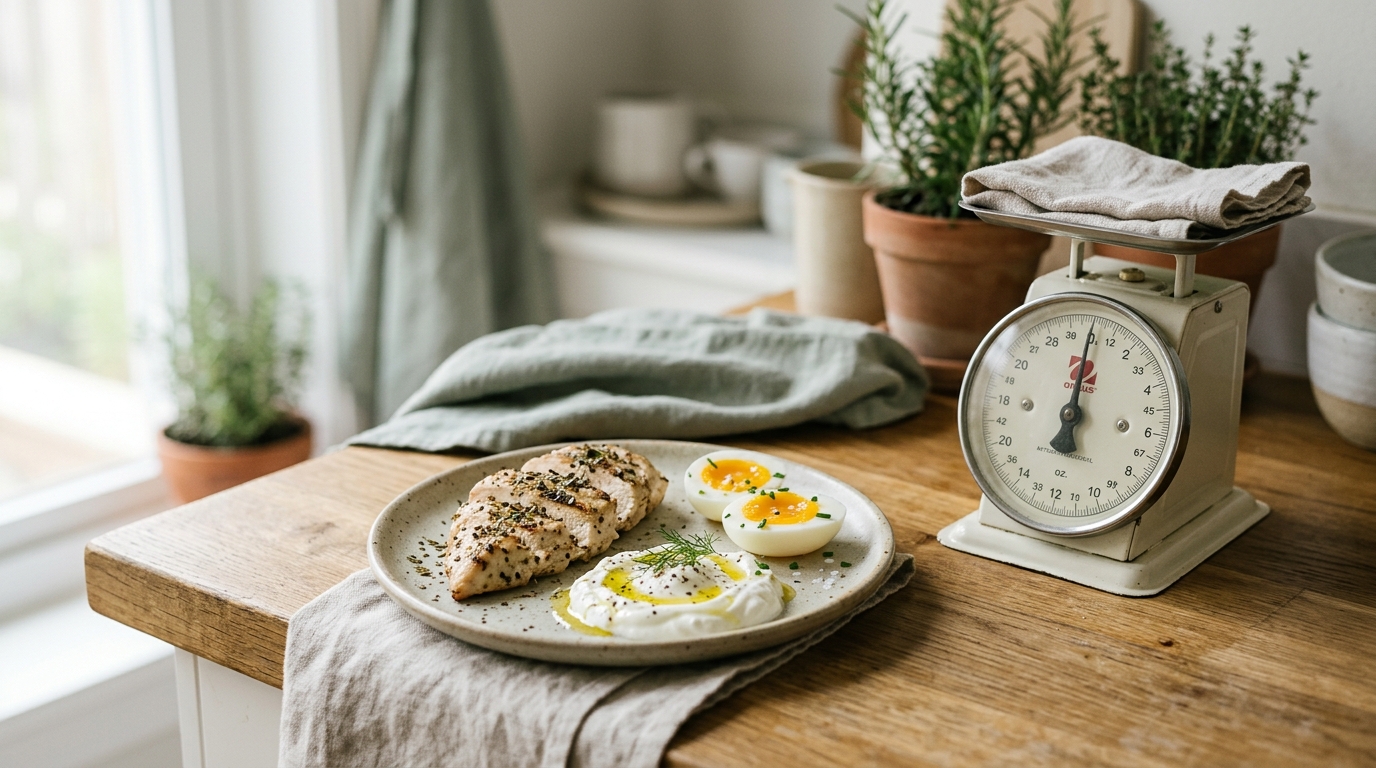
On a GLP-1 medication like Ozempic, Wegovy, or Mounjaro, aim for 1.2 to 1.5 grams of protein per kilogram of body weight daily (0.55 to 0.68 grams per pound). An 80 kg (176 lb) person lands at 96 to 120 grams a day. Obesity medicine clinicians commonly cite this range to protect lean muscle during fast weight loss. If you carry a lot of excess weight, most clinicians calculate from your target weight instead of the number on the scale today. Ask yours which figure to use.
The medication changes how quickly your stomach empties and how hungry you feel. Lower appetite makes the calorie deficit easy. Hitting your protein target gets harder, because there's less room on the plate. Your prescriber or a registered dietitian should set the final number against your medical history.
Why Muscle Loss Happens During Rapid Weight Loss
Rapid weight loss strips fat and muscle at the same time. In semaglutide and tirzepatide trials, roughly a quarter to 40 percent of the weight lost was lean mass in people who didn't train or eat enough protein. Less muscle means a lower metabolic rate and less strength.
Muscle burns calories around the clock. Lose a few kilos of it and your basal metabolic rate falls with it, so maintenance gets harder later.
Fatigue follows. Patients often blame the drug when the real cause is weeks of eating 40 grams of protein a day. Keep protein high and the scale moves mostly on fat.
How Much Protein Do You Really Need?
Most clinical guidance puts the target at 1.2 to 1.5 grams per kilogram of body weight. At 90 kilograms that's 108 to 135 grams a day. Strength training pushes the useful ceiling to about 2.0 grams per kilogram.
Run your own number through the GLP-1 protein calculator. Here's how it works out for someone at 180 pounds (82 kg):
- Minimum target (1.2g/kg): 98 grams of protein per day.
- Best target (1.5g/kg): 123 grams of protein per day.
- High activity target (2.0g/kg): 164 grams of protein per day.
Protein is one of three macros competing for very little appetite.
Hitting Protein Targets with Suppressed Appetite
Hitting high protein goals when you have zero appetite requires prioritizing protein first at every meal. Aim for 25 to 30 grams of protein per eating occasion, relying on nutrient-dense, low-volume sources like Greek yogurt, protein shakes, and lean poultry to avoid early fullness.
These drugs delay gastric emptying, so food sits in your stomach longer and a normal-sized dinner feels like too much. The fix is structural: change what goes on the plate first, and how often you eat.
Eat Protein First
Eat the protein before you touch the carbs or fat. Fullness tends to arrive halfway through a plate now, and whatever you ate first is what you actually got. Starches and vegetables go last.
Increase Meal Frequency
Three big meals rarely work on a GLP-1. Split the target across five small ones instead: 25 grams five times a day is 125 grams, which covers most adults without stretching your stomach once.
What to Eat on High-Nausea Days
On days when nausea peaks, switch to cold liquid protein with a mild flavor. Cold food gives off fewer smells, and smell is what usually turns your stomach. Protein water, clear whey isolate, plain Greek yogurt, and low-fat cottage cheese offer high protein yields without sitting heavily in your stomach.
Fat slows gastric emptying further and makes nausea worse, so lean sources win on bad days. The daily number lives in how much fat you should eat per day.
Best Protein Options for Queasy Stomachs
- Clear whey protein: Mixes like juice, avoids the heavy, milky texture of standard shakes.
- Bone broth: Provides 9 to 10 grams of protein per cup and replenishes sodium.
- Edamame: cold, salty, and you can pick at a handful over an hour.
- String cheese: Low volume, easy to digest, and provides 7 grams of protein per stick.
High-Protein Foods and Portion Sizes
To hit 120 grams of protein, you need to know what that looks like on a plate. Here is a quick reference table for common, low-volume protein sources:
- Chicken breast (cooked, 4 oz / 113g): 35g protein
- Non-fat Greek yogurt (1 cup / 225g): 24g protein
- Canned tuna in water (1 can / 140g): 28g protein
- Cottage cheese (low fat, 1 cup / 225g): 28g protein
- Whey protein powder (1 scoop): 25g protein
- Eggs (2 large): 12g protein
- Tofu (firm, 1/2 cup / 126g): 22g protein
How to Track Your Protein Intake Accurately
Guessing portions almost always means under-eating protein, because suppressed hunger removes the signal you used to rely on. Logging what you eat is the only way to know whether you cleared 1.2 to 1.5 grams per kilogram or stopped at half of it.
Eyeballing fails fastest when you feel sick. A chicken piece that looks enormous on a queasy afternoon can be 60 grams of meat and 15 grams of protein.
MacroLog is built for exactly this problem. Log a meal by photo, voice, text, barcode, or search, and watch protein climb toward the daily goal you set. It also tracks 12 micronutrients and water, syncs with Apple Health and Google Health Connect, and works offline on iOS and Android. There's a free tier; AI photo and voice logging sit in Pro. It tracks food, not medication. Your dose, your schedule, your side effects stay between you and your prescriber.
The same log catches the opposite problem. Appetite suppression can drop you to 800 calories a day without you noticing, which is where hair loss and nutrient gaps start.
Frequently Asked Questions
Can I drink protein shakes every day on a GLP-1?
Yes. A shake delivers 25 to 30 grams without the volume of a meal, and whey isolate or clear whey digest most easily. Keep most of your intake in whole food, though, or you'll fall short on fiber and micronutrients.
What happens if I don't eat enough protein on Ozempic or Wegovy?
Too little protein leads to muscle wasting, hair loss, constant fatigue and a weaker immune system. You will lose weight on the scale, but a large portion of it will be muscle tissue, which negatively alters your body composition.
Should I force myself to eat protein if I feel sick?
Do not force large meals if you feel physically ill. Instead, sip on protein water or bone broth throughout the day. Small, continuous intake is better than forcing a large meal that might cause vomiting. Always discuss severe nausea with your prescribing doctor.
How do I track my food without getting overwhelmed?
Focus strictly on calories and protein first. Let the carbs and fats fall where they may while you adjust to the medication.
Where to Start This Week
Pick your number first: 1.2 to 1.5 grams per kilogram, calculated with your prescriber if you're carrying a lot of excess weight. Then split it across four or five eating occasions so no single meal has to be big. If you're planning to stop the medication soon, see how to keep weight off after stopping a GLP-1 and run your maintenance calories before appetite returns.
Then measure it for two weeks and see how close you actually get. Download MacroLog, log a few meals by photo or voice, and let the daily protein total tell you whether the plan is working.
