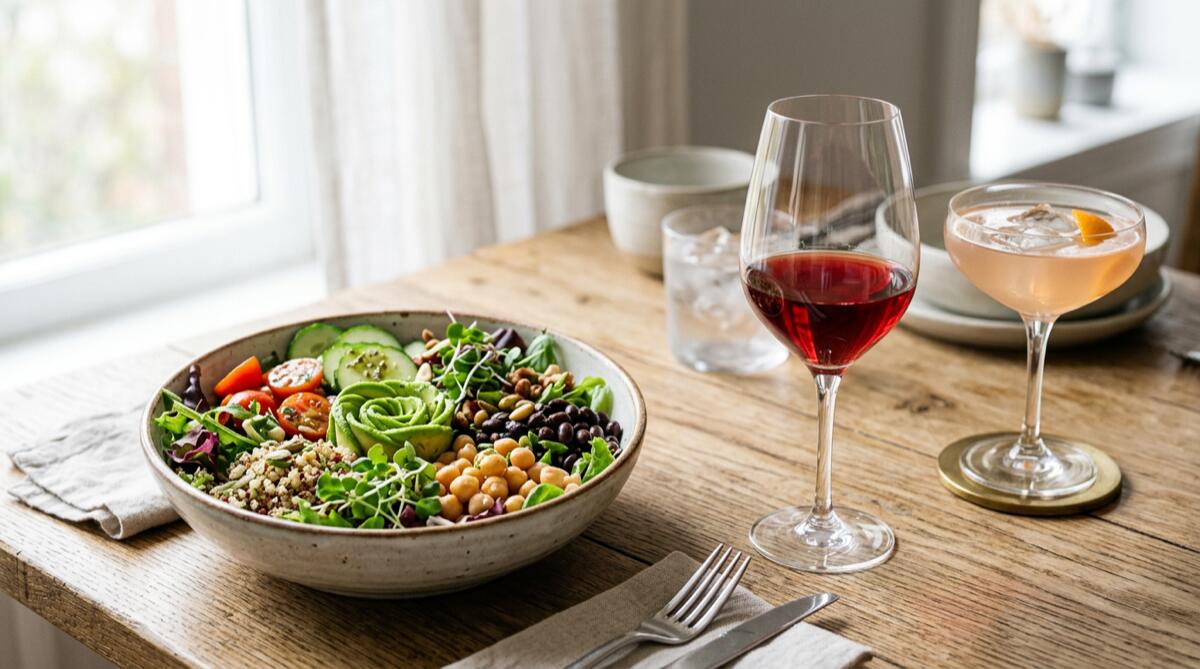
The Weekend Dilemma: Can Alcohol and Weight Loss Coexist?
You have been doing everything right all week. You have hit your protein goals, stayed within your energy limits, and crushed your workouts. But then Friday night arrives, bringing with it happy hour, dinner with friends, or a relaxing glass of wine on the couch. Suddenly, you are faced with a burning question: How does this affect my progress?
The relationship between alcohol weight loss and diet culture is often misunderstood. For decades, traditional diets preached complete abstinence from alcohol, labeling it as the ultimate progress-killer. However, modern nutritional science tells a more nuanced story. You do not necessarily have to choose between reaching your fitness goals and enjoying a social life.
Understanding how your body processes alcohol, how it impacts your metabolism, and how to track it accurately is the key to finding balance. In this comprehensive guide, we will dive deep into the science of alcohol and weight loss, explore the hidden impacts on your diet, and give you actionable strategies to enjoy a drink without derailing your progress.
The Science: How Alcohol Affects Weight Loss and Metabolism
To understand why alcohol can stall your progress, we need to look at what happens inside your body the moment you take a sip. Unlike proteins, fats, and carbohydrates, alcohol is treated differently by your digestive system and metabolism.
The Reality of "Empty" Calories
When nutritionists call alcohol "empty calories," they mean it literally. Alcohol provides a significant amount of energy but zero nutritional value—no vitamins, no minerals, no fiber, and no protein. While carbohydrates and protein contain 4 calories per gram, and dietary fat contains 9 calories per gram, pure alcohol (ethanol) packs 7 calories per gram.
This makes alcohol incredibly dense in energy. If you want to understand more about how these numbers fit into your daily intake, check out our guide on . Because alcohol is so calorie-dense, a few casual drinks can easily add hundreds of calories to your daily total, potentially wiping out your hard-earned in a matter of hours.
Metabolic Prioritization: The Fat-Burning Pause Button
Here is where the biology gets fascinating—and slightly frustrating for those trying to lose weight. Your body recognizes ethanol as a toxin. Because it cannot store alcohol for later use (the way it stores carbs as glycogen or fat as adipose tissue), your liver must process and eliminate it immediately.
When you drink, your body hits the "pause" button on metabolizing everything else. Fat burning completely stops. Carbohydrate and protein digestion are put on the back burner. Your liver prioritizes clearing the alcohol from your system. If you eat a heavy, high-fat meal while drinking, those food calories are much more likely to be stored as body fat because your body is too busy dealing with the alcohol to burn them off.
The Hidden Costs: How Alcohol Sabotages Your Diet
The direct calories from alcohol are only half the story. The indirect effects of drinking often do far more damage to your weight loss goals than the drinks themselves.
The "Munchies" and Lowered Inhibitions
Have you ever noticed how a late-night pizza seems irresistible after a few drinks? This isn't just a lack of willpower; it is biology. Alcohol stimulates the agouti-related protein (AgRP) neurons in your brain, which are the exact same neurons activated by starvation. Your brain literally thinks you are starving, triggering intense cravings for salty, fatty, and carbohydrate-rich foods.
Furthermore, alcohol lowers your inhibitions and impairs your decision-making. That strict adherence to your diet plan suddenly feels less important after two margaritas. This combination of increased physiological hunger and decreased psychological restraint is why many people consume more calories in post-drinking snacks than in the alcohol itself.
Sleep Disruption and Hormonal Chaos
While a glass of wine might help you fall asleep faster, alcohol severely disrupts your sleep architecture, particularly your REM (Rapid Eye Movement) sleep. Poor sleep is a massive enemy of weight loss.
When you don't get quality sleep, your body produces more ghrelin (the hunger hormone) and less leptin (the fullness hormone). You wake up the next day feeling ravenous, sluggish, and craving quick energy in the form of sugar and refined carbs. Plus, your cortisol (stress hormone) levels spike, which can promote fat storage, particularly around the midsection. If you are struggling to understand why your scale isn't moving despite your efforts, this hormonal cascade might be why.
The Next-Day NEAT Drop
NEAT stands for Non-Exercise Activity Thermogenesis—the calories you burn doing everyday movements like walking, fidgeting, and cleaning. When you are hungover or simply fatigued from poor sleep, your NEAT plummets. You are more likely to lie on the couch all day than go for a walk or clean the house. This drastic drop in daily calorie expenditure significantly impacts your , making weight loss even harder.
How to Track Alcohol Calories Accurately
If you want to include alcohol in your diet without ruining your progress, you absolutely must track it. But tracking alcohol can be tricky because it isn't officially classified as a carbohydrate, fat, or protein. So, how do you log it?
To maintain your energy balance, you should convert alcohol calories into either carbohydrate or fat macros. Here is the math:
- To track as Carbohydrates: Take the total calories of the drink and divide by 4. (e.g., a 120-calorie glass of wine = 30g carbs).
- To track as Fats: Take the total calories of the drink and divide by 9. (e.g., a 120-calorie glass of wine = 13.3g fat).
- To track as a Mix: You can split the calories half-and-half between carbs and fats.
Never sacrifice your protein macros for alcohol, as protein is essential for muscle preservation and satiety. If you need a refresher on macro tracking, check out our guide on .
Does doing this math sound exhausting? This is where MacroLog changes the game. As an AI-powered calorie tracker, MacroLog allows you to simply scan the barcode of your beer, snap a photo of your cocktail, or use voice logging to say, "I drank a 5-ounce glass of Pinot Noir." The app instantly calculates the calories and adjusts your daily allowances without you having to do complex math. It is the perfect tool for .
The Best and Worst Alcoholic Drinks for Weight Loss
Not all drinks are created equal when it comes to your waistline. Making smart swaps can save you hundreds of calories over a weekend.
The Worst Offenders (Avoid or Limit)
- Sugary Cocktails: Margaritas, Piña Coladas, and Long Island Iced Teas are loaded with syrups, juices, and multiple types of liquor. A single cocktail can pack 300 to 500 calories.
- Craft Beers and IPAs: While delicious, heavy craft beers often have higher alcohol by volume (ABV) and are packed with carbohydrates. A pint of a double IPA can easily exceed 300 calories.
- Sweet Wines and Liqueurs: Dessert wines, Baileys, and flavored liqueurs contain massive amounts of added sugar.
The Best Choices (Diet-Friendly)
- Spirits with Zero-Calorie Mixers: Vodka, gin, tequila, or whiskey mixed with soda water, diet cola, or a squeeze of fresh lime. (Approx. 90-100 calories per drink).
- Dry Wines: A standard 5-ounce glass of dry white (Sauvignon Blanc, Pinot Grigio) or dry red (Pinot Noir, Cabernet Sauvignon) contains about 120 calories and minimal residual sugar.
- Light Beers: If you love beer, opt for light lagers which typically range from 90 to 110 calories per bottle.
- Hard Seltzers: These have become incredibly popular because they are pre-portioned, refreshing, and usually hover around 100 calories and 2g of carbs per can.
Actionable Strategies to Drink and Still Lose Weight
You don't have to be a hermit to achieve your dream physique. By implementing a few smart strategies, you can enjoy social events while keeping your alcohol weight loss goals intact.
1. Plan Your Day in Advance
If you know you are going out on Saturday night, plan your meals backward. Pre-log your anticipated drinks in MacroLog first thing in the morning. Then, build your meals for the rest of the day around your remaining calories. Focus heavily on lean proteins and fibrous vegetables during the day to stay full while leaving a "calorie buffer" for the evening.
2. Eat a High-Protein Meal Before You Drink
Never drink on an empty stomach. Eating a solid meal rich in protein and fiber before you go out slows the absorption of alcohol into your bloodstream. It also keeps you satiated, making you much less likely to order a plate of loaded nachos at midnight.
3. The 1-to-1 Water Rule
For every alcoholic beverage you consume, drink one full glass of water. This strategy does three things: it keeps you hydrated, it physically fills your stomach so you drink slower, and it naturally cuts your total alcohol consumption for the night in half.
4. Set a Hard Limit
Decide how many drinks you will have before you arrive at the venue, and stick to it. Whether it is two glasses of wine or three vodka sodas, having a predetermined boundary helps you avoid the slippery slope of lowered inhibitions.
5. Don't Let a Slip Become a Slide
If you end up drinking more than planned and eating that late-night pizza, do not panic. One night of going over your calories will not ruin weeks of progress. The worst thing you can do is wake up the next day and abandon your diet entirely. Forgive yourself, hydrate, and get right back to your normal eating routine. Consistency over time is what matters, a concept we explore deeply in How Long Should You Track Calories? The Complete Timeline.
Conclusion: Finding Your Balance
The journey to a healthier, leaner body doesn't require you to give up everything you enjoy. Alcohol and weight loss can coexist, provided you approach drinking with mindfulness, planning, and moderation. By understanding the caloric density of alcohol, choosing smarter drinks, and accounting for those calories in your daily tracking, you can raise a glass to your progress without guilt.
Taking the guesswork out of your diet is the fastest way to see results. If you are tired of manually calculating macros for every drink and meal, it is time to upgrade your tracking experience. With features like barcode scanning, voice logging, and AI photo recognition, keeping your diet on track has never been easier.
Ready to take control of your nutrition without giving up your social life? Download MacroLog today and start tracking the smart way!