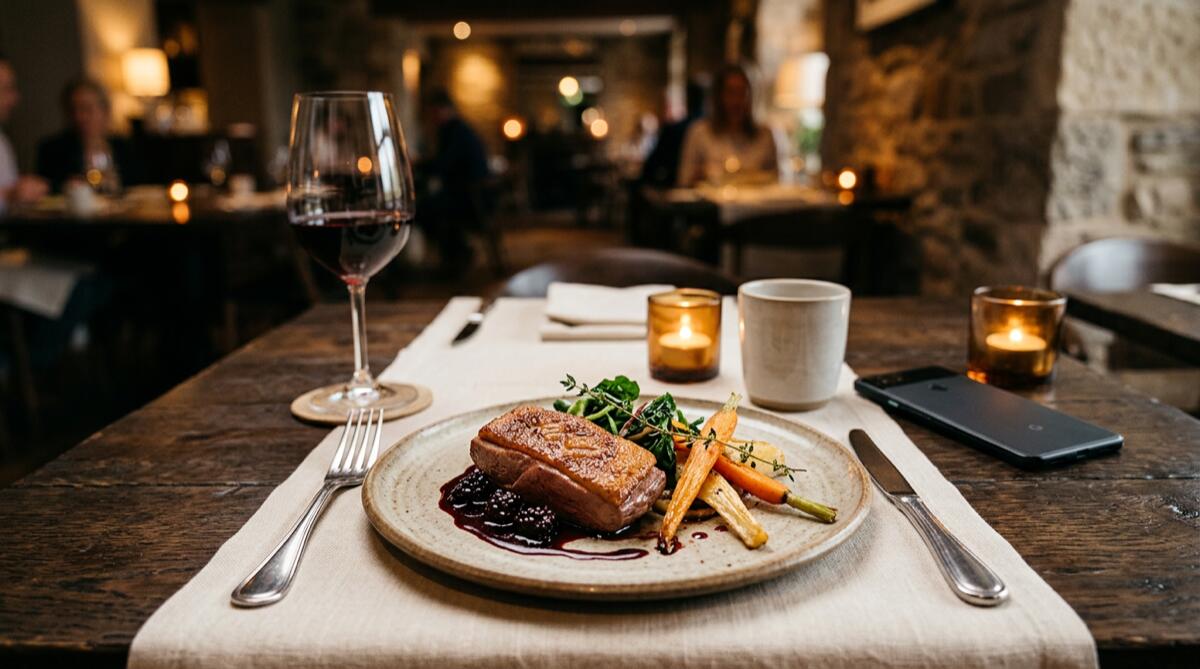
The Dilemma of Dining Out on a Diet
For anyone committed to their health and fitness goals, restaurants can feel like a minefield. You have been diligently weighing your food, logging your meals, and suddenly, a Friday night dinner invitation threatens to derail your progress. But here is the good news: you do not have to choose between a thriving social life and achieving your fitness goals. Learning how to track calories eating out is a skill, and like any skill, it gets easier with practice.
Many people assume that dining out means they either have to order a dry garden salad or completely abandon their diet for the day. Neither is true. By understanding how restaurants prepare food, utilizing practical estimation techniques, and leveraging modern technology like MacroLog, you can enjoy your favorite restaurant meals while staying perfectly aligned with your goals. If you are new to the basics of energy balance, you might want to start with our guide on How to Count Calories: The Complete Beginner's Guide.
Why Are Calories Eating Out So Hard to Track?
Before diving into the strategies, it is essential to understand why restaurant meals are notoriously difficult to track. Even if you order something that sounds healthy, the calorie count can be surprisingly high.
1. The Secret Ingredient is Usually Butter or Oil
Restaurant chefs have one primary goal: to make the food taste as delicious as possible. They are not concerned with your . This means vegetables are often sautéed in heavy oil, steaks are finished with a generous pat of butter, and sauces are thickened with cream. A single tablespoon of oil adds 120 calories to a dish, and it is almost impossible to detect by eye.
2. Super-Sized Portions
Restaurant portions are significantly larger than what you would serve yourself at home. A standard restaurant pasta dish can easily contain three to four standard serving sizes of noodles. This portion distortion makes visual estimation incredibly tricky, especially if you are not used to weighing your food at home.
Pre-Restaurant Strategies: Setting Yourself Up for Success
Winning the battle of calories eating out starts long before you sit down at the table and open the menu.
Review the Menu in Advance
Almost every restaurant has its menu available online. Taking five minutes to review your options before you arrive removes the pressure of making a split-second decision while you are hungry and distracted by socializing. Look for dishes that feature lean proteins and vegetables, and decide what you will order before you walk through the door.
Buffer Your Calories
If you know you are having a large dinner out, adjust your meals earlier in the day. Opt for high-protein, high-volume, low-calorie foods for breakfast and lunch. Think egg white omelets, large salads with lean chicken, or Greek yogurt. This strategy ensures you have a larger calorie "budget" for your evening meal.
How to Estimate Calories Eating Out (Actionable Tips)
When you cannot scan a barcode or use a food scale, you have to rely on estimation. Here are the most effective ways to gauge your intake without looking obsessive.
1. Deconstruct the Meal
Instead of trying to find an entry for "Gourmet Bacon Cheeseburger with Secret Sauce," break the meal down into its individual components. When logging the meal, input the bun, the beef patty, the slice of cheese, the bacon, and the sauce separately. This method is significantly more accurate than relying on generic database entries.
2. Use the Hand Portion Method
Your hands are the perfect portable measuring tool. Use this simple guide to estimate portion sizes when tracking calories eating out:
- Protein (Meat, Fish, Poultry): The size and thickness of your palm is roughly 3-4 ounces (20-30g of protein).
- Carbohydrates (Rice, Pasta, Potatoes): A cupped handful is about 1/2 cup to 1 cup.
- Fats (Butter, Oils, Cheese): The size of your thumb is roughly one tablespoon.
- Vegetables: The size of your fist represents about one cup.
3. The 20-30% Buffer Rule
Because of those hidden cooking oils and butters mentioned earlier, it is always a safe bet to add a buffer to your estimation. If you calculate that your meal is around 800 calories, add an extra 20% (160 calories) to account for hidden fats. If you want to dive deeper into why this happens, read our article: Why Your Calorie Count Is Wrong (And How to Fix It).
Smart Menu Choices and Modifications
You have the power to customize your order to fit your . Do not be afraid to politely ask the server for minor modifications.
Look for the Right Cooking Methods
The words used on the menu are massive clues to the dish's calorie density. Avoid words like: crispy, pan-fried, battered, au gratin, creamy, or smothered. Look for words like: grilled, baked, steamed, roasted, or broiled.
Sauces and Dressings on the Side
Salads can be a dieter's best friend or their worst enemy. A healthy chicken salad can easily exceed 1,000 calories if it is drowning in Caesar dressing. Always ask for dressings and rich sauces on the side. Dip your fork into the dressing before taking a bite of salad—you will get the flavor without consuming hundreds of extra calories.
Using Technology to Your Advantage
Estimating calories eating out used to involve pulling out a notepad and guessing wildly. Today, technology makes it incredibly seamless. This is where MacroLog truly shines.
Instead of manually searching for every single ingredient, you can use MacroLog's AI photo recognition feature. Simply snap a quick picture of your plate before you dig in. The AI will analyze the image, identify the food components, estimate the portion sizes, and log the calories and macros for you. If you prefer, you can also use the voice logging feature—just tell the app, "I ate a grilled chicken breast with a cup of mashed potatoes and steamed broccoli," and it will calculate the rest. It takes the stress completely out of the restaurant experience.
Managing Your Mindset: Consistency Over Perfection
Perhaps the most important aspect of tracking calories eating out is your mindset. It is crucial to remember that calorie tracking is an estimation game, even when you are cooking at home. When you eat out, the margin of error simply increases slightly.
Do not let the fear of inaccuracy ruin your evening. If you estimate your meal was 1,200 calories, but it was actually 1,500, that 300-calorie difference will not cause you to gain a pound of fat overnight. Weight loss and health are built on long-term consistency, not daily perfection. If you struggle with the mental aspect of tracking, we highly recommend reading .
Conclusion: Enjoy Your Meal
Managing calories eating out does not have to be a source of anxiety. By planning ahead, making smart menu choices, deconstructing your meals, and using the right tools, you can stay on track with your fitness goals while enjoying the social and culinary pleasures of dining at a restaurant.
Remember, the goal of a diet is to enhance your life, not restrict it. Armed with these strategies, you are ready to tackle any restaurant menu with confidence. Ready to make tracking at restaurants effortless? Download MacroLog today and let our AI handle the math while you enjoy your meal!

