The Rise of Plant-Based Fitness
Whether you have adopted a plant-based lifestyle for ethical, environmental, or health reasons, you have likely encountered the age-old question: "Where do you get your protein?" While getting enough protein on a vegan or vegetarian diet is entirely possible, optimizing your nutrition for fitness, muscle growth, or weight loss requires a more strategic approach. This is where vegan macro tracking comes into play.
Tracking your macronutrients—protein, carbohydrates, and fats—ensures that you are not just eating healthy, but eating in a way that supports your specific body composition goals. In this comprehensive guide, we will break down exactly how to navigate macro tracking as a vegetarian or vegan, how to overcome common plant-based hurdles, and how modern tools can make the process effortless.
Why Vegan Macro Tracking Matters
There is a common misconception that because plant-based foods are generally highly nutritious and rich in fiber, you can eat them in unlimited quantities without gaining weight. However, the fundamental laws of energy balance still apply. Whether you are eating grass-fed steak or organic quinoa, consuming more energy than you expend will lead to weight gain.
If you are unsure about how this works, we highly recommend reading our guide on . For vegans, tracking macros is especially crucial because plant-based diets naturally lean heavily toward carbohydrates. Without a conscious effort to balance your plate, you might find yourself eating 70% carbs, 20% fats, and only 10% protein. While this might provide enough energy for daily life, it is suboptimal for preserving lean muscle mass during a calorie deficit or building muscle during a bulk.
Decoding Plant-Based Macronutrients
To master vegan macro tracking, you need a solid understanding of how macronutrients behave in plant foods. Let us look at how this applies specifically to a vegan diet.
1. Protein: The Vegan's Holy Grail
Unlike animal products, which are typically isolated sources of protein (like chicken breast) or protein and fat (like beef), most plant-based protein sources come packaged with carbohydrates. This is the most significant challenge in vegan macro tracking. For example, to get 20 grams of protein from black beans, you also have to consume about 40 grams of carbohydrates.
To hit your protein goals without overshooting your carb limit, you need to rely on "leaner" plant proteins. Excellent sources include:
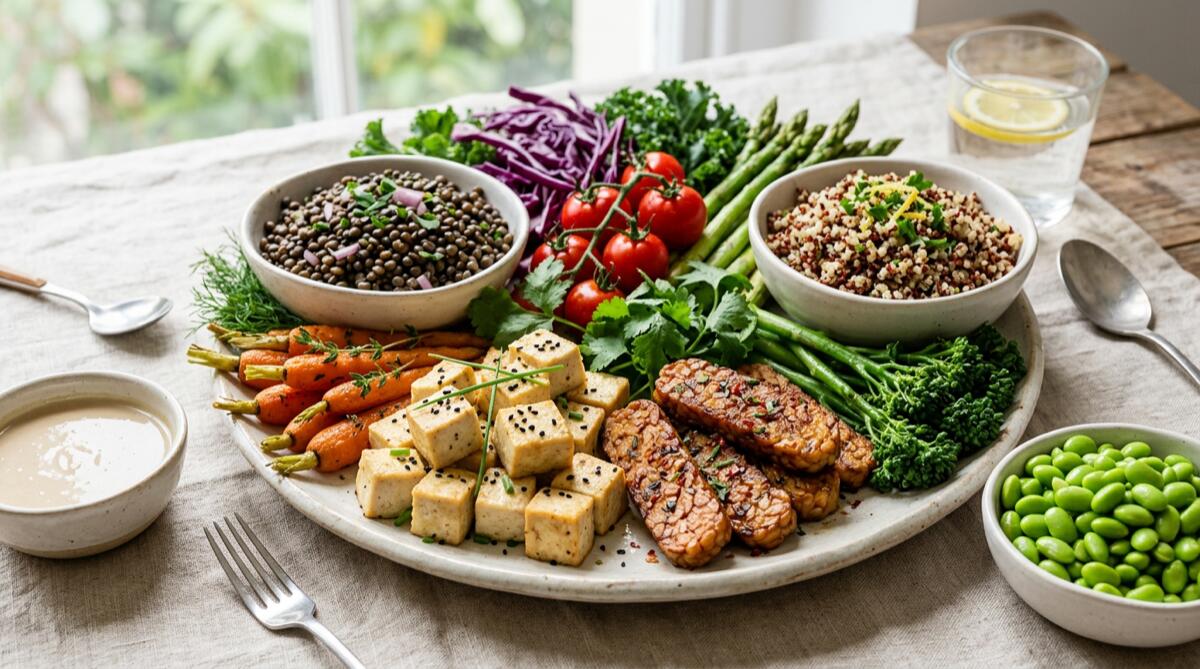
- Tofu and Tempeh: Highly versatile, complete proteins that are relatively low in carbs.
- Seitan (Vital Wheat Gluten): A protein powerhouse that mimics the texture of meat, offering up to 25g of protein per 100g with minimal carbs.
- Edamame: A great snack that balances protein, fiber, and healthy fats.
- Vegan Protein Powders: Pea, rice, or soy protein blends are incredibly helpful for hitting high protein targets efficiently.
2. Carbohydrates: Your Primary Fuel
Carbohydrates are rarely an issue on a plant-based diet; in fact, they are the foundation. The key is choosing the right types of carbs. Focus on complex, unrefined carbohydrates like oats, quinoa, sweet potatoes, and brown rice. These foods provide sustained energy for your workouts and are packed with essential micronutrients.
3. Fats: The Hormone Protectors
Fats are essential for hormone regulation, brain health, and nutrient absorption. However, they are also calorie-dense (9 calories per gram). Vegans often consume healthy fats through avocados, nuts, seeds, and oils. It is easy to accidentally overconsume calories by heavy-handed pouring of olive oil or snacking on almonds. If you want to know exactly how to balance your dietary fat, read our article: How Much Fat Should You Eat Per Day? The Ultimate Guide.
Common Challenges in Vegan Macro Tracking (And How to Overcome Them)
The Carb-Protein Overlap
As mentioned, legumes and beans are fantastic foods, but they are primarily carbohydrate sources with a moderate amount of protein. If you rely solely on lentils for protein, you will likely exceed your daily carbohydrate allowance. The Solution: Mix your protein sources. Pair a moderate-carb protein (like beans) with a low-carb protein (like tofu or a vegan protein shake) to balance your daily totals.
The Fiber Overload
A whole-food, plant-based diet is incredibly rich in fiber. While fiber is fantastic for digestion and satiety, consuming 60-80 grams of fiber a day (which is easy to do on a vegan diet) can lead to severe bloating and gastrointestinal distress, especially if you are eating in a calorie surplus. The Solution: If your calories are high, do not be afraid to incorporate some lower-fiber, refined foods like white rice, traditional pasta, or fruit juices to hit your macro goals without overloading your digestive system.
Step-by-Step Guide to Setting Up Your Plant-Based Macros
Ready to start tracking? Here is how to set up your vegan macros for success:
- Calculate Your TDEE: First, you need to know your Total Daily Energy Expenditure.
- Determine Your Calorie Goal: Subtract 300-500 calories for weight loss, or add 200-300 for muscle gain. If you need help understanding this concept, read .
- Set Your Protein: Aim for 0.8 to 1.0 grams of protein per pound of body weight. On a vegan diet, aiming slightly higher can be beneficial due to the lower bioavailability of some plant proteins.
- Set Your Fats: Allocate 20-30% of your total daily calories to healthy fats.
- Fill the Rest with Carbs: The remaining calories will come from carbohydrates. For a detailed breakdown of this math, visit .
How MacroLog Makes Vegan Tracking Effortless
Tracking macros on a vegan diet used to mean spending hours reading labels and manually entering complex homemade recipes. Today, MacroLog takes the friction out of the process using advanced AI technology.
Because vegan meals often consist of "bowls" with multiple mixed ingredients (like a Buddha bowl with quinoa, roasted chickpeas, tahini dressing, and kale), manual entry can be a nightmare. With MacroLog's AI Photo Recognition, you can simply snap a picture of your meal, and the app will identify the ingredients and estimate the portions and macros for you.
Cooking a complex vegan curry? Use the Voice Logging feature. Just say, "I ate a bowl of tofu tikka masala with a cup of basmati rice," and MacroLog will instantly log the macros. Furthermore, the extensive Barcode Scanner makes it incredibly easy to track store-bought meat alternatives, vegan cheeses, and plant milks, ensuring your macro count is always accurate.
Conclusion
Vegan macro tracking does not have to be an overwhelming puzzle of balancing beans and rice. By understanding the macronutrient profiles of plant-based foods, prioritizing high-yield protein sources like tofu and seitan, and managing your fiber intake, you can sculpt the physique you want while staying true to your dietary choices.
The key to long-term success is consistency, and consistency requires convenience. Stop stressing over complicated spreadsheets and manual food diaries. Let AI do the heavy lifting for you.
Ready to take the guesswork out of your plant-based diet? Download MacroLog today and start hitting your vegan macro goals with ease!


