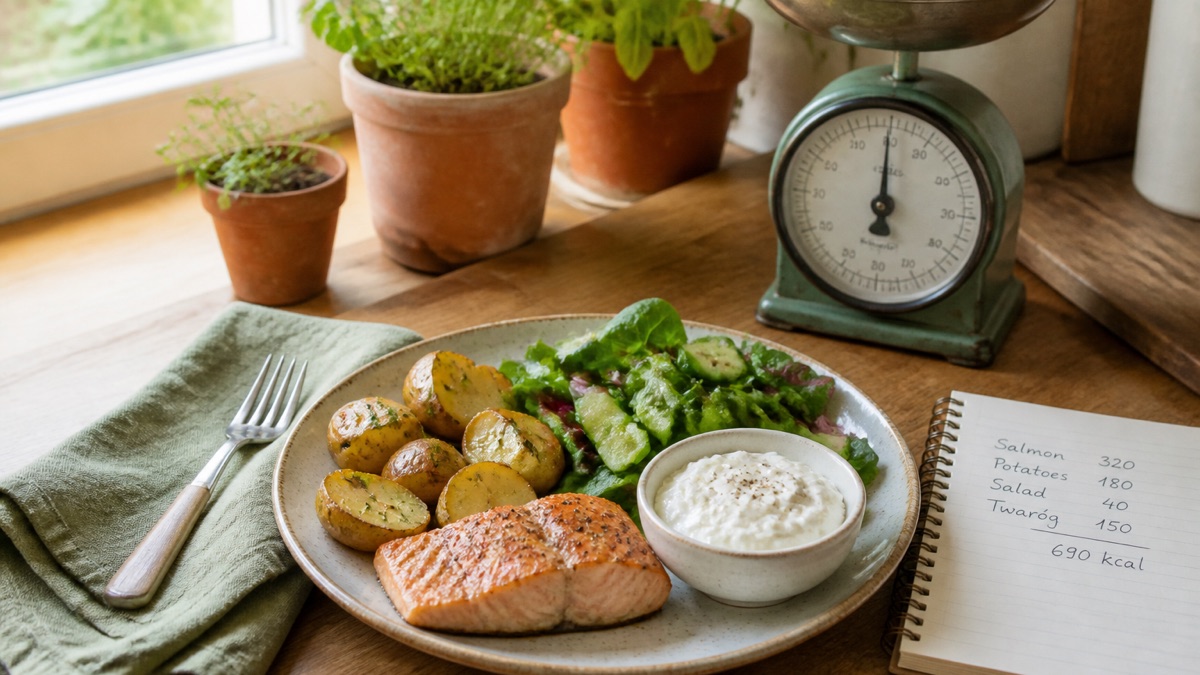
When you stop a GLP-1 medication like Ozempic, Wegovy, or Mounjaro, your appetite comes back within days to weeks but your calorie need stays at the new, lower number set by your smaller body. A person who lost 30 pounds burns roughly 150 to 250 fewer calories a day than before. The medication suppressed hunger and allowed the deficit; stopping removes that suppression but not the need to match intake to the smaller maintenance figure. Track your food for the first 12 weeks off the medication, or the weight returns faster than you lost it.
Nothing below is advice about your prescription. When and how to stop a GLP-1 medication is a decision for your prescriber. This is food tracking only.
Why Weight Regain Happens After Stopping
Weight regain after stopping semaglutide or tirzepatide is not a drug failure. It is a return to your natural appetite meeting a smaller body that burns fewer calories. The STEP 1 trial extension showed participants regained about two-thirds of their lost weight over the 52 weeks after withdrawal when they went back to normal eating habits.
Your appetite suppression wears off over roughly 5 to 8 weeks as the medication clears. Hunger and food thoughts increase. The drive to eat comes back. But the energy your body needs each day does not rise with appetite—it stays matched to your new, lower weight.
A 200-pound man who drops to 170 pounds burns about 150 to 250 fewer calories daily just from being smaller. That gap is permanent unless weight comes back. Eating the same portions you did at 200 pounds produces a 1,000 to 1,500 calorie weekly surplus, which translates to regaining a pound every two to three weeks. Our guide on explains how body weight affects daily burn.
Calculate Your Maintenance Calories at Your New Weight
Before appetite fully returns, run your maintenance number at your current weight. Maintenance calories are the daily intake that keeps weight stable—not gaining, not losing. This is not the deficit number you were eating during treatment. It is higher, but still lower than what you ate before starting the medication.
Use the GLP-1 maintenance calculator to get your specific figure based on your new weight, activity level, and how much you lost. An 80 kg (176 lb) moderately active person typically maintains at around 2,000 to 2,200 calories, compared to 2,400 to 2,600 at 100 kg.
This number is not negotiable. Eating above it produces weight regain at a predictable rate. Eating below it starts another deficit, which might be appropriate if you have more to lose, but requires the same tracking discipline. The calculator gives you the midpoint; test it for two weeks and adjust by 100 to 150 calories if your seven-day weight average moves more than half a pound.
Keep Protein at GLP-1 Levels to Defend Muscle
Your protein target does not drop when you stop the medication. Hold 1.2 to 1.5 grams per kilogram of body weight daily even as appetite returns, because the temptation will be to fill the hunger gap with carbs and fat. Muscle you kept during the loss phase disappears fast if protein falls and lifting stops.
At 80 kilograms that is still 96 to 120 grams of protein a day. At 90 kilograms it is 108 to 135 grams. Calculate your number with the GLP-1 protein calculator and stick to it. Regained weight without resistance training and adequate protein comes back almost entirely as fat, not the muscle you protected on the way down.
Protein also keeps you fuller longer as appetite resets. A breakfast with 35 grams of protein reduces mid-morning hunger more than a carb-heavy one at the same calorie count. That matters most in weeks 3 through 8 off the medication, when hunger spikes and old portion sizes start looking reasonable again. For practical strategies on hitting high protein when you are no longer nauseous, read how much protein you need on a GLP-1.
What the STEP 1 Extension Actually Showed
The STEP 1 extension trial followed people who stopped semaglutide after 68 weeks of treatment. Over the next 52 weeks without the medication, participants regained a mean of 11.6 percentage points of their body weight, which was about two-thirds of what they had lost. Those who kept some of the behavioral changes—especially food logging and activity—regained less, though no group held all the loss without staying on the drug.
The trial did not prescribe structured maintenance tracking or calorie targets. Participants attended lifestyle counseling sessions but returned to self-selected eating. This mirrors real-world conditions where appetite suppression ends but no replacement system takes over. The regain was neither surprising nor a metabolic defect. It was appetite meeting a lower energy target without measurement.
Your outcome depends entirely on whether you build a tracking habit before appetite resets. Start that habit in the last month on the medication, not the first month off it. By the time hunger fully returns, the daily log should already be automatic.
The First 12 Weeks: Track or Regain
The first 12 weeks after stopping are the decision window. If you track your food daily and hold to your maintenance number during this period, weight stabilizes and the new baseline sets. If you rely on feel and portions, regain starts by week 4 and accelerates.
Track every meal, every snack, every drink with calories. Weigh yourself daily and watch the seven-day average, not the single-day number. Daily weight bounces with water and digestion, but the weekly trend shows whether you are holding, gaining, or still losing. Expect appetite to feel urgent around weeks 3 to 6. That is normal. The hunger signal is real, but the calorie need has not changed.
Twelve weeks gives your appetite time to recalibrate to the new normal. After three months of stable weight and tracked intake, the habit is set and portion sizes look correct again. Stopping tracking before that window closes is how regain happens. The data from STEP 1 and similar trials makes this pattern clear: people who stop measuring regain weight within months.
Resistance Training Twice a Week Still Matters
Lifting weights twice a week kept muscle during the loss phase. It keeps muscle during maintenance too. Stop training when you stop the medication and any regained weight will be fat, even if protein stays high. Two full-body sessions per week, six to eight working sets per major movement, defends what you built.
Maintenance training looks almost identical to deficit training. Squat or leg press, a hinge, a push, a pull, calves, and core. Loads should hold steady or climb slightly now that calories are higher. If weights are dropping while you eat at maintenance, either the calorie number is wrong or protein has fallen. Both are fixable with a week of stricter logging. For a detailed look at how training and diet work together long term, see our body recomposition guide.
How to Stabilize When Hunger Spikes
Weeks 4 through 8 are the hardest. Appetite overshoots, and everything you restricted during treatment suddenly looks necessary. Three tactics help.
- Front-load protein and volume at breakfast. Eating 40 grams of protein and a large serving of vegetables or fruit in the first meal reduces total daily intake by 200 to 300 calories without added hunger later.
- Pre-log dinner before lunch. Decide the evening meal in the morning, log it, and see how many calories remain for the rest of the day. This removes the 6 PM decision fatigue when hunger is highest.
- Schedule three 150-calorie snacks instead of grazing. Grazing adds 400 to 600 uncounted calories daily during the hunger spike weeks. Three timed snacks—Greek yogurt, an apple with peanut butter, a protein bar—keep intake visible.
These are not permanent rules. They are scaffolding for the 8 weeks when appetite is loudest and the new calorie budget feels impossible. After week 10, hunger intensity drops and portions feel normal again. If it does not, your maintenance number may be too low, or the original deficit was too aggressive and metabolic adaptation is real. Raise calories by 150 and retest for two weeks.
Frequently Asked Questions
Will I regain all the weight if I stop my GLP-1 medication?
Not automatically. Regain happens if you return to the same eating habits you had before treatment. The STEP 1 extension showed participants regained about two-thirds of lost weight over 52 weeks when they stopped tracking food and activity. Track your intake at your new maintenance calories and you hold the loss.
How long does it take for appetite to come back after stopping semaglutide?
Appetite suppression fades over 5 to 8 weeks as the medication clears. Hunger increases gradually, not all at once. Week 3 through week 6 tend to be the hardest, when appetite is high but your body has not yet adjusted to the smaller maintenance calorie target.
Should I go back on the medication if I start regaining weight?
That is a medical decision for your prescriber, not something to self-direct. Restarting a GLP-1 is common and sometimes planned as long-term or cyclical treatment. Discuss regain with your doctor before it reaches 10 pounds. Going back on the medication does not replace the need to track food when you eventually stop again.
Can I maintain my weight without tracking forever?
Some people transition to intuitive eating after 6 to 12 months of maintenance tracking, once portion sizes and hunger cues recalibrate to the new weight. Others find they need ongoing tracking, at least loosely, to stay stable. Test it after your first year: stop tracking for a month, weigh daily, and watch the trend. If weight stays within 3 pounds, intuitive eating might work. If it climbs, tracking is your long-term tool.
What if my weight is stable but I'm eating less than the calculator says I should?
If you are maintaining weight on fewer calories than predicted, one of three things is happening: your activity level is lower than you estimated, metabolic adaptation from a steep deficit is real, or your tracking has portion creep and you are eating more than logged. Run a diet break for two weeks at calculated maintenance, track with a food scale, and retest. If weight still holds at the lower number, that is your true maintenance and the calculator overestimated.
Start Tracking Before You Stop the Medication
The best time to start maintenance tracking is four weeks before your last dose, not four weeks after. Log your food daily while appetite is still low, learn what your new portions look like, and let the habit set before hunger returns. By the time the medication clears, the tracking routine is automatic and the calorie budget is familiar.
Download MacroLog and log everything by photo, voice, barcode, or text. The app tracks food, not medication, and works offline. Watch your daily calorie total against your maintenance number and your weekly weight trend. The first 12 weeks off the medication decide whether the loss holds or reverses. Tracking is what makes the difference.

