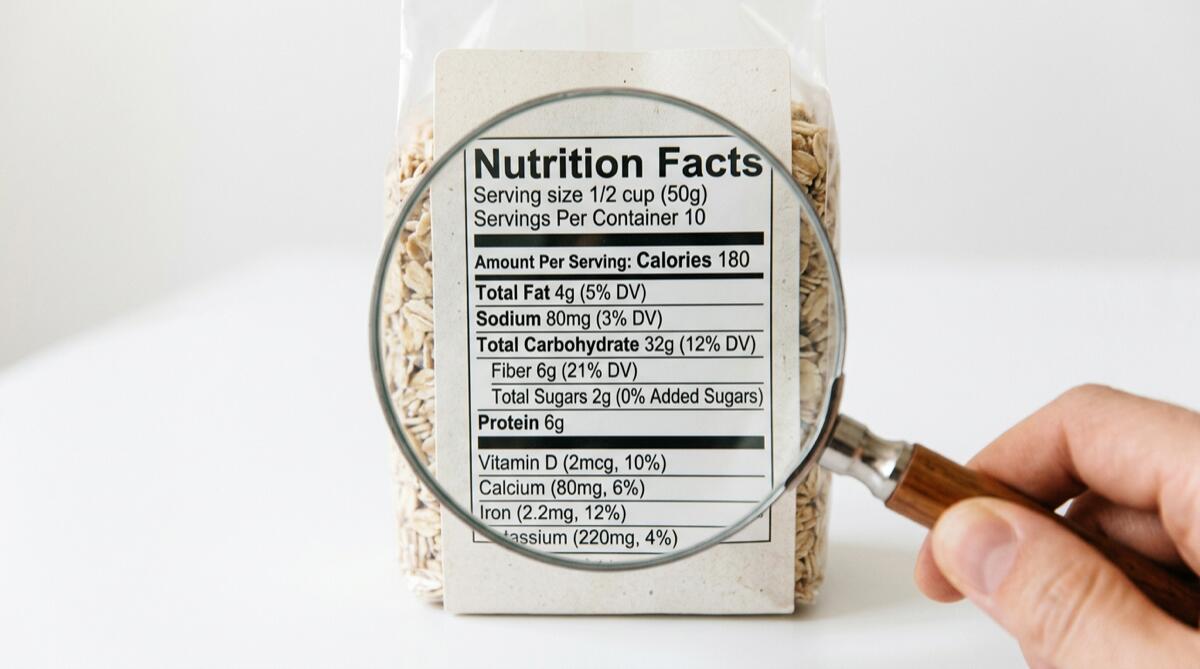
The Supermarket Minefield: Why Labels Matter
Picture this: You are standing in the supermarket aisle, staring at two different protein bars. One claims to be "All Natural," while the other boasts "Zero Added Sugar." You flip them over, and suddenly you are confronted with a wall of microscopic text, percentages, and scientific-sounding ingredients. If you have ever felt overwhelmed by this scenario, you are not alone. Learning how to read nutrition labels is one of the most critical skills you can develop for your health, weight management, and overall well-being.
At its core, weight management comes down to energy balance. If you want to lose weight, you need to understand . But creating that deficit is nearly impossible if you don't know exactly what you are putting into your body. Nutrition labels are the maps that guide your dietary journey. In this comprehensive guide, we will break down the anatomy of a nutrition label, expose common marketing tricks, and show you how to navigate the grocery store like a true nutrition pro.
Step 1: The Serving Size Trap
The single biggest mistake people make when reading a nutrition label is skipping straight to the calorie count without checking the serving size first. Manufacturers are legally allowed to dictate what constitutes a "serving," and these portions are often unrealistically small.
For example, you might pick up a small bag of trail mix. The label says "150 calories" in big, bold letters. Sounds like a great snack, right? But if you look closely at the serving size, it might say "Servings Per Container: 3." If you eat the whole bag, you haven't consumed 150 calories; you've consumed 450. This discrepancy is a primary reason why people struggle with weight loss despite thinking they are eating well. If you are wondering why your calorie count is wrong, serving sizes are usually the primary culprit.
- Always check the "Serving Size" first: This is the baseline for all the numbers that follow.
- Check "Servings Per Container": Multiply the calories and macros by this number if you plan to eat the entire package.
- Weigh your food: Volume measurements (like "1 cup" or "12 crackers") are notoriously inaccurate. Using a digital food scale in grams is the only way to be 100% precise.
Step 2: Decoding Calories and Macros
Once you understand the serving size, the next step is looking at the calories and macronutrients. While it is true that for weight manipulation, the quality of those calories (your macros) dictates how you feel, your body composition, and your satiety levels.
Calories
The calorie number tells you how much energy you get from one serving of the food. To put this number into context, you need to know your Total Daily Energy Expenditure (TDEE). If you aren't sure what your target should be, check out our guide on .
Macronutrients: Protein, Fats, and Carbs
Below the calories, you will find the breakdown of macronutrients. Understanding is essential for optimizing your diet:
- Protein: Essential for muscle repair, immune function, and keeping you full. Look for foods that offer a good protein-to-calorie ratio.
- Total Fat: Don't fear fat, but do pay attention to the type of fat. Saturated and trans fats should be limited, while monounsaturated and polyunsaturated fats are beneficial.
- Total Carbohydrates: This section is divided into Dietary Fiber and Total Sugars. High fiber content (3-5g or more per serving) is a sign of a high-quality, minimally processed food that will keep your blood sugar stable.
Step 3: Spotting Hidden Sugars in the Ingredients List
The nutrition facts panel tells you the "what," but the ingredients list tells you the "how." Ingredients are listed in descending order by weight. This means the first ingredient is the most abundant in the product.
Food manufacturers are clever. They know that consumers are looking out for the word "sugar," so they use dozens of different aliases to hide it. If you see any of these terms in the first three ingredients, the product is essentially a dessert:
- High Fructose Corn Syrup (HFCS)
- Maltodextrin
- Dextrose, Fructose, Sucrose (anything ending in "-ose")
- Agave Nectar or Brown Rice Syrup (these sound healthy, but your body processes them just like regular sugar)
- Fruit Juice Concentrate
Step 4: Seeing Through Marketing Claims
The front of the package is marketing; the back of the package is science. Never trust the front of a package. Here is what common claims actually mean:
- "Light" or "Lite": The product has been processed to reduce either calories or fat by at least 50%. However, when fat is removed, sugar is often added to make up for the lost flavor.
- "Multigrain": This simply means more than one type of grain was used. It does not mean the grains are whole. Always look for "100% Whole Wheat" or "Whole Grain" as the first ingredient.
- "Made with Real Fruit": This often means the product contains a microscopic drop of fruit juice concentrate mixed with artificial flavors and sugars.
- "Zero Trans Fat": The FDA allows products to claim zero trans fat if they contain less than 0.5 grams per serving. If you eat multiple servings, those "zero" grams add up quickly. Check the ingredients for "partially hydrogenated oils"—if it's there, trans fat is present.
Step 5: Using Technology to Eliminate the Guesswork
Let's be honest: manually reading every single label, calculating serving sizes, and writing down macros in a notebook is exhausting. This is exactly why most people quit tracking their food after a few weeks.
To succeed long-term, you need to know how to count calories without it taking over your life. This is where modern AI technology steps in. With an app like MacroLog, you don't have to do the math yourself.
Instead of squinting at a label and trying to calculate 1.5 servings of peanut butter, you can simply use MacroLog's barcode scanner. Within a fraction of a second, the app pulls the exact nutritional profile of the product. Even better, if you are eating a meal without a barcode—like a homemade salad or a restaurant dish—you can use MacroLog's AI photo recognition or voice logging. Just snap a picture or say "I ate two scrambled eggs with a slice of whole wheat toast," and the AI instantly calculates the calories and macros for you.
Conclusion: Knowledge is Power
Learning how to read nutrition labels is a foundational skill for anyone looking to improve their health, lose body fat, or build muscle. By always checking the serving size first, prioritizing protein and fiber, and reading the ingredients list for hidden sugars, you instantly protect yourself from deceptive marketing.
Remember, the goal isn't to be obsessive; the goal is to be informed. Once you understand what is actually in your food, making healthier choices becomes second nature.
Ready to make tracking your nutrition effortless? Stop guessing and start progressing. Download MacroLog today to get access to lightning-fast barcode scanning, AI photo recognition, and voice logging. Your health journey just got a whole lot easier.


