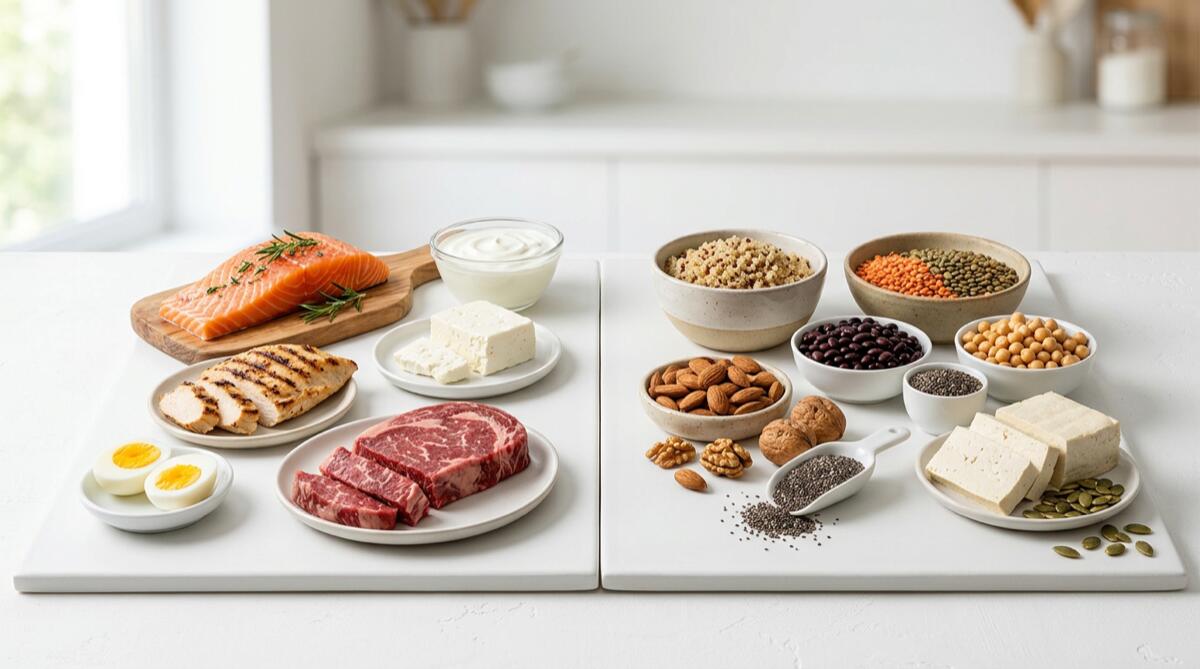
The Great Protein Puzzle: Complete vs Incomplete
If you have spent any time in the health, fitness, or nutrition space, you have undoubtedly heard about the importance of protein. It is the building block of muscle, the key to recovery, and a crucial macronutrient for keeping you full and satisfied. But as you dive deeper into nutrition, you will inevitably encounter a more nuanced term: the complete protein. What exactly does this mean, and why does it matter?
Many people assume that protein is simply protein, whether it comes from a steak, a bowl of lentils, or a scoop of powder. However, the biological reality is a bit more complex. To truly understand how to fuel your body, optimize your recovery, and build lean muscle mass, you need to understand the difference between complete and incomplete proteins. If you are just starting out with understanding your nutritional needs, you might want to read our guide on What Are Macros? The Complete Guide to Macronutrients before diving into the specifics of protein quality.
The Building Blocks: Understanding Amino Acids
To understand what makes a complete protein, we first need to break protein down into its fundamental components: amino acids. Think of protein as a complex LEGO structure, and amino acids as the individual LEGO bricks. When you eat a protein-rich food, your digestive system breaks that structure down into individual bricks, which your body then uses to build its own structures—like muscle tissue, enzymes, hormones, and immune cells.
There are 20 different amino acids that your body needs to function optimally. These are divided into two main categories:
- Non-Essential Amino Acids (11): Your body can synthesize these on its own using other compounds. You do not strictly need to get them from your diet.
- Essential Amino Acids (9): Your body cannot produce these. They must be obtained through the food you eat. The nine essential amino acids (EAAs) are histidine, isoleucine, leucine, lysine, methionine, phenylalanine, threonine, tryptophan, and valine.
Among the essential amino acids, leucine is particularly famous in the fitness world because it acts as the primary trigger for Muscle Protein Synthesis (MPS). Without enough leucine and the other eight EAAs, your body simply cannot repair and grow muscle tissue efficiently.
What is a Complete Protein?
A complete protein is a food source that contains all nine essential amino acids in adequate proportions for human physiological needs. When you consume a complete protein, you are giving your body the exact amino acid profile it needs to support growth, repair, and overall health without needing to supplement with other protein sources.
Common Sources of Complete Proteins
Historically, animal products have been the go-to sources for complete proteins because their amino acid profiles closely match the needs of the human body. Excellent animal-based sources include:
- Meat (beef, pork, lamb)
- Poultry (chicken, turkey)
- Fish and seafood (salmon, tuna, shrimp)
- Eggs (often considered the gold standard for protein bioavailability)
- Dairy products (milk, yogurt, cheese, whey protein)
However, you do not need to eat meat to get complete proteins. There are several plant-based sources that also contain all nine essential amino acids in sufficient quantities:
- Soy products (tofu, tempeh, edamame, soy milk)
- Quinoa
- Buckwheat
- Hemp seeds
- Chia seeds
- Amaranth
What is an Incomplete Protein?
An incomplete protein is a food source that is low or lacking in one or more of the nine essential amino acids. The specific amino acid that is missing or present in very low amounts is referred to as the limiting amino acid.
Most plant-based proteins fall into this category. For example:
- Legumes and Beans: Generally high in lysine but low in methionine and cysteine.
- Grains (wheat, rice, oats): Generally high in methionine but low in lysine.
- Nuts and Seeds: Often low in lysine and sometimes low in methionine or cysteine.
Does this mean incomplete proteins are "bad" or useless for muscle building? Absolutely not. They still provide valuable amino acids, fiber, vitamins, and minerals. They just need a little teamwork to reach their full potential.
The Myth of Protein Combining
For decades, vegetarian and vegan nutrition advice heavily pushed the concept of "protein combining" or "protein complementarity." The idea was that if you ate an incomplete protein, you had to pair it with another complementary incomplete protein in the exact same meal to form a complete protein. The classic example is rice and beans. Rice lacks lysine but has methionine; beans lack methionine but have lysine. Together, they form a complete protein.
Modern nutritional science has largely debunked the necessity of this strict timing. Your liver stores a "pool" of free amino acids. If you eat oatmeal (low in lysine) for breakfast and lentil soup (high in lysine) for lunch, your body is smart enough to mix and match the amino acids from that pool to synthesize the proteins it needs. As long as you eat a varied diet and consume all the essential amino acids over the course of 24 hours, your body will get what it needs.
How to Track Your Protein Intake Easily
Whether you are eating a juicy steak or a bowl of quinoa and black beans, ensuring you hit your daily protein goal is crucial for everything from weight loss to muscle gain. But manually calculating the amino acid profiles and total protein of every meal can be exhausting.
This is where MacroLog changes the game. As an AI-powered calorie and macro tracker, MacroLog takes the guesswork out of your nutrition. You don't need to manually search for "grilled chicken breast" or "tofu scramble." You can simply use the AI photo recognition feature to snap a picture of your plate, and MacroLog will instantly identify the foods, estimate the portion sizes, and log the macros—including your complete protein intake.
If you're cooking a complex recipe, you can use the voice logging feature. Just say, "I ate a bowl of rice with black beans, half an avocado, and two tablespoons of hemp seeds," and the app will accurately parse and log the entire meal. If you want to learn more about setting your specific protein targets, check out our guide on How to Count Macros: A Step-by-Step Guide.
Protein Quality vs. Quantity: The Science
When discussing complete proteins, scientists often refer to protein quality using specific scoring systems. The two most common are PDCAAS (Protein Digestibility-Corrected Amino Acid Score) and DIAAS (Digestible Indispensable Amino Acid Score).
Why Digestibility Matters
It is not just about what is in the food; it is about what your body can absorb. Animal proteins generally have a higher digestibility rate (often 90-99%) compared to plant proteins (70-90%). Plant proteins are often bound up in fibrous cell walls and contain anti-nutrients like phytic acid, which can inhibit the absorption of some amino acids.
Because of this slight reduction in digestibility and the lower concentration of essential amino acids (especially leucine) in plant foods, vegans and vegetarians may need to consume slightly more total protein—roughly 10-20% more—than omnivores to achieve the same muscle-building effects. If you're wondering how this fits into your overall daily intake, you can find out more in our article: How Many Calories Should I Eat Per Day? The Ultimate Guide. Protein quality matters most when total intake is squeezed, which is exactly what happens on appetite-suppressing medication — our guide to protein needs on GLP-1 medication covers that case.
Practical Strategies for Getting Enough Complete Protein
Regardless of your dietary preferences, hitting your protein goals is entirely achievable with a bit of planning.
For Omnivores
If you eat meat, dairy, and eggs, getting complete proteins is effortless. Your main focus should be on choosing lean sources to manage your overall calorie and fat intake. Chicken breast, turkey, white fish, Greek yogurt, and egg whites are excellent choices. Be mindful of tracking these accurately—scanning the barcode of your Greek yogurt with MacroLog ensures you log the exact macros instantly.
For Vegetarians
Dairy and eggs are your best friends for high-quality, complete protein. Cottage cheese, whey protein powder, and whole eggs provide exceptional amino acid profiles. You can also heavily rely on plant-based complete proteins like soy and quinoa.
For Vegans
A plant-based diet requires a bit more variety, but it is highly effective. Focus on:
- Soy: Tofu, tempeh, and edamame are complete proteins and highly versatile.
- Legumes + Grains: While you don't need to eat them at the exact same meal, having a diet rich in beans, lentils, chickpeas, rice, oats, and wheat ensures you cover all your bases.
- Seeds: Hemp and chia seeds are complete proteins that can be easily added to smoothies or oatmeal.
- Vegan Protein Powders: Many high-quality vegan powders blend pea and rice protein to create a complete amino acid profile that rivals whey.
Conclusion: Don't Overcomplicate It
The concept of a complete protein is scientifically important, but it shouldn't cause you stress at the dinner table. If you are an omnivore, you are likely getting plenty of complete proteins already. If you are plant-based, eating a diverse diet with plenty of legumes, grains, nuts, and seeds will ensure your body has the amino acid pool it needs to thrive.
The most important factor is your total daily protein intake. Hitting your macro goals consistently is what drives results, whether your goal is weight loss, muscle gain, or maintenance. To make hitting those goals as frictionless as possible, let AI do the heavy lifting.
Ready to take control of your nutrition without the hassle of manual tracking? Start snapping photos, scanning barcodes, or simply speaking your meals into existence. Download MacroLog today and revolutionize the way you track your macros!


