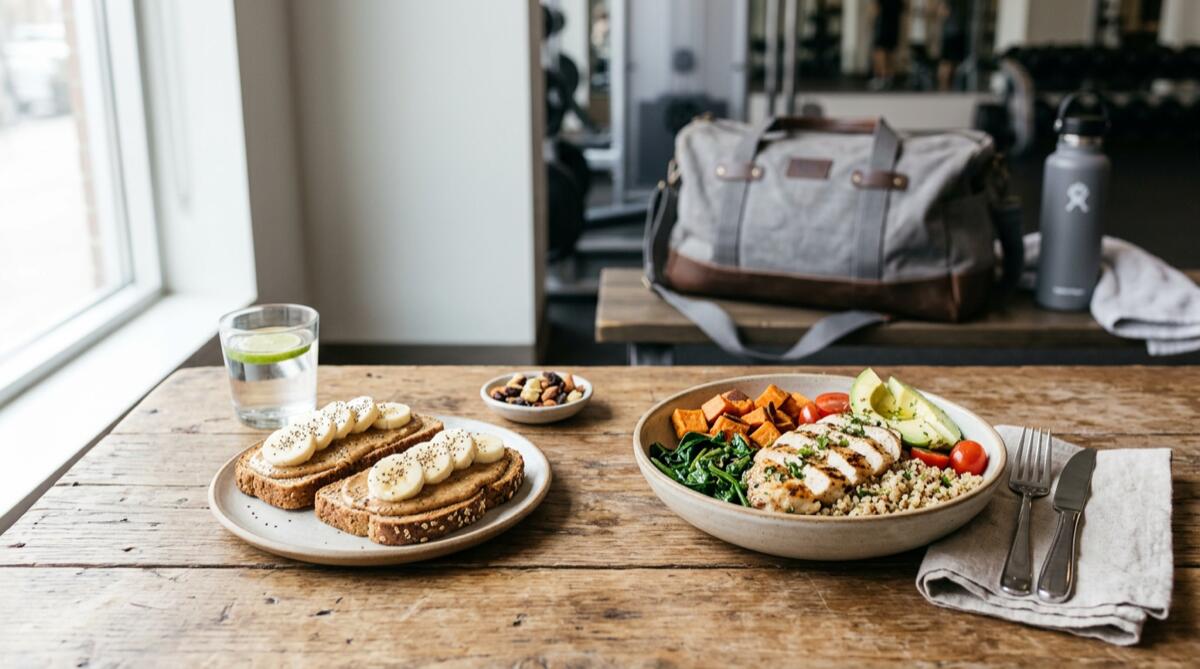
The Missing Link in Your Fitness Journey
You have customized your training split, bought the best lifting shoes, and consistently show up to the gym. But if you are not paying attention to your pre post workout nutrition, you are leaving serious results on the table. Think of your body like a high-performance sports car: you wouldn't expect it to win a race with an empty tank, nor would you leave it without maintenance after a grueling track day.
Proper pre post workout nutrition is the secret weapon that separates average progress from exceptional results. It dictates your energy levels during a heavy squat session, determines how quickly you recover, and signals your body to build muscle rather than break it down. In this comprehensive guide, we will break down exactly what you need to eat, when you need to eat it, and how to track it effortlessly.
Why Pre and Post Workout Nutrition Matters
To understand why meal timing and composition matter, we need to look at the science of energy balance and muscle physiology. When you train, especially during resistance training or high-intensity interval training (HIIT), your body relies primarily on glycogen (stored carbohydrates) for energy. As you lift weights, you create micro-tears in your muscle fibers. This process is catabolic, meaning it breaks down tissue.
Your pre-workout meal acts as the fuel source, ensuring your glycogen stores are topped off so you can push harder and lift heavier. Your post-workout meal provides the building blocks (protein) and the energy (carbohydrates) required to shift your body from a catabolic state to an anabolic (muscle-building) state. If you are curious about the foundational science of how energy intake dictates your weight, check out our guide on .
Pre-Workout Nutrition: Fueling the Engine
The primary goal of your pre-workout meal is to maximize performance, preserve muscle mass, and facilitate recovery. To achieve this, you need to focus on two main macronutrients: carbohydrates and protein.
The Role of Carbohydrates (Your Primary Energy Source)
Carbohydrates are your body's preferred source of energy for high-intensity exercise. Consuming carbs before a workout fills your muscle and liver glycogen stores. The type of carbohydrates you should eat depends on how much time you have before your session.
- 2-3 Hours Before: Focus on complex carbohydrates that digest slowly and provide a steady release of energy. Excellent choices include oats, brown rice, sweet potatoes, and whole-grain pasta.
- 30-60 Minutes Before: If you are short on time, opt for simple, fast-digesting carbohydrates. A banana, rice cakes, or a handful of dates will give you an immediate energy spike without sitting heavily in your stomach.
The Role of Protein (Muscle Protection)
Consuming protein before you train helps prevent muscle breakdown. It primes your bloodstream with amino acids, which are the building blocks of muscle. When these amino acids are readily available during your workout, your body is less likely to break down its own muscle tissue for energy. Aim for 20-30 grams of high-quality, lean protein such as chicken breast, Greek yogurt, or a whey protein shake.
Fats: Keep Them Low
While fats are essential for overall health, they slow down digestion. Eating a high-fat meal right before a workout can leave you feeling sluggish and bloated. Save your avocados and nuts for meals further away from your training window. To learn more about balancing your daily fat intake, read our article on How Much Fat Should You Eat Per Day?.
Pre-Workout Meal Examples
Here are some practical pre-workout meal ideas based on your timing:
- 2 Hours Before: Grilled chicken breast with sweet potato and a small side of asparagus.
- 1 Hour Before: A bowl of oatmeal made with skim milk, topped with sliced bananas and a scoop of whey protein.
- 30 Minutes Before: Two rice cakes with a thin layer of jam and a small protein shake.
Post-Workout Nutrition: The Recovery Phase
Once you rack the weights, your body is primed to absorb nutrients. The goal of post-workout nutrition is to replenish depleted glycogen stores, decrease muscle protein breakdown, and increase muscle protein synthesis.
The Anabolic Window: Fact or Fiction?
For years, gym-goers believed in the strict "anabolic window"—a magical 30-minute period after training where you *must* consume a protein shake or lose all your gains. Modern sports science has shown that this window is actually much larger. While you don't need to sprint to the locker room to chug a shake, consuming a balanced meal within 1 to 2 hours post-workout is optimal for recovery.
Protein: Rebuilding the Damage
After a workout, your muscles are essentially crying out for amino acids to repair the micro-tears you just created. Consuming 25-40 grams of protein post-workout maximizes muscle protein synthesis. Fast-digesting proteins like whey isolate are popular, but whole food sources like eggs, fish, and lean meats are equally effective.
Carbohydrates: Refilling the Tank
Replenishing your glycogen stores is crucial, especially if you plan to train again within 24 hours. Post-workout is the perfect time to consume fast-digesting carbohydrates, as they spike insulin levels. Insulin is an anabolic hormone that helps shuttle nutrients (like amino acids) directly into your muscle cells. White rice, potatoes, and even gummy bears or a sports drink are highly effective post-workout carb sources.
Post-Workout Meal Examples
- The Classic: Grilled salmon, white rice, and steamed zucchini.
- The Quick Fix: A smoothie made with whey protein, frozen berries, spinach, and a banana.
- The Breakfast Lifter: Three scrambled eggs with a side of toasted sourdough bread and a glass of orange juice.
How to Track Your Workout Nutrition Easily
Knowing what to eat is only half the battle; actually hitting those macronutrient targets consistently is where most people fail. This is where MacroLog becomes your ultimate fitness companion.
Gone are the days of manually searching databases for "cooked white rice" or "grilled chicken breast." With MacroLog, you can simply take a photo of your post-workout meal, and the AI will instantly recognize the food, estimate the portion size, and log the calories and macros for you. Driving home from the gym? Just use the voice logging feature and say, "I drank a protein shake with one scoop of whey and a banana," and the app handles the rest.
Tracking your pre post workout nutrition shouldn't feel like a second job. If you want to learn how to monitor your intake without stress, read our guide on .
Hydration: The Unsung Hero of Performance
It is impossible to discuss pre post workout nutrition without mentioning hydration. Even a 2% drop in hydration levels can significantly impair your strength, endurance, and cognitive focus.
Aim to drink at least 16-20 ounces of water 2 hours before your workout. During your session, sip water continuously to replace fluids lost through sweat. If your workout lasts longer than an hour or is particularly intense, consider adding electrolytes to your water to maintain optimal nerve and muscle function.
Conclusion: Putting It All Together
Perfecting your pre post workout nutrition is a game-changer for your physique and performance. Remember the golden rules: fuel up with complex carbs and lean protein before your session, and recover with fast-digesting carbs and high-quality protein afterward. Keep fats low around your training window to ensure quick digestion.
Consistency is key. You don't need to be perfect every single day, but hitting your macro targets around your workouts will compound over time, leading to better lifts, faster recovery, and noticeable muscle growth. To make this process seamless, let AI do the heavy lifting for your diet.
Ready to take control of your fitness journey? Download MacroLog today and start tracking your pre and post-workout meals with just a photo or your voice. Your future gains will thank you!


