Protein is the darling of the fitness and nutrition world, and for good reason. Whether your goal is to build muscle, shed stubborn body fat, or simply maintain a healthy lifestyle, protein plays a starring role. But with so much conflicting information online, a common question arises: how much protein per day do you actually need?
Why Is Protein So Important?
Before we dive into the numbers, it is crucial to understand why protein matters. Protein is made up of amino acids, which are the building blocks of your body. They are responsible for repairing tissues, producing enzymes and hormones, and maintaining a strong immune system.
When it comes to body composition, protein has three major superpowers:
- Muscle Preservation and Growth: When you work out, you create micro-tears in your muscle fibers. Protein provides the necessary materials to repair and build these muscles back stronger.
- Satiety: Protein is the most filling macronutrient. A high-protein diet keeps you fuller for longer, which makes sticking to a calorie deficit significantly easier.
- High Thermic Effect of Food (TEF): Your body burns up to 30% of the calories from protein just to digest and metabolize it, compared to only 5-10% for carbs and 0-3% for fats.
How Much Protein Per Day? The Official Guidelines vs. Optimal Intake
If you search for "how much protein per day," you will likely find the Recommended Dietary Allowance (RDA), which is set at 0.8 grams of protein per kilogram of body weight (or 0.36 grams per pound). However, it is essential to understand that the RDA represents the bare minimum required to prevent a nutritional deficiency in sedentary individuals—not the optimal amount for health, longevity, or body composition.
1. Protein Needs for Sedentary Individuals
If you do not exercise regularly and your primary goal is simply general health, aiming for 1.0 to 1.2 grams of protein per kilogram of body weight is a solid baseline. This ensures you maintain lean mass as you age, a critical factor in preventing sarcopenia (age-related muscle loss).
2. Protein Needs for Weight Loss
When you are cutting calories, your body is at risk of breaking down muscle tissue for energy. To prevent this, your protein intake actually needs to be higher than when you are maintaining your weight. If you are actively using calorie tracking for weight loss, aim for 1.6 to 2.2 grams of protein per kilogram (0.73 to 1 gram per pound) of body weight. This high intake protects your hard-earned muscle and keeps hunger at bay. The same range applies if you are losing weight on semaglutide or tirzepatide, except appetite suppression makes it far harder to reach, which is why how much protein to eat on a GLP-1 deserves its own plan.
3. Protein Needs for Muscle Growth (Hypertrophy)
For those hitting the gym and lifting weights to build muscle, the scientific consensus suggests an optimal range of 1.6 to 2.2 grams of protein per kilogram of body weight. Eating more than 2.2g/kg generally does not provide additional muscle-building benefits, though it is not harmful and can still help with satiety.
How to Calculate Your Daily Protein Needs
Calculating your specific needs is straightforward once you know your goal weight or lean body mass. If you are significantly overweight, calculating protein based on your total body weight might yield an unnecessarily high number. In this case, calculate your intake based on your target body weight or lean body mass.
For a complete breakdown of how to balance protein with carbs and fats, check out our guide on how to count macros.
Best Sources of High-Quality Protein
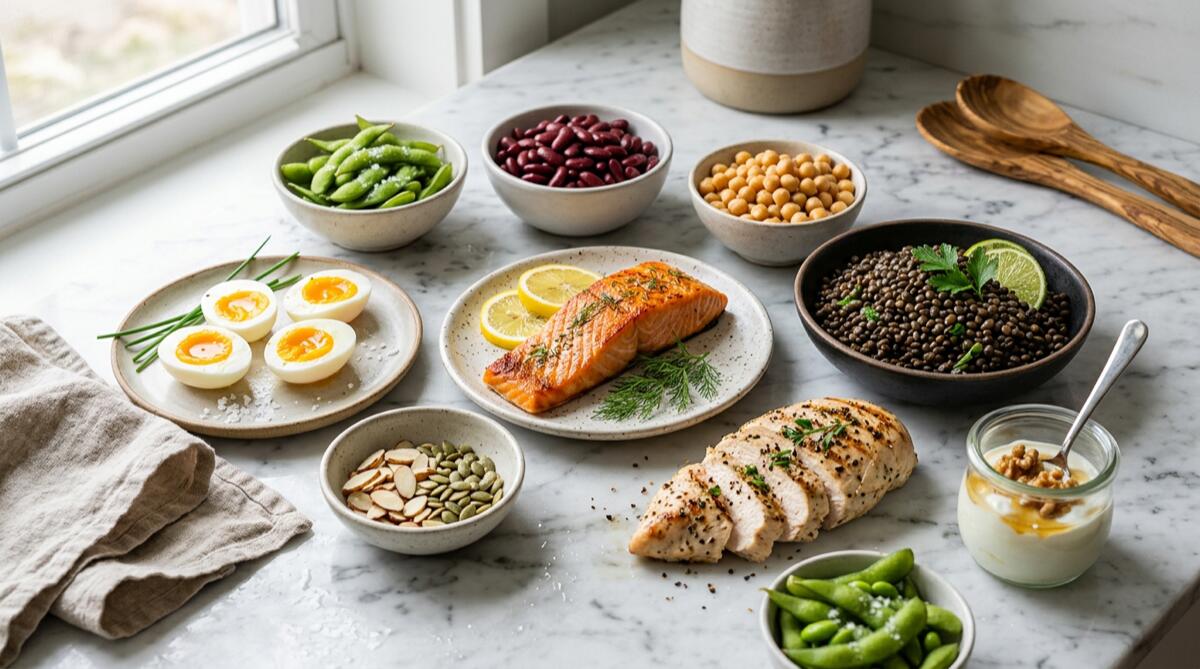
Not all protein is created equal. Animal sources are considered "complete" proteins because they contain all nine essential amino acids. Plant sources are often incomplete, but eating a variety of them throughout the day easily solves this issue.
- Lean Meats: Chicken breast, turkey, lean beef, and pork tenderloin.
- Fish and Seafood: Salmon, tuna, shrimp, and tilapia.
- Dairy: Greek yogurt, cottage cheese, milk, and whey protein powder.
- Plant-Based: Lentils, chickpeas, tofu, tempeh, edamame, and quinoa.
How to Track Your Protein Intake Easily
Knowing your target is only half the battle; consistently hitting it is where the magic happens. Many people think they eat enough protein until they actually start tracking it. However, manual tracking can feel tedious.
This is where MacroLog changes the game. As an AI-powered calorie and macro tracker, MacroLog removes the friction from dieting. You don't have to manually search for "grilled chicken breast" and guess the weight. With MacroLog, you can simply take a photo of your meal, and the AI will recognize the food and estimate the macros. Cooking a complex recipe? Use the voice logging feature and just say, "I ate 200 grams of Greek yogurt with a scoop of whey protein," and the app will instantly log it for you. It also features a lightning-fast barcode scanner for packaged foods.
Using smart tools helps you figure out how to track calories without becoming obsessive, allowing you to focus on enjoying your food while still hitting your protein targets.
Frequently Asked Questions About Protein
Can you eat too much protein?
For healthy individuals with no pre-existing kidney issues, high-protein diets are perfectly safe. The myth that protein damages healthy kidneys has been thoroughly debunked by modern sports nutrition science. However, consuming excessive protein simply means the extra calories will be used for energy or stored as fat, rather than building extra muscle.
Does protein timing matter?
The "anabolic window"—the idea that you must chug a protein shake within 30 minutes of working out—is vastly exaggerated. While getting protein around your workout is beneficial, your total daily protein intake is far more important than the exact timing. Aim to spread your protein evenly across 3 to 5 meals throughout the day to maximize muscle protein synthesis.
Conclusion
So, exactly how much protein per day should you eat? For most active individuals looking to optimize their health, body composition, and performance, aiming for roughly 1.6 to 2.2 grams per kilogram of body weight is the sweet spot. Prioritize high-quality sources, spread your intake throughout the day, and use smart tools to keep yourself accountable.
Ready to hit your protein goals without the headache of manual tracking? Download MacroLog today and experience the easiest way to track your macros using AI photo recognition and voice logging!


